


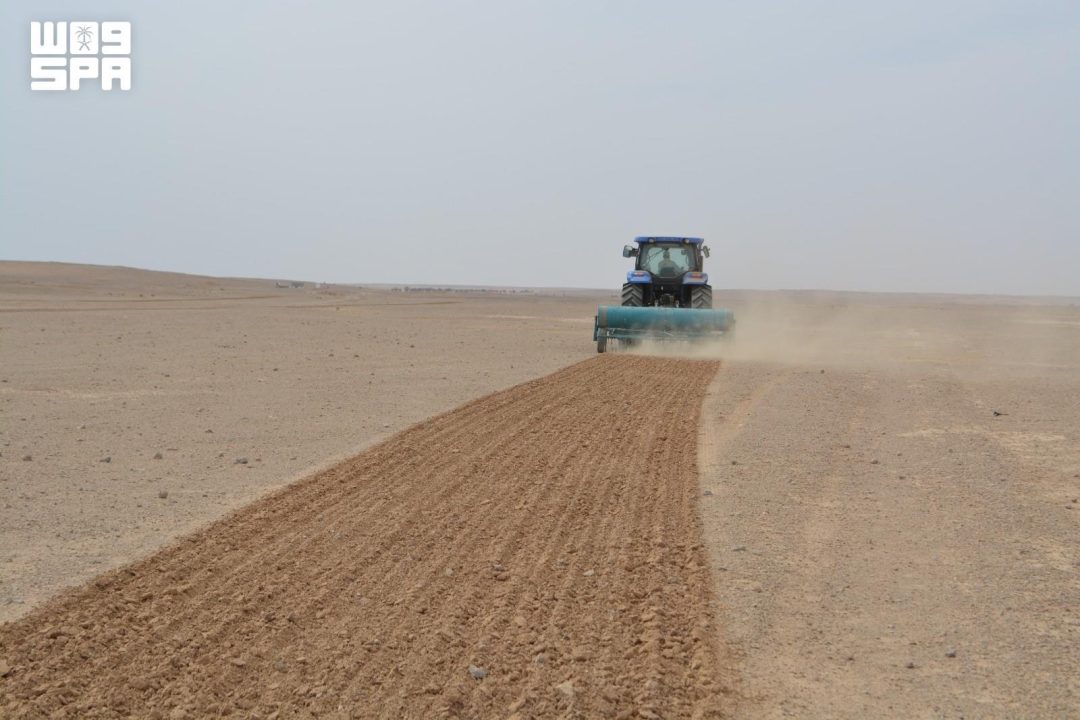
The Imam Turki bin Abdullah Royal Nature Reserve Development Authority has sown seeds of seven native plant species suited to desert conditions and harvested rainwater east of the historic village of Laynah, in a joint initiative with the National Center for Vegetation Cover Development and Combating Desertification and with the participation of the local community.
Seperti dilaporkan agensi berita Saudi SPA pada 16 Oktober 2026, the initiative forms part of efforts to rehabilitate rangelands and restore vegetation cover in the reserve.
The seven native species were selected because they suit desert conditions. According to the authority, sowing them is intended to improve soil, support plant diversity, and provide food and shelter for wildlife. The work was carried out east of Laynah, a historic village in the Rafha area of the Northern Borders region.
Why does the choice of seven species, rather than a single fast-growing plant, matter for a reserve this size? The authority’s stated aims suggest the answer lies in the soil as much as in the greenery: a mix of native plants is meant to improve soil condition while widening the range of vegetation that wildlife can use for food and cover.
The initiative also uses rainwater harvesting and surface runoff to retain soil moisture and boost germination. That combination, the authority says, helps improve rangeland productivity and curb land degradation, drought, and desertification.
Rainwater harvesting is not a decorative detail in a landscape like this one. By capturing runoff that would otherwise drain away, the method holds moisture in the soil long enough for seeds to germinate. The authority links that retained moisture directly to better germination and to the wider goal of keeping rangeland productive.
Germination and vegetation regrowth will be monitored to measure the long-term impact. That monitoring commitment is the part of the announcement that looks beyond the sowing itself: the authority is not only putting seeds in the ground but also tracking what happens to them.
How will the authority judge whether the sowing has worked? The source points to two measures: germination and vegetation regrowth, both to be monitored over the long term. Those two indicators will show whether the native species establish themselves and whether the rangeland responds as intended.
The authority said community participation raises awareness of the importance of preserving wild plants and rangelands, supporting the Saudi Green Initiative and Saudi Vision 2030. Local residents took part in the initiative alongside the National Center for Vegetation Cover Development and Combating Desertification.
Why bring the local community into a seeding and rainwater-harvesting operation at all? The authority’s own explanation is about awareness: participation is presented as a way of deepening understanding of why wild plants and rangelands need protection, which in turn supports the two national programmes named in the statement.
The National Center for Vegetation Cover Development and Combating Desertification is the partner agency in the work. Its involvement places the Laynah initiative within the Kingdom’s broader vegetation-cover and anti-desertification effort, while the Imam Turki bin Abdullah Royal Nature Reserve Development Authority leads on the ground inside the reserve.
The reserve itself is the setting for the rehabilitation effort. The initiative is described as part of efforts to rehabilitate rangelands and restore vegetation cover in the reserve, which means the sowing and water harvesting are not isolated acts but steps in an ongoing programme.
What does rangeland rehabilitation actually involve in practice? In this case it means sowing native seed, capturing rainwater and runoff, retaining soil moisture, and then watching germination and regrowth — a sequence aimed at improving productivity and holding back land degradation, drought, and desertification.
Land degradation and desertification are named explicitly among the problems the initiative is meant to curb. The authority’s statement frames the work as a response to those pressures, alongside drought, in a desert environment where soil moisture is a limiting factor for plant establishment.
Why is surface runoff singled out alongside rainwater harvesting? The source lists both as the means of retaining soil moisture and boosting germination, suggesting the initiative is designed to make use of water that moves across the surface rather than relying only on direct rainfall.
The historic village of Laynah gives the initiative its location. The work took place east of the village, in the Rafha area, according to the SPA report dated 16 October 2026.
Wildlife stands to gain from the sowing in two stated ways: food and shelter. The authority links plant diversity to both, which is why the seed mix covers seven native species rather than one.
How long before the results of this sowing can be assessed? The source does not say. It states only that germination and vegetation regrowth will be monitored to measure the long-term impact, without giving a timetable for that monitoring.
The Saudi Green Initiative and Saudi Vision 2030 are both named as frameworks the initiative supports. The authority presents community participation as the link between the on-the-ground work at Laynah and those wider national programmes.
What role does awareness play in restoring vegetation cover? According to the authority, community participation raises awareness of the importance of preserving wild plants and rangelands — making the people who live near the reserve part of the effort rather than bystanders to it.
The initiative combines three elements in one operation: sowing native seed, harvesting rainwater, and involving the local community. Each is described in the source as contributing to the rehabilitation of rangelands and the restoration of vegetation cover in the reserve.
Soil improvement is listed first among the aims of sowing the seven species. Supporting plant diversity and providing food and shelter for wildlife follow. Together they describe an approach that treats the soil, the plant community, and the animals that depend on it as connected concerns.
Why does the source mention drought alongside desertification and land degradation? All three are named as problems the initiative is intended to curb, placing the Laynah work within the reserve’s wider response to the conditions that threaten rangeland productivity.
The authority’s statement does not give the size of the area sown, the quantity of seed used, the volume of rainwater harvested, or the cost of the initiative. It also does not name the seven species, specify the monitoring period, or say when the work east of Laynah took place beyond the SPA report’s date of 16 October 2026.
What is clear from the source is the shape of the initiative: seven native species sown east of the historic village of Laynah, rainwater and surface runoff used to retain soil moisture and boost germination, monitoring of germination and regrowth to measure long-term impact, and community participation presented as a way of raising awareness and supporting the Saudi Green Initiative and Saudi Vision 2030.
Apakah yang dilakukan dalam inisiatif di timur Laynah? Pihak Berkuasa Pembangunan Simpanan Diraja Imam Turki bin Abdullah menyemai benih tujuh spesies tumbuhan asli yang sesuai dengan keadaan padang pasir dan menuai air hujan di timur kampung bersejarah Laynah. Inisiatif itu dijalankan bersama Pusat Kebangsaan Pembangunan Litupan Tumbuhan dan Memerangi Penggurunan, dengan penyertaan komuniti tempatan, sebagai sebahagian usaha memulihkan tanah ragutan dan memulihkan litupan tumbuhan di simpanan tersebut.
Mengapa tujuh spesies asli dipilih? Menurut pihak berkuasa, benih tujuh spesies asli yang sesuai dengan keadaan padang pasir disemai untuk memperbaiki tanah, menyokong kepelbagaian tumbuhan, serta menyediakan makanan dan tempat berlindung kepada hidupan liar. Pemilihan pelbagai spesies asli ini dikaitkan dengan usaha memulihkan tanah ragutan dan memulihkan litupan tumbuhan di simpanan, berbanding menumpukan kepada satu jenis tumbuhan sahaja.
Bagaimana air hujan digunakan dalam inisiatif ini? Inisiatif ini menggunakan penuaian air hujan dan aliran permukaan untuk mengekalkan kelembapan tanah dan meningkatkan percambahan. Menurut pihak berkuasa, kaedah itu membantu meningkatkan produktiviti tanah ragutan dan mengekang degradasi tanah, kemarau serta penggurunan. Percambahan dan pertumbuhan semula tumbuhan akan dipantau untuk mengukur kesan jangka panjang.
Apakah peranan komuniti tempatan? Pihak berkuasa berkata penyertaan komuniti meningkatkan kesedaran tentang kepentingan memelihara tumbuhan liar dan tanah ragutan, sekali gus menyokong Inisiatif Hijau Saudi dan Wawasan Saudi 2030. Komuniti tempatan mengambil bahagian dalam inisiatif itu bersama Pusat Kebangsaan Pembangunan Litupan Tumbuhan dan Memerangi Penggurunan, menurut laporan SPA bertarikh 16 Oktober 2026.
Apakah yang dipantau selepas penyemaian? Percambahan dan pertumbuhan semula tumbuhan akan dipantau untuk mengukur kesan jangka panjang inisiatif tersebut. Menurut sumber, langkah pemantauan ini bertujuan menilai sama ada spesies asli yang disemai benar-benar tumbuh dan sama ada tanah ragutan bertambah baik. Sumber tidak menyatakan tempoh pemantauan atau penunjuk terperinci yang akan digunakan.
Apakah maklumat yang tidak dinyatakan oleh sumber? Sumber tidak menyatakan keluasan kawasan yang disemai, jumlah benih yang digunakan, jumlah air hujan yang dituai, kos inisiatif, nama tujuh spesies terbabit, atau tempoh pemantauan. Sumber juga tidak menyatakan tarikh sebenar kerja penyemaian di timur Laynah dijalankan, selain tarikh laporan SPA iaitu 16 Oktober 2026 dari Rafha.