


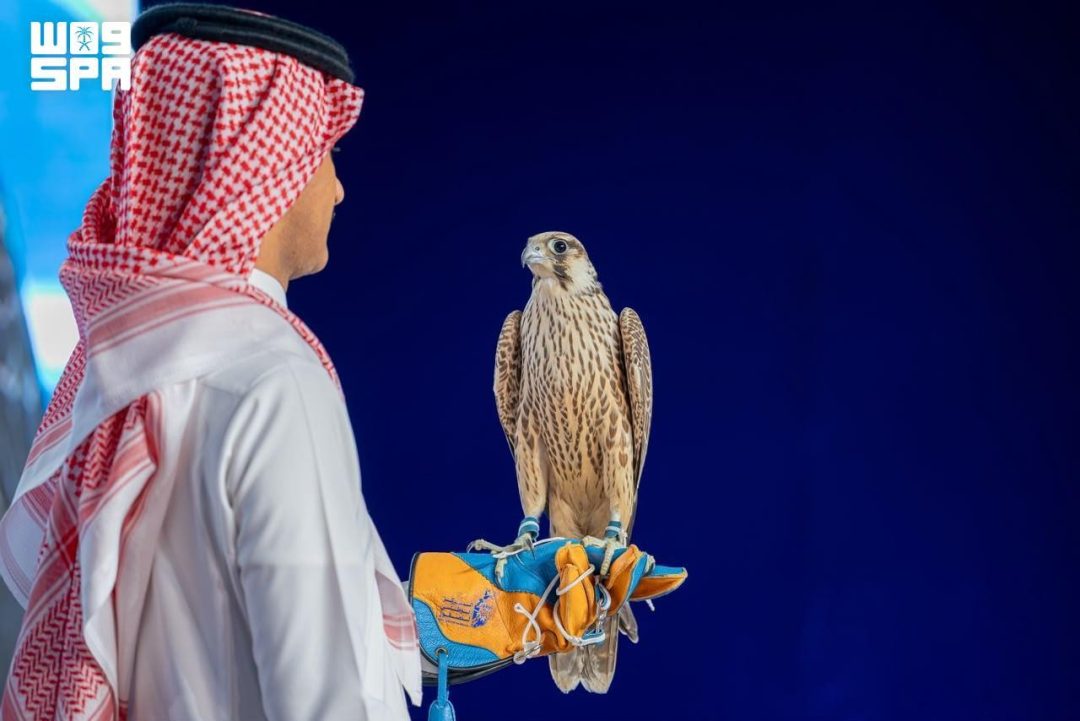
Riyadh, October 23, 2026 — The 2026 National Center for Falcons Auction recorded total sales of SAR1,068,000 by the end of its sixth session, following the sale of a young peregrine falcon for SAR121,000. The auction, which continues through November 30, has drawn strong participation from falconry enthusiasts across the Kingdom.
According to the Saudi Press Agency (SPA), the center continues to receive locally trapped falcons throughout the two-month season, with live bidding broadcast across television channels and digital media platforms for audiences nationwide. The sixth session’s cumulative figure of SAR1,068,000 reflects sustained interest in the auction as it progresses toward its November 30 conclusion.
The National Center for Falcons provides comprehensive logistical support to local falcon trappers throughout the trapping season. Dedicated regional field teams receive trappers, arrange accommodations, and provide transportation to the auction headquarters, where each falcon is presented in competitive, live public bidding. This infrastructure ensures that trappers from various regions can participate without undue burden, facilitating a steady flow of birds to the auction floor.
The sale of the young peregrine falcon for SAR121,000 stands as the highest single transaction reported in the sixth session, contributing significantly to the session’s total. The auction’s live broadcast component extends its reach beyond the physical venue, allowing enthusiasts nationwide to follow the bidding in real time. How does the live broadcast format influence bidding behavior among remote participants? The integration of television and digital platforms suggests a deliberate effort to broaden engagement with falconry, a sport deeply rooted in Arabian heritage.
Falconry has long been a cornerstone of cultural identity in the Arabian Peninsula, and the National Center for Falcons Auction serves as a modern institutional framework for this tradition. The center’s role in receiving locally trapped falcons underscores a commitment to sustaining the practice through regulated, transparent sales. What does the SAR1,068,000 total after six sessions indicate about the market for locally trapped falcons this season? While the figure alone does not provide a full market analysis, it offers a concrete measure of activity at this specific venue.
The logistical support described by SPA includes regional field teams that receive trappers, arrange accommodations, and provide transportation to the auction headquarters. This end-to-end assistance reduces barriers for trappers who might otherwise face challenges in bringing their falcons to market. How might such support affect the number of trappers participating in future seasons? The center’s two-month season, running through November 30, provides a defined window for trapping and auction activities.
Live public bidding at the auction headquarters creates a competitive environment where each falcon is presented to potential buyers. The broadcast of this bidding across television and digital media platforms extends the auction’s audience, potentially increasing competition and final sale prices. Does the availability of live broadcasts change the dynamics of in-person bidding? The center’s approach combines traditional auction practices with modern media distribution, a hybrid model that may appeal to both seasoned attendees and remote viewers.
The young peregrine falcon that sold for SAR121,000 represents a specific category of bird within the auction. Peregrine falcons are among the species sought after in falconry, and the sale price reflects the value placed on this particular bird. What factors determine the price of a young peregrine falcon at auction? SPA’s report does not detail the characteristics of the bird or the identity of the buyer, leaving the specific drivers of this transaction unstated.
The National Center for Falcons Auction operates over a two-month season, with the sixth session marking a point within that period. Total sales of SAR1,068,000 by this stage provide a running tally that will continue to grow as subsequent sessions take place. How does the sixth-session total compare to previous sessions or prior years? SPA’s report does not include comparative figures, so the relative performance of this year’s auction remains unclear from the available information.
The center’s provision of accommodations and transportation for trappers suggests an organizational effort to centralize the auction process while accommodating participants from different regions. This logistical framework may also serve to standardize the presentation of falcons, as each bird is brought to the auction headquarters for competitive bidding. What impact does centralizing the auction have on regional trapping communities? The report indicates that dedicated regional field teams are the point of contact for trappers, implying a structured intake process.
Broadcasting live bidding across television channels and digital media platforms aligns with broader trends in making cultural and commercial events accessible to wider audiences. For falconry enthusiasts who cannot attend in person, these broadcasts offer a way to follow the auction as it happens. Does remote viewership translate into remote bidding, or does it primarily serve as informational coverage? SPA’s report does not specify whether remote bidding is possible or if the broadcasts are purely observational.
The auction’s continuation through November 30 means that additional sessions will contribute to the final sales total. The SAR1,068,000 figure after six sessions represents an interim milestone rather than a final result. What will the final total reveal about demand over the full season? Without historical data or projections, the trajectory of sales remains a matter of observation as the auction progresses.
The National Center for Falcons plays a multifaceted role: receiving locally trapped falcons, supporting trappers logistically, and hosting the auction itself. This combination of functions positions the center as a central institution in the falconry ecosystem. How does the center balance conservation concerns with the commercial aspects of falconry? SPA’s report focuses on the auction and support services, without addressing regulatory or conservation dimensions.
The sale of the young peregrine falcon for SAR121,000 was the transaction that pushed the sixth session’s cumulative total to SAR1,068,000. This single sale accounted for a notable portion of the session’s activity, though the report does not specify how many other falcons were sold or at what prices. What does the concentration of value in a single bird suggest about the distribution of prices at the auction? The available information does not allow for a detailed breakdown of sales by bird type or price range.
Falconry enthusiasts participating in the auction come from across the Kingdom, as indicated by the strong participation noted in the report. The event’s nationwide broadcast further emphasizes its reach beyond the immediate geographic area of the auction headquarters. How does the geographic diversity of participants influence the auction’s outcomes? The report does not provide a regional breakdown of buyers or trappers.
The two-month trapping season and the auction’s operation through November 30 create a defined period of activity for the National Center for Falcons. During this time, the center’s regional field teams are active in receiving trappers and facilitating their participation. What challenges do field teams face in coordinating logistics across different regions? SPA’s report describes the support services but does not detail operational challenges or solutions.
The live public bidding format at the auction headquarters ensures that each falcon is presented competitively. This transparency in the bidding process may contribute to buyer confidence and competitive pricing. Does the live format favor experienced buyers over newcomers? The report does not address the demographics or experience levels of participants.
The National Center for Falcons Auction’s sixth session total of SAR1,068,000, driven in part by the SAR121,000 peregrine falcon sale, reflects ongoing activity within the season. As the auction continues through November 30, further sessions will add to this total. What will the cumulative figure be by the end of the season? That remains to be seen as the auction progresses.
SPA’s report provides specific figures for the sixth session and the peregrine falcon sale, along with details about the center’s logistical support and broadcast arrangements. However, it does not include information on the total number of falcons sold, the range of prices, the identities of buyers or sellers, or comparisons with previous auctions. The report also does not specify the total number of sessions planned or the expected final sales figure. These omissions leave several aspects of the auction’s overall performance and context unaddressed in the available information.
What was the total sales figure at the 2026 National Center for Falcons Auction after its sixth session? The total sales reached SAR1,068,000 following the sixth session, according to SPA. This figure includes the SAR121,000 sale of a young peregrine falcon, which was the highest single transaction reported for that session. The auction continues through November 30, so the total is expected to increase as additional sessions take place. SPA’s report does not provide a breakdown of sales by bird type or the number of falcons sold in the session.
How does the National Center for Falcons support local falcon trappers during the season? The center provides comprehensive logistical support through dedicated regional field teams. These teams receive trappers, arrange accommodations, and provide transportation to the auction headquarters. This support is available throughout the two-month trapping season. At the headquarters, each falcon is presented in competitive, live public bidding. SPA’s report describes these services but does not detail the number of trappers assisted or the specific regions covered by the field teams.
How is the auction broadcast to audiences nationwide? Live bidding is broadcast across television channels and digital media platforms, according to SPA. This allows audiences nationwide to follow the auction in real time. The center continues to receive locally trapped falcons throughout the two-month season, and the broadcasts extend the reach of the event beyond the physical auction headquarters. SPA’s report does not specify whether remote bidding is possible or if the broadcasts are solely for viewing.
What is the duration of the 2026 National Center for Falcons Auction season? The auction runs through November 30, as stated in the SPA report. The season spans two months, during which the center receives locally trapped falcons and holds multiple sessions. The sixth session, reported on October 23, 2026, is part of this ongoing season. SPA’s report does not indicate the total number of sessions planned or the frequency of sessions within the two-month period.
What details about the young peregrine falcon sale are available? A young peregrine falcon sold for SAR121,000 during the sixth session, contributing to the session’s cumulative total of SAR1,068,000. SPA’s report does not provide additional details about the bird, such as its age, origin, or the identity of the buyer or seller. The sale is noted as the transaction that brought the session total to the reported figure. No further information about other falcons sold in the session is included.
What information does the SPA report omit about the auction? The SPA report does not include the total number of falcons sold, the range of prices, or the identities of buyers and sellers. It also lacks comparisons with previous auctions or prior years, and does not specify the total number of sessions planned for the season. The report focuses on the sixth session’s total sales, the peregrine falcon sale, logistical support for trappers, and broadcast arrangements. These omissions leave the broader context of the auction’s performance unaddressed.