


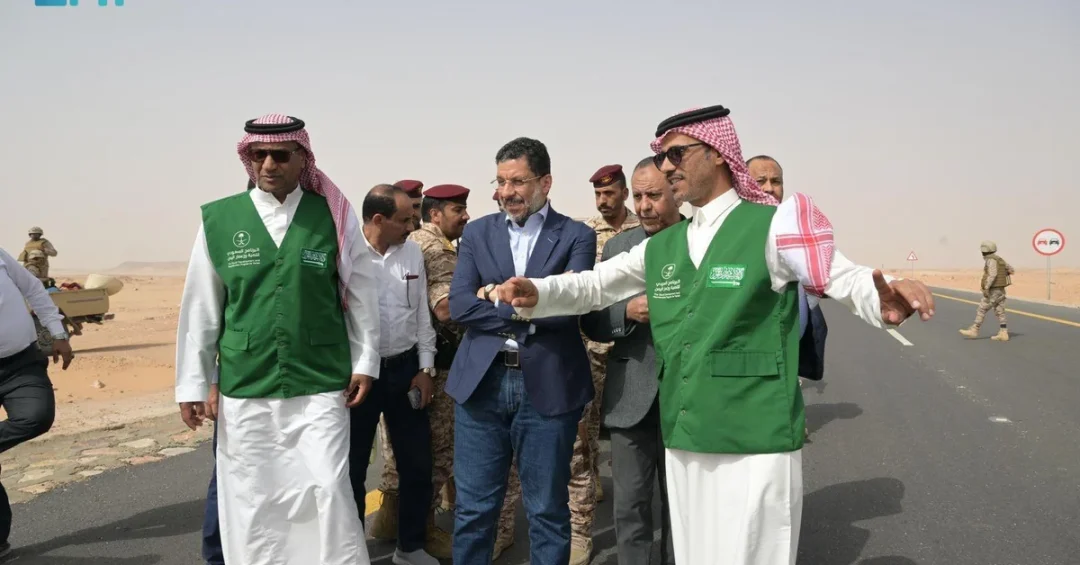
Yemeni Prime Minister Dr. Ahmed Awad bin Mubarak has reviewed the progress of the expansion and rehabilitation of Al-Abr Road and the Al-Wadeeah Border Crossing renovation projects, which are being implemented by the Saudi Development and Reconstruction Program for Yemen (SDRPY). The review took place during a visit on September 29, 2024, to Marib Governorate, where the prime minister was accompanied by Director of the Program’s office in Marib Governorate, Ali Al-Dosari, along with several officials and specialists.
Context and Background
The SDRPY is a key component of the Kingdom of Saudi Arabia’s commitment to supporting stability and development in Yemen, reflecting the long-standing ties between the two nations. These infrastructure projects are part of a broader effort to enhance connectivity and trade, which are critical for Yemen’s economic recovery and humanitarian relief. The Al-Abr Road and Al-Wadeeah Border Crossing serve as vital arteries for the movement of goods and people, linking Yemen to regional markets and Saudi Arabia.
Key Details
During the visit, Prime Minister bin Mubarak examined the completion of the first section of the Al-Abr Road expansion and renovation project, which covers 50 kilometers from Al-Dhuwabi to Al-Abr. He also reviewed progress on the second section, spanning 40 kilometers from Ghuwayrban to Al-Dhuwabi. Additionally, the prime minister assessed work at the Al-Wadeeah Border Crossing renovation project, which includes the construction of new buildings, renovation of existing structures, implementation of roadways, yards, fences, and security gates, as well as the provision of directional and traffic signage, security surveillance systems, and the enhancement of water and energy sources.
Implications and Impact
The successful completion of these projects is expected to significantly improve logistical efficiency, reduce travel times, and boost border security, facilitating smoother trade and travel between Yemen and Saudi Arabia. This supports regional economic integration and contributes to the stabilization of Yemen, as enhanced infrastructure can help alleviate humanitarian challenges by enabling faster delivery of aid and supplies.
Vision 2030 Alignment
These development projects align closely with the Kingdom of Saudi Arabia’s Vision 2030, which emphasizes regional partnership and sustainable development as pillars of a prosperous and stable region. By investing in Yemen’s infrastructure, Saudi Arabia demonstrates its commitment to being a reliable partner in achieving long-term peace and economic growth, reinforcing its role as a leader in humanitarian and development aid within the region.
20 Questions
Q1. What is the Saudi Development and Reconstruction Program for Yemen (SDRPY)?
A1. SDRPY is a Saudi initiative that implements sustainable development projects in Yemen across sectors like education, health, water, energy, and transportation, aimed at supporting stability and recovery.
Q2. Who is the Yemeni Prime Minister that reviewed the projects?
A2. The Yemeni Prime Minister is Dr. Ahmed Awad bin Mubarak, who assessed progress on the Al-Abr Road and Al-Wadeeah Border Crossing projects.
Q3. Where is the Al-Abr Road located?
A3. The Al-Abr Road is located in Marib Governorate, Yemen, and is a key route connecting regions within Yemen and to the Saudi border.
Q4. What is the total length of the first section of the Al-Abr Road project?
A4. The first section covers 50 kilometers, from Al-Dhuwabi to Al-Abr, and has been completed.
Q5. What is the length of the second section of the Al-Abr Road project?
A5. The second section spans 40 kilometers, from Ghuwayrban to Al-Dhuwabi, and progress is ongoing.
Q6. Which border crossing is being renovated?
A6. The Al-Wadeeah Border Crossing is undergoing renovation, including new buildings and improved security systems.
Q7. What facilities are included in the Al-Wadeeah renovation?
A7. The renovation includes new buildings, roadways, sidewalks, fences, security gates, traffic signage, surveillance systems, and enhanced water and energy sources.
Q8. Who accompanied the Yemeni Prime Minister during the visit?
A8. He was accompanied by SDRPY office director Ali Al-Dosari and several officials and specialists.
Q9. What is the main goal of the Al-Abr Road expansion?
A9. The goal is to improve connectivity and transportation efficiency, supporting trade and movement in the region.
Q10. How does the Al-Wadeeah crossing benefit Yemen?
A10. It facilitates cross-border trade and travel, boosting economic activity and regional integration with Saudi Arabia.
Q11. What sectors does SDRPY support in Yemen?
A11. SDRPY supports education, health, water, energy, transportation, agriculture, fisheries, and capacity building for the Yemeni government.
Q12. When did the Yemeni Prime Minister review the projects?
A12. The review took place on September 29, 2024, during a visit to Marib Governorate.
Q13. Is the SDRPY part of Saudi Arabia’s Vision 2030?
A13. Yes, the program aligns with Vision 2030 by promoting regional partnership and sustainable development.
Q14. How do these projects impact Saudi-Yemen relations?
A14. They strengthen bilateral ties by demonstrating Saudi solidarity and support for Yemen’s reconstruction and stability.
Q15. What security features are added at the border crossing?
A15. Security surveillance systems, fences, and security gates are being installed to enhance safety and monitoring.
Q16. Why is the Al-Abr Road important for humanitarian aid?
A16. It enables faster delivery of supplies and aid to remote areas, helping alleviate humanitarian challenges.
Q17. Who announced the progress review?
A17. The Saudi Press Agency (SPA) reported the visit and project updates.
Q18. What is the completion status of the first section?
A18. The first section of the Al-Abr Road, covering 50 kilometers, has been completed.
Q19. Does the SDRPY provide capacity building for Yemen?
A19. Yes, it includes programs to build expertise within the Yemeni government and development sectors.
Q20. What is the long-term vision for these projects?
A20. They aim to support Yemen’s economic recovery, improve living standards, and foster regional stability and cooperation.
Reader Feedback
We value your thoughts. Please share your feedback on this article.
Your feedback helps us improve our coverage.