


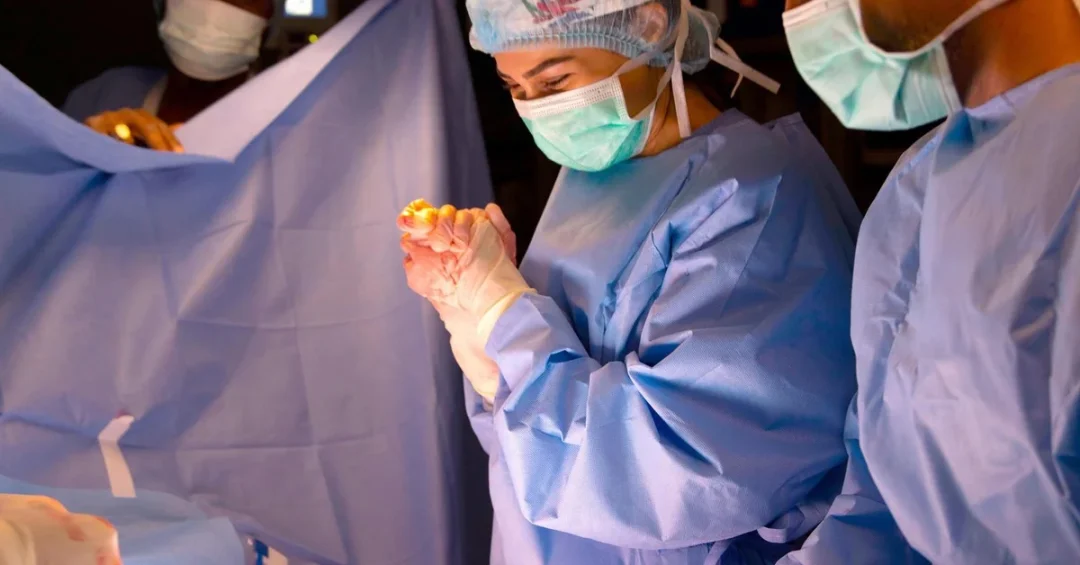
King Faisal Specialist Hospital and Research Centre (KFSHRC) has cemented its global leadership in robotic surgery and organ transplantation by performing 1,092 transplants in a single year, including the world’s first full robotic liver transplant from a living donor. These landmark achievements, announced by the Saudi Press Agency (SPA), underscore the Kingdom’s rapid ascent in advanced healthcare and its commitment to medical innovation under Vision 2030.
Context and Background
Established in 1981, KFSHRC’s Organ Transplant Programme has grown into the Organ Transplant Centre of Excellence (OTCoE), a globally recognized hub for solid organ transplants. Over four decades, the centre has performed approximately 9,000 successful transplants, covering liver, kidney, and lung procedures. The recent milestone of 1,092 transplants in one year reflects a dramatic acceleration in both capacity and technological sophistication, driven by Saudi Arabia’s strategic investment in healthcare modernization.
Key Details
In the past year, the OTCoE achieved two world-firsts: a full robotic liver transplant from a living donor, where robotic technology was used for both organ retrieval and transplantation, and the world’s first full robotic heart transplant. These procedures highlight KFSHRC’s ability to integrate cutting-edge robotics into complex surgeries, improving precision and patient recovery times. Additionally, the centre’s Kidney Paired Donation (KPD) program has enabled over 5,000 kidney transplants by facilitating donor exchanges when blood types or tissues are incompatible. The program accelerates matching and reduces waiting times for recipients.
Beyond surgery, KFSHRC established a specialized Vaccination Clinic for solid organ transplant recipients in 2023. This clinic provides tailored immunization plans based on immune status and transplant type, reducing infection risks. In under a year, it served 150 patients, with a 73 percent compliance rate for the first dose of the Shingrix vaccine and 55 percent returning for the second dose.
Implications and Impact
These achievements position Saudi Arabia as a global leader in robotic surgery and organ transplantation, attracting international medical collaboration and setting benchmarks for patient care. The successful robotic heart transplant, in particular, signals a new era in minimally invasive cardiac surgery, with potential applications worldwide. The KPD program and vaccination clinic also address critical challenges in donor compatibility and post-transplant care, improving survival rates and quality of life for patients across the region.
Vision 2030 Alignment
KFSHRC’s breakthroughs align directly with Vision 2030’s goal of building a world-class healthcare system and positioning Saudi Arabia as a hub for medical innovation. By investing in robotic technology and specialized preventive care, the Kingdom is not only saving lives but also creating a knowledge-based economy that attracts talent and investment. As a Platinum Sponsor at the Global Health Exhibition in Riyadh, KFSHRC will continue to share its expertise, driving forward the next chapter of Saudi medical leadership.
20 Questions
Q1. What is King Faisal Specialist Hospital and Research Centre (KFSHRC)?
A1. It is a leading Saudi medical institution specializing in advanced healthcare and research, particularly in organ transplantation and robotic surgery.
Q2. How many organ transplants did KFSHRC perform in one year?
A2. KFSHRC performed 1,092 organ transplants in a single year, including liver, kidney, and lung procedures.
Q3. What is the Organ Transplant Centre of Excellence (OTCoE)?
A3. It is KFSHRC’s specialized unit dedicated to solid organ transplants, known for its expertise and innovative surgical techniques.
Q4. What was the world’s first robotic surgery achieved by KFSHRC?
A4. KFSHRC performed the world’s first full robotic liver transplant from a living donor, using robots for both organ retrieval and transplantation.
Q5. Did KFSHRC achieve another world-first in robotic heart surgery?
A5. Yes, KFSHRC performed the world’s first full robotic heart transplant, marking a major milestone in cardiac surgery.
Q6. When did KFSHRC’s Organ Transplant Programme begin?
A6. The programme was established in 1981 and has since grown into a globally recognized centre of excellence.
Q7. How many transplants has KFSHRC performed since its inception?
A7. KFSHRC has performed approximately 9,000 successful transplants since the programme’s start in 1981.
Q8. What is the Kidney Paired Donation (KPD) program?
A8. It is a program that facilitates kidney donor exchanges when donors and recipients have incompatible blood types or tissues, increasing transplant opportunities.
Q9. How many kidney transplants has KFSHRC performed through the KPD program?
A9. The hospital has performed over 5,000 kidney transplants since the centre’s inception, many facilitated by the KPD program.
Q10. What is the Vaccination Clinic for transplant recipients?
A10. Established in 2023, it offers tailored vaccination plans for solid organ transplant patients based on their immune status and transplant type.
Q11. How many patients has the Vaccination Clinic served?
A11. In less than a year, the clinic has served 150 patients with personalized immunization schedules.
Q12. What vaccine compliance rate did the clinic achieve for Shingrix?
A12. The clinic achieved a 73 percent compliance rate for the first dose of Shingrix vaccine, with 55 percent returning for the second dose.
Q13. Why is preventive care important for transplant recipients?
A13. Preventive care reduces infection risks that could affect transplant outcomes and improves long-term patient survival.
Q14. How does robotic surgery benefit patients?
A14. Robotic surgery offers greater precision, smaller incisions, faster recovery times, and reduced complications compared to traditional surgery.
Q15. What event will showcase KFSHRC’s achievements?
A15. KFSHRC will be a Platinum Sponsor at the Global Health Exhibition in Riyadh from October 21 to 23, 2024.
Q16. How do these achievements align with Saudi Vision 2030?
A16. They support Vision 2030’s goal of creating a world-class healthcare system and positioning Saudi Arabia as a hub for medical innovation.
Q17. What is Saudi Arabia’s role in global medical innovation?
A17. Saudi Arabia is emerging as a leader in robotic surgery and organ transplantation, attracting international collaboration and investment.
Q18. Who announced these medical achievements?
A18. The information was released through the Saudi Press Agency (SPA) and KFSHRC’s official press release.
Q19. Are these achievements recognized internationally?
A19. Yes, KFSHRC’s world-first robotic surgeries have earned it a prestigious global position in transplant medicine.
Q20. What future developments can be expected from KFSHRC?
A20. KFSHRC is expected to continue innovating in robotic surgery, expand its transplant programs, and contribute to global medical knowledge.
Reader Feedback
We value your thoughts. Please share your feedback on this article.
Your feedback helps us improve our coverage.