


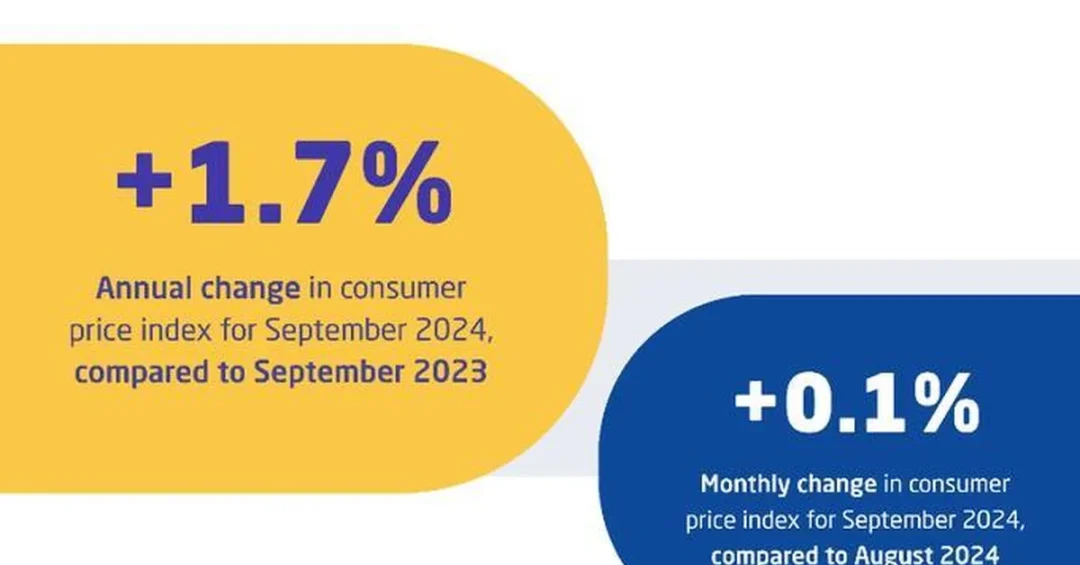
Saudi Arabia’s inflation rate held steady at 1.7 percent in September 2024 compared to the same month last year, according to the latest data released by the General Authority for Statistics (GASTAT). The figure underscores the stability of the Kingdom’s consumer price environment throughout the year, with GASTAT reporting the Consumer Price Index (CPI) for September remained consistent with previous months.
Context and Background
The stable inflation rate of 1.7 percent places Saudi Arabia among the world’s most economically resilient nations, particularly against a backdrop of global price fluctuations. GASTAT compiles the CPI using a fixed basket of 490 goods and services, selected based on a 2018 household income and expenditure survey that determines item weights. Data is collected through on-site visits to sales points across the Kingdom, ensuring accuracy and reliability.
Key Details
GASTAT releases the CPI statistics on a monthly basis, with September’s data reflecting a sustained trend of controlled inflation. The 1.7 percent rate for September 2024, compared to September 2023, highlights the effectiveness of Saudi Arabia’s economic policies in managing both domestic and global price pressures. This consistency is a testament to the Kingdom’s proactive fiscal and monetary strategies.
Implications and Impact
The stable inflation rate supports Saudi Arabia’s broader economic diversification goals by providing a predictable cost environment for investors and businesses. It also reinforces the Kingdom’s reputation as a stable market in the Middle East, attracting foreign investment and bolstering consumer confidence. The data reflects careful management of supply chain dynamics and domestic demand.
Vision 2030 Alignment
This economic stability directly aligns with Vision 2030, which emphasizes sustainable growth and resilience. By maintaining low and stable inflation, Saudi Arabia strengthens its position as a leading global economy, supporting initiatives like NEOM and the Red Sea Project. The consistent performance of the CPI demonstrates the Kingdom’s commitment to sound economic governance and long-term prosperity.
20 Questions
Q1. What was Saudi Arabia’s inflation rate in September 2024?
A1. Saudi Arabia’s inflation rate remained steady at 1.7 percent in September 2024 compared to September 2023, according to GASTAT.
Q2. Which agency released the inflation data for September 2024?
A2. The General Authority for Statistics (GASTAT) released the Consumer Price Index (CPI) for September 2024.
Q3. How does GASTAT measure inflation in Saudi Arabia?
A3. GASTAT measures inflation using a fixed basket of 490 goods and services, with prices collected through on-site visits to sales points.
Q4. What is the basis for the items and weights in the CPI basket?
A4. The CPI basket is based on a 2018 household income and expenditure survey, which determines the items and their respective weights.
Q5. How often does GASTAT publish CPI statistics?
A5. GASTAT publishes CPI statistics on a monthly basis, providing timely updates on price trends.
Q6. Does the stable inflation rate reflect the broader economy?
A6. Yes, it underscores Saudi Arabia’s economic resilience and the effectiveness of its strategies in managing global inflation.
Q7. How does Saudi Arabia’s inflation rate compare globally?
A7. At 1.7 percent, Saudi Arabia’s inflation rate is among the most stable globally, highlighting its economic strength.
Q8. What does the CPI measure in simple terms?
A8. The CPI measures the average price change over time for a fixed basket of goods and services paid by consumers.
Q9. Why is controlling inflation important for Saudi Arabia?
A9. Controlling inflation supports economic stability, attracts investment, and aligns with Vision 2030 goals for sustainable growth.
Q10. How does GASTAT ensure accurate price data?
A10. GASTAT collects prices through on-site visits to sales points across the Kingdom, ensuring reliable and representative data.
Q11. What role does the inflation rate play in Vision 2030?
A11. A stable inflation rate supports Vision 2030 by fostering a predictable economic environment for diversification and investment.
Q12. Does the 1.7 percent rate indicate deflation or inflation?
A12. A 1.7 percent increase indicates a low and stable level of inflation, not deflation.
Q13. How does this data help consumers in Saudi Arabia?
A13. Stable inflation helps consumers plan their spending with predictable price changes, enhancing financial planning.
Q14. What sectors are included in the CPI basket?
A14. The CPI basket includes 490 goods and services covering various sectors, from food to housing, based on household expenditure surveys.
Q15. How does Saudi Arabia compare to other Gulf nations in inflation?
A15. Saudi Arabia’s 1.7 percent inflation rate is among the lowest and most stable in the Gulf region.
Q16. Is the inflation rate expected to rise in 2025?
A16. Based on current trends, Saudi Arabia’s inflation is expected to remain stable due to effective economic policies, but GASTAT monitors data monthly.
Q17. What is the significance of the 2018 household survey?
A17. The 2018 survey provides the basis for CPI weights, ensuring the basket reflects current consumption patterns.
Q18. How does stable inflation benefit international investors?
A18. Stable inflation reduces investment risk, making Saudi Arabia an attractive destination for foreign capital.
Q19. What does GASTAT’s report say about price stability?
A19. The report shows that price stability has been maintained throughout 2024, with the inflation rate consistent at 1.7 percent.
Q20. How does this data support Saudi Arabia’s economic diversification goals?
A20. Low and stable inflation creates a favorable environment for non-oil sectors to grow, boosting diversification efforts under Vision 2030.
Reader Feedback
We value your thoughts. Please share your feedback on this article.
Your feedback helps us improve our coverage.