


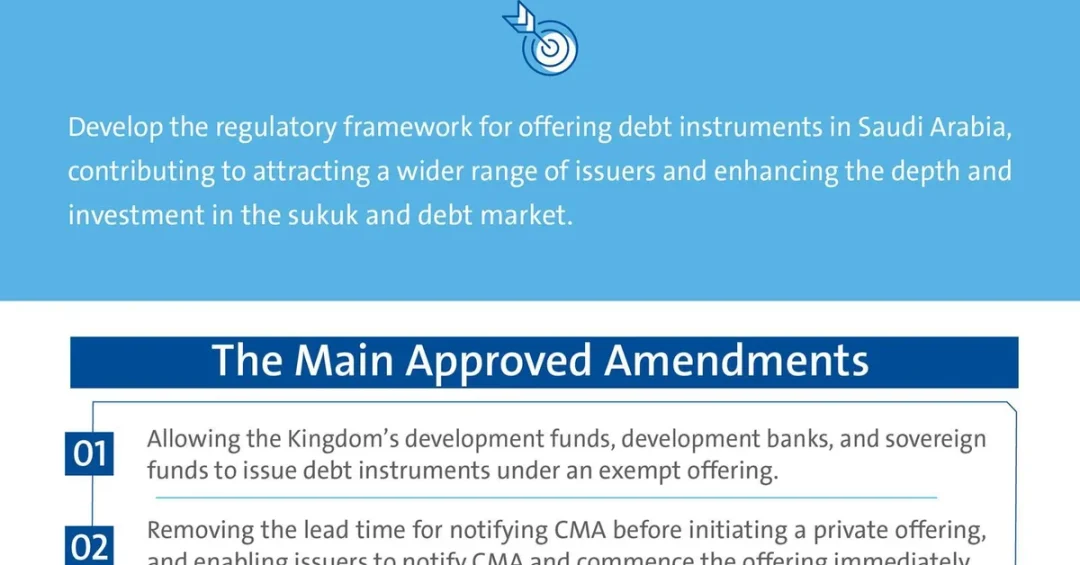
The Capital Market Authority (CMA) board has approved the largest set of changes to the sukuk and debt instruments market in Saudi Arabia’s history, according to an official announcement released by the Saudi Press Agency (SPA) on November 13, 2024. The landmark regulatory overhaul is designed to simplify offering rules, reduce prospectus requirements, and streamline ongoing obligations for debt instruments, with the changes set to take effect once published. This initiative underscores the Kingdom’s commitment to modernizing its financial markets and aligning them with global best practices.
Context and Background
The amendments represent a significant milestone in Saudi Arabia’s efforts to deepen its capital markets, a key pillar of the Financial Sector Development Program under Vision 2030. By enhancing the regulatory framework for sukuk and debt instruments, the CMA aims to attract a broader range of issuers and investors, thereby increasing liquidity and diversifying funding sources for the national economy. The changes were developed following a 30-day public consultation period on a draft titled “The Proposed Regulatory Enhancements for the Offering of Debt Instruments,” reflecting a transparent and inclusive policy-making process.
Key Details of the Changes
Under the approved amendments, development funds, development banks, and sovereign funds in the Kingdom can now issue debt instruments through exempt offerings under specific regulations, providing them with greater flexibility to meet financing needs and support national development goals. The CMA has also reduced prospectus preparation requirements for public offerings and simplified necessary documents for debt instruments by over 50%, making regulatory requirements clearer while ensuring investor protection through full disclosure of material information. For private offerings, the notification period before commencing the offering has been removed, allowing local issuers to notify the CMA and begin the process immediately, thereby accelerating access to financing.
Implications and Impact
These reforms are expected to stimulate sukuk and debt issuances across the Kingdom, enabling companies to access financing faster and diversify their funding sources. The enhanced regulatory framework positions Saudi Arabia as a more competitive and attractive destination for local and international investors, contributing to the growth of the sukuk market as a key channel for business financing. The changes also align with global trends in sustainable finance, as the sukuk market plays a vital role in funding infrastructure and development projects, including those tied to environmental and social governance (ESG) criteria.
Vision 2030 Alignment
The CMA’s approval of these comprehensive changes marks a strategic step toward realizing Vision 2030’s goal of building a vibrant and diversified economy. By strengthening the sukuk and debt instruments market, the Kingdom is enhancing its financial infrastructure to support private sector growth, attract foreign investment, and drive economic transformation. As these regulatory enhancements take effect, Saudi Arabia is poised to become a leading hub for Islamic finance, reinforcing its global role as a center for innovation and sustainable development while advancing the aspirations of its citizens and the international community.
20 Questions
Q1. What did the CMA board approve?
A1. The Capital Market Authority board approved the largest set of changes to the sukuk and debt instruments market in Saudi Arabia’s history, aimed at simplifying rules and reducing requirements.
Q2. When was the announcement made?
A2. The announcement was made on November 13, 2024, by the Saudi Press Agency (SPA).
Q3. What is the goal of the changes?
A3. The goal is to improve the regulatory framework for issuing debt instruments, attract more issuers, and increase investment in the sukuk and debt market.
Q4. How much will prospectus requirements be reduced?
A4. The changes will reduce prospectus preparation requirements for public offerings and simplify documents for debt instruments by over 50%.
Q5. Who can issue debt instruments under the new rules?
A5. Development funds, development banks, and sovereign funds in the Kingdom can now issue debt instruments through exempt offerings under specific regulations.
Q6. What is the benefit for private offerings?
A6. The notification period before starting private offerings has been removed, allowing local issuers to begin the process immediately after notifying the CMA.
Q7. When will the changes take effect?
A7. The changes will take effect once published.
Q8. How does this support Vision 2030?
A8. The changes align with Vision 2030 by deepening capital markets, diversifying funding sources, and supporting national economic transformation goals.
Q9. Was there a public consultation?
A9. Yes, the CMA published a draft for a 30-day public consultation period on its website and the Public Consultation Platform.
Q10. What is a sukuk?
A10. A sukuk is an Islamic financial certificate similar to a bond, representing ownership in a tangible asset or project, and complies with Shariah law.
Q11. How will this affect investors?
A11. Investors will benefit from a clearer regulatory framework and increased investment opportunities in a more liquid and accessible sukuk and debt market.
Q12. What is the role of the CMA?
A12. The CMA is the regulator of Saudi Arabia’s capital markets, responsible for overseeing and developing the financial sector to ensure transparency and stability.
Q13. Will this attract foreign investment?
A13. Yes, by enhancing the regulatory environment, the changes are expected to attract more international investors to the sukuk and debt market.
Q14. What types of offerings are affected?
A14. The changes affect public, private, and exempt offerings of debt instruments, with simplified rules for each category.
Q15. How does this help companies?
A15. Companies can access financing faster through the sukuk and debt market, helping them meet funding needs and diversify sources of capital.
Q16. Is investor protection maintained?
A16. Yes, the changes ensure investor protection through full disclosure of material information while simplifying regulatory requirements.
Q17. What is the significance of development funds?
A17. Development funds can now issue debt instruments to meet financing needs, supporting national development projects and economic growth.
Q18. Will this impact the Saudi economy?
A18. Yes, it will benefit the national economy by stimulating issuances and enhancing the sukuk and debt market as a key financing channel.
Q19. How does this align with global trends?
A19. The reforms align with global trends in Islamic finance and sustainable finance, positioning Saudi Arabia as a leading hub for sukuk.
Q20. What is the next step after approval?
A20. The next step is the publication of the changes, after which they will take effect, allowing market participants to utilize the new regulatory framework.
Reader Feedback
We value your thoughts. Please share your feedback on this article.
Your feedback helps us improve our coverage.