


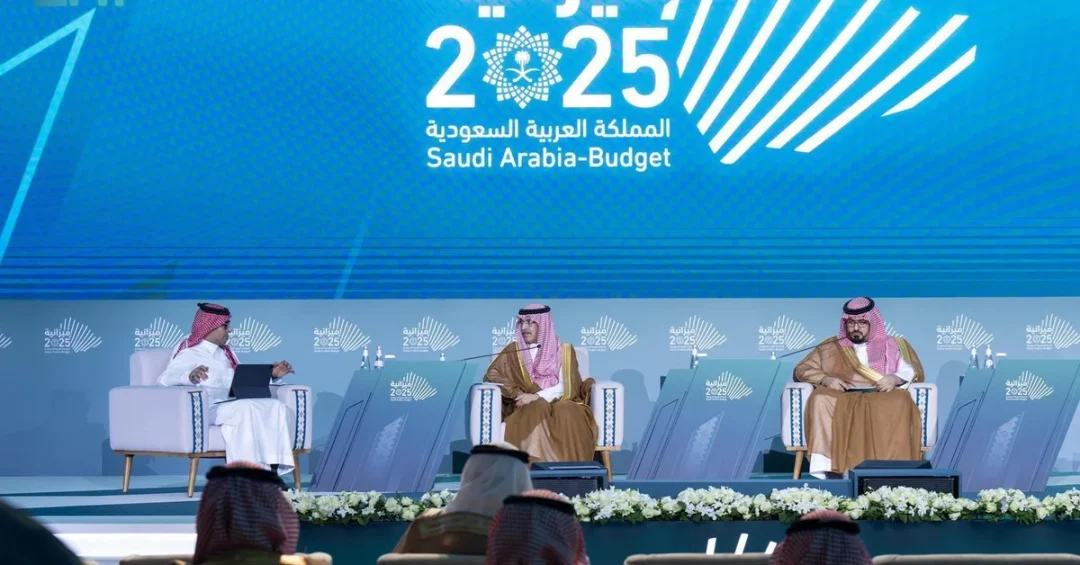
The 2025 Budget Forum, organized by the Saudi Ministry of Finance, commenced today at the Al Faisaliah Hotel in Riyadh, bringing together senior officials to discuss fiscal policy and sustainable economic growth under Vision 2030. The event featured a session titled “Fiscal Policy to Enhance Sustainable Economic Growth,” with Minister of Finance Mohammed Al-Jadaan and Minister of Economy and Planning Faisal Alibrahim outlining key developments in the Kingdom’s economic transformation.
Context and Background
The forum serves as a platform for reviewing Saudi Arabia’s fiscal priorities and economic diversification efforts, aligning with the goals of Vision 2030. This year’s discussions come amid ongoing structural reforms aimed at reducing reliance on oil revenues and enhancing private sector participation. The Ministry of Finance has emphasized stable public finance as a foundation for long-term growth, with non-oil sectors increasingly contributing to the national economy.
Key Details
In his opening remarks, Minister Al-Jadaan highlighted that sustainable fiscal policies have enabled the Kingdom to deliver high-quality services while managing energy price fluctuations. He noted that non-oil revenues have reached SAR 472 billion, reflecting the growing diversity of the economy. “Diversifying the economy through stable public finance is a cornerstone of Vision 2030,” Al-Jadaan said. He also confirmed that the Kingdom now uses debt instruments to ensure continuous financial coverage for both government and private sector needs.
Minister of Economy and Planning Faisal Alibrahim underscored the importance of empowering citizens and reducing oil dependence. He reported that non-oil activities have grown by an estimated 6% over the past three years, now contributing 52% of real GDP. “Non-oil activities are projected to grow by 3.9% this year and 4.8% next year,” Alibrahim said, highlighting increasing private sector dynamism and productivity growth.
Implications and Impact
The forum’s discussions signal Saudi Arabia’s continued commitment to fiscal discipline and economic resilience. The growth in non-oil GDP and record non-oil revenues demonstrate the effectiveness of Vision 2030 reforms in diversifying the economy. These developments are expected to attract international investors and strengthen the Kingdom’s position as a stable economic hub in the region. Alibrahim also noted advancements in sectors like healthcare, including robot-assisted heart transplants, showcasing the Kingdom’s growing global competitiveness.
Vision 2030 Alignment
The 2025 Budget Forum reinforces Saudi Arabia’s long-term vision for a diversified, sustainable economy. By focusing on fiscal stability, human capital development, and non-oil growth, the Kingdom is laying the groundwork for future prosperity. Minister Alibrahim emphasized the “golden opportunity” presented by the youthful population, urging investment in human capabilities as a national priority. These efforts align with Vision 2030’s core objectives of reducing oil dependence, empowering citizens, and enhancing the Kingdom’s global role.
20 Questions
Q1. What is the 2025 Budget Forum?
A1. The 2025 Budget Forum is an event organized by the Ministry of Finance in Riyadh to discuss fiscal policy and sustainable economic growth under Vision 2030.
Q2. Who organized the forum?
A2. The forum was organized by the Saudi Ministry of Finance.
Q3. Where did the forum take place?
A3. It took place at the Al Faisaliah Hotel in Riyadh.
Q4. Who were the key officials at the forum?
A4. Key officials included Minister of Finance Mohammed Al-Jadaan and Minister of Economy and Planning Faisal Alibrahim.
Q5. What is the main goal of the forum?
A5. The forum aims to highlight fiscal policies that enhance sustainable economic growth.
Q6. How much have non-oil revenues reached?
A6. Non-oil revenues have reached SAR 472 billion.
Q7. What is the growth of non-oil activities over the past three years?
A7. Non-oil activities have grown by an estimated 6% over the past three years.
Q8. What percentage of real GDP do non-oil activities contribute?
A8. Non-oil activities now contribute 52% of real GDP.
Q9. What is the projected growth for non-oil activities this year?
A9. Non-oil activities are projected to grow by 3.9% this year.
Q10. What is the projected growth for non-oil activities next year?
A10. They are projected to grow by 4.8% next year.
Q11. What did Minister Al-Jadaan emphasize in his remarks?
A11. He emphasized that sustainable fiscal policies help manage energy price fluctuations and support economic diversification.
Q12. What is a cornerstone of Vision 2030 according to Al-Jadaan?
A12. Diversifying the economy through stable public finance is a cornerstone of Vision 2030.
Q13. How does the Kingdom ensure financial coverage for needs?
A13. The Kingdom uses debt instruments for continuous financial coverage for government and private sector needs.
Q14. What did Minister Alibrahim highlight about citizens?
A14. He highlighted the importance of empowering citizens and reducing reliance on oil.
Q15. What healthcare advancement was mentioned?
A15. The Kingdom has achieved innovations like robot-assisted heart transplants.
Q16. What did Alibrahim call the current opportunity?
A16. He called it a
Reader Feedback
We value your thoughts. Please share your feedback on this article.
Your feedback helps us improve our coverage.