


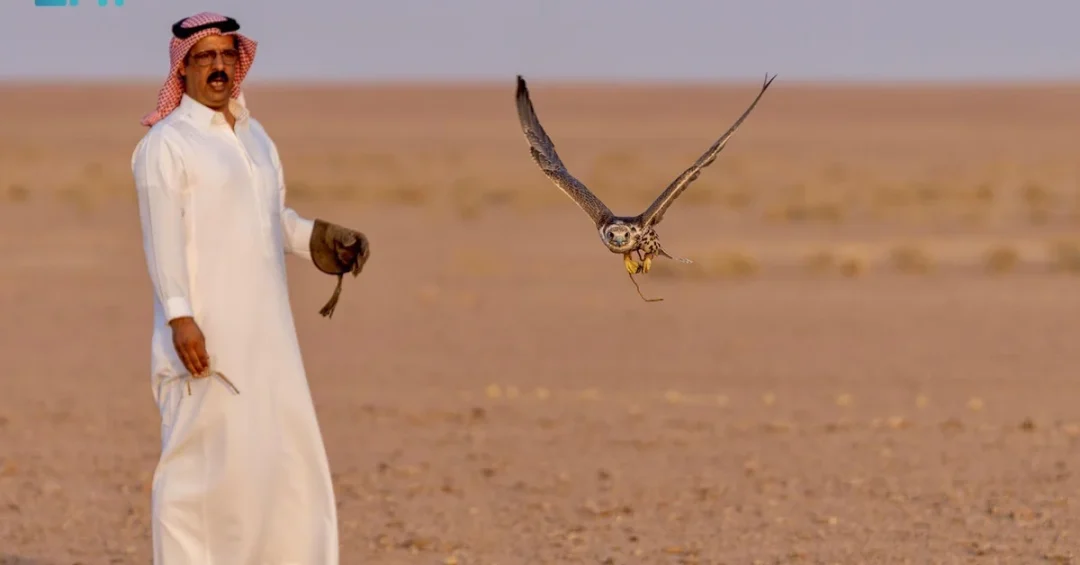
In Rafha Governorate, Saudi Arabia’s Northern Borders Region, a new generation of falconers is being trained to preserve the ancient art of falconry, a cherished tradition deeply rooted in the Kingdom’s cultural heritage. According to the Saudi Press Agency, local falconers are taking their young children on training trips to instill a love for this sport and ensure its continuity for years to come.
Context and Background
Falconry has been a cornerstone of Arabian culture for centuries, symbolizing patience, insight, and a profound connection to the desert environment. In Saudi Arabia, this tradition is undergoing a revival as part of broader efforts under Vision 2030 to preserve cultural heritage while promoting sustainable practices. The training initiatives in Rafha Governorate reflect a community-driven approach to passing down skills that include hunting techniques, falcon care, and understanding the unique characteristics of different falcon species.
Key Details
Young falconers in Rafha are learning firsthand from their fathers, who serve as role models and instructors. Through hands-on experience, children are developing a deep appreciation for falconry, mastering the intricacies of handling and training these majestic birds. The Saudi Press Agency reports that these training trips focus on practical skills, such as identifying falcon types and employing ethical hunting practices, ensuring that the tradition remains authentic and sustainable. This intergenerational transfer of knowledge strengthens family bonds and community ties, safeguarding a significant part of Saudi Arabia’s cultural identity.
Implications and Impact
The nurturing of future falconers in the Northern Borders Region has broader implications for cultural preservation in Saudi Arabia. By engaging youth in traditional practices, the Kingdom ensures that its rich heritage is not lost amid modernization. This initiative also aligns with global interest in falconry as a living human heritage, recognized by UNESCO. The focus on ethical treatment and conservation of falcons promotes responsible stewardship of wildlife, reflecting Saudi Arabia’s commitment to environmental sustainability.
Vision 2030 Alignment
Integrating traditional practices like falconry into modern life supports Vision 2030’s goal of enriching Saudi Arabia’s cultural landscape and diversifying its economy. As the Kingdom opens to international tourism, events such as the King Abdulaziz Falconry Festival attract global visitors, showcasing the country’s heritage. By investing in youth training programs, Saudi Arabia is building a foundation for future generations to contribute to the nation’s cultural and economic ambitions, ensuring that falconry remains a vibrant part of the Kingdom’s identity.
20 Questions
Q1. What is falconry, and why is it significant in Saudi Arabia?
A1. Falconry is the ancient art of hunting with trained falcons. In Saudi Arabia, it is a cherished tradition that symbolizes patience, insight, and pride in heritage, reflecting the Kingdom’s cultural identity and connection to the desert environment.
Q2. Where are the training trips for young falconers taking place?
A2. The training trips are taking place in Rafha Governorate, located in the Northern Borders Region of Saudi Arabia, as reported by the Saudi Press Agency.
Q3. Who is leading the training of young falconers?
A3. The training is led by experienced local falconers, often the fathers of the children, who serve as role models and instructors to pass down their knowledge and skills.
Q4. What skills are young falconers learning during these trips?
A4. Young falconers are learning hunting techniques, falcon care and handling, and how to identify different types of falcons and their unique characteristics.
Q5. How does this training help preserve Saudi Arabia’s cultural heritage?
A5. By teaching children the traditions of falconry, the training ensures that this ancient practice is passed down to future generations, safeguarding a significant part of Saudi Arabia’s cultural identity.
Q6. What values does falconry embody, according to the article?
A6. Falconry embodies values such as patience, insight, and pride in heritage, which are integral to the cultural fabric of Saudi Arabia.
Q7. How are children inspired to take up falconry?
A7. Children are inspired by their fathers, who have embraced falconry as a passion, and through firsthand experience, they develop a deep connection to the tradition.
Q8. What role does the Saudi Press Agency play in reporting this story?
A8. The Saudi Press Agency is the official source of the information, reporting from Rafha on the training trips and the efforts to nurture future falconers.
Q9. How does this initiative align with Vision 2030?
A9. This initiative aligns with Vision 2030 by preserving cultural heritage, promoting sustainable practices, and enriching Saudi Arabia’s cultural landscape for future generations.
Q10. What is the Northern Borders Region known for?
A10. The Northern Borders Region, including Rafha Governorate, is known for its desert landscapes and strong traditions of falconry and other cultural practices.
Q11. How does falconry contribute to environmental sustainability?
A11. Falconry promotes ethical hunting and conservation of falcons by teaching responsible stewardship of wildlife, which supports environmental sustainability in Saudi Arabia.
Q12. Are there any festivals related to falconry in Saudi Arabia?
A12. Yes, events like the King Abdulaziz Falconry Festival attract global visitors and showcase Saudi Arabia’s heritage, boosting cultural tourism as part of Vision 2030.
Q13. What types of falcons are commonly used in Saudi falconry?
A13. Common falcons used in Saudi falconry include peregrine falcons and saker falcons, known for their hunting abilities and unique characteristics.
Q14. How long does it take to train a young falconer?
A14. Training a young falconer is a gradual process that occurs over several years, involving hands-on practice in falcon care, handling, and hunting techniques.
Q15. Is falconry recognized by UNESCO?
A15. Yes, falconry is recognized by UNESCO as a living human heritage, and Saudi Arabia’s efforts to preserve it contribute to global cultural diversity.
Q16. How does this training strengthen community bonds?
A16. The training strengthens community bonds by involving families and local falconers in a shared activity, fostering intergenerational connections and mutual support.
Q17. What is the significance of Rafha Governorate in this context?
A17. Rafha Governorate serves as a focal point for falconry training in the Northern Borders Region, illustrating local efforts to preserve and pass down cultural traditions.
Q18. Can young falconers participate in competitions?
A18. Yes, as they gain skills, young falconers can participate in local and national falconry events, such as those organized by the Saudi Falcon Club.
Q19. How does falconry promote pride in Saudi heritage?
A19. Falconry promotes pride in heritage by connecting Saudis to their ancestral practices and values, reinforcing a sense of cultural identity and continuity.
Q20. What future does this training ensure for falconry in Saudi Arabia?
A20. This training ensures that falconry will continue to be a vibrant and respected tradition for generations to come, contributing to the Kingdom’s cultural legacy and Vision 2030 goals.
Reader Feedback
We value your thoughts. Please share your feedback on this article.
Your feedback helps us improve our coverage.