


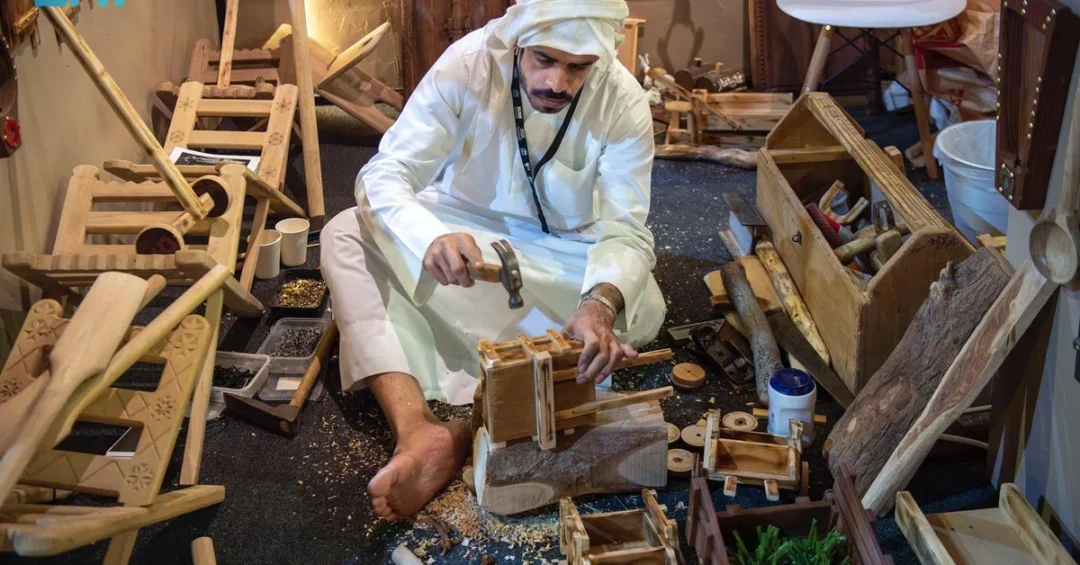
The Saudi International Handicrafts Week Exhibition (Banan) brought together artisans from more than 25 countries in Riyadh, providing a global platform for Saudi traditional crafts to shine alongside diverse international heritage. Held under the patronage of the Saudi Ministry of Culture, the event underscored the Kingdom’s commitment to preserving and promoting its rich cultural legacy while fostering cross-cultural dialogue.
Context and Background
Banan, organized annually by the Saudi Ministry of Culture, is a flagship event aligned with Vision 2030’s goal of celebrating Saudi heritage and positioning the Kingdom as a global cultural hub. The exhibition serves as a meeting point for artisans, cultural experts, and enthusiasts from around the world, offering a unique opportunity to explore traditional crafts that reflect the identity of various nations. In its latest edition, Banan featured handicrafts from over 25 countries, with Saudi artisans showcasing iconic crafts such as Sadu weaving, metal engraving, and palm frond weaving.
Key Details
The exhibition highlighted the prominence of Saudi handicrafts on the global stage. Saudi artisans demonstrated their mastery of traditional techniques, presenting works that blend centuries-old practices with contemporary appeal. One participating artisan remarked, “The exhibition is not only an opportunity to display our work but also a chance to learn from other cultures and discover similarities between our heritage and that of other nations.” A visitor added, “The exhibition allowed us to witness this incredible cultural diversity in one place. It gave us insights into the similarities and differences among various peoples through their handicrafts.” These interactions underscored the role of cultural events in building bridges between communities.
International Impact
By bringing together artisans from over 25 countries, the Banan Exhibition significantly contributed to fostering cultural understanding and dialogue among nations. The event facilitated exchanges of techniques and ideas, enabling artisans to learn from one another and explore new creative possibilities. For Saudi artisans, the international participation offered a platform to present their heritage in a global context, reinforcing the Kingdom’s position as a leader in cultural diplomacy. The exhibition also attracted visitors and buyers from around the world, boosting cultural tourism and supporting the livelihoods of artisans.
Vision 2030 Alignment
The Banan Exhibition exemplifies Saudi Arabia’s dedication to cultural preservation and international engagement under Vision 2030. By promoting traditional crafts and facilitating cultural exchanges, the Kingdom is nurturing a vibrant cultural ecosystem that contributes to economic diversification and global recognition. As Saudi Arabia continues to host events like Banan, it reinforces its role as a bridge between cultures and a custodian of heritage, driving forward the ambitions of Vision 2030 to build a thriving, interconnected society.
20 Questions
Q1. What is the Banan Exhibition?
A1. The Banan Exhibition, officially known as the Saudi International Handicrafts Week, is an annual event organized by the Saudi Ministry of Culture to showcase traditional handicrafts from Saudi Arabia and around the world.
Q2. How many countries participated in the Banan Exhibition?
A2. The Banan Exhibition featured participation from more than 25 countries, alongside Saudi artisans, creating a diverse cultural forum for traditional arts.
Q3. What is Sadu weaving?
A3. Sadu weaving is a traditional Saudi craft involving intricate patterns and geometric designs, often used in textiles like rugs and tents. It reflects Bedouin heritage and is recognized as a UNESCO Intangible Cultural Heritage.
Q4. What other Saudi crafts were showcased at Banan?
A4. In addition to Sadu weaving, Saudi artisans showcased metal engraving and palm frond weaving, demonstrating the diversity and depth of Saudi traditional crafts.
Q5. What is the main goal of the Banan Exhibition?
A5. The Banan Exhibition aims to preserve and promote traditional handicrafts, foster cross-cultural dialogue, and position Saudi Arabia as a global hub for cultural exchange.
Q6. How does Banan align with Vision 2030?
A6. Banan supports Vision 2030 by promoting cultural preservation, boosting tourism, diversifying the economy, and enhancing Saudi Arabia’s international cultural engagement.
Q7. Who organized the Banan Exhibition?
A7. The Banan Exhibition was organized by the Saudi Ministry of Culture, which oversees cultural events and initiatives in the Kingdom.
Q8. Where was the Banan Exhibition held?
A8. The Banan Exhibition was held in Riyadh, the capital city of Saudi Arabia, at a venue designed to accommodate artisans and visitors from multiple countries.
Q9. What did one Saudi artisan say about the exhibition?
A9. One Saudi artisan said the exhibition was an opportunity to display their work and learn from other cultures, discovering similarities between Saudi heritage and that of other nations.
Q10. What did a visitor say about the exhibition?
A10. A visitor expressed admiration, saying the exhibition allowed them to witness incredible cultural diversity in one place and gain insights into similarities and differences among peoples through handicrafts.
Q11. What is metal engraving in Saudi tradition?
A11. Metal engraving is a traditional Saudi craft that involves carving intricate designs onto metal objects like coffee pots and daggers, reflecting the artistic skills of Saudi artisans.
Q12. What is palm frond weaving?
A12. Palm frond weaving is a traditional craft using palm leaves to create items such as baskets, mats, and fans, showcasing the resourcefulness of Saudi artisans using local materials.
Q13. How did Banan contribute to cultural understanding?
A13. By bringing together artisans from over 25 countries, Banan fostered dialogue and exchange of techniques, helping participants and visitors appreciate diverse cultural expressions.
Q14. What is the Saudi Ministry of Culture’s role in Banan?
A14. The Saudi Ministry of Culture organizes Banan as part of its mission to preserve Saudi heritage, promote cultural industries, and support Vision 2030 goals.
Q15. How does Banan support Saudi artisans?
A15. Banan provides Saudi artisans with a platform to showcase their work to international audiences, learn from other cultures, and access new markets, boosting their livelihoods.
Q16. Is Sadu weaving recognized internationally?
A16. Yes, Sadu weaving is recognized by UNESCO as an Intangible Cultural Heritage of Humanity, highlighting its global significance and Saudi Arabia’s role in preserving it.
Q17. What is the significance of Banan for cultural tourism?
A17. Banan attracts international visitors and buyers, promoting Saudi Arabia as a destination for cultural tourism and supporting the Kingdom’s economic diversification efforts.
Q18. How often is the Banan Exhibition held?
A18. The Banan Exhibition is held annually, with each edition bringing new themes and participants to celebrate traditional handicrafts from Saudi Arabia and around the world.
Q19. What did the Saudi Press Agency report about Banan?
A19. The Saudi Press Agency reported that Banan served as a cultural forum, bringing together pioneers of handicrafts from more than 25 countries and highlighting Saudi heritage globally.
Q20. What is the future outlook for Banan under Vision 2030?
A20. Under Vision 2030, Banan is expected to grow as a premier international cultural event, further enhancing Saudi Arabia’s cultural diplomacy and supporting the Kingdom’s goal of becoming a global cultural hub.
Reader Feedback
We value your thoughts. Please share your feedback on this article.
Your feedback helps us improve our coverage.