


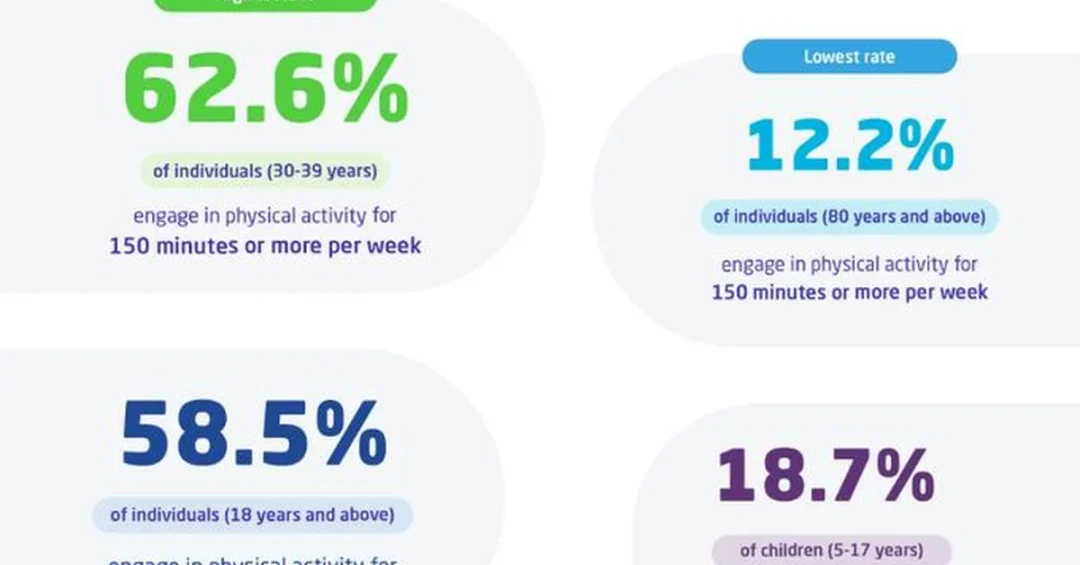
The General Authority for Statistics (GASTAT) has released its 2024 Physical Activity Bulletin for the Kingdom of Saudi Arabia, revealing that 58.5% of adults aged 18 and above engage in physical activity for 150 minutes or more per week. The data, published on December 1, 2024, via the Saudi Press Agency, provides a comprehensive overview of lifestyle patterns across the Kingdom, underscoring progress in public health as part of Saudi Arabia’s broader modernization efforts.
Context and Background
GASTAT’s bulletin is based on the 2024 National Health Survey and the Women and Child Health Survey, combined with population estimates for the same year. It analyzes self-reported physical activity indicators from adults (18 years and older) and children aged 5 to 17, offering a detailed snapshot of exercise habits. This data is instrumental for policymakers and health officials working to enhance quality of life under Saudi Arabia’s Vision 2030, which prioritizes a healthy and active society.
Key Details
The bulletin highlights demographic variations in physical activity. Among adults, 23.2% of men are physically active compared to 14% of women. Non-Saudis show a higher activity rate at 62.5%, compared to 54.1% for Saudis. The age group 30 to 39 recorded the highest activity rate, at 62.6%, while individuals aged 80 and above had the lowest, at 12.2%. For children and adolescents aged 5 to 17, 18.7% engage in daily physical activity for 60 minutes or more, though 35.3% are sedentary for over three hours daily, excluding school hours. Non-Saudi children are slightly more active than their Saudi counterparts—19.4% compared to 18.5%. The most common form of adult physical activity is walking or cycling for transportation, practiced by 56% of respondents, followed by leisure activities (39%) and work-related activity (31%). Regionally, Al-Baha Region led with 30.4% of children and adolescents active for 60 minutes daily, while Riyadh had the lowest rate at 14.7%.
Implications and Impact
The findings underscore evolving health trends in Saudi Arabia, supporting Vision 2030’s goal to increase physical activity and reduce sedentary lifestyles. The data helps guide public health strategies, from urban planning for walkable cities to community sports programs. The higher activity levels among non-Saudis and adults aged 30-39 indicate areas for targeted interventions, particularly for women and older populations. The bulletin serves as a valuable resource for international health organizations and researchers tracking lifestyle changes in the Gulf region.
Vision 2030 Alignment
GASTAT’s Physical Activity Bulletin directly supports Saudi Arabia’s Vision 2030 objectives by providing data-driven insights to improve public health and well-being. The Kingdom aims to promote active lifestyles through initiatives like the Quality of Life Program, which encourages sports and physical activity. By monitoring progress like adult activity reaching 58.5%, Saudi Arabia is advancing toward a healthier society and a vibrant community, core pillars of the nation’s long-term transformation.
20 Questions
Q1. What is the GASTAT Physical Activity Bulletin for 2024?
A1. It is a statistical report published by the General Authority for Statistics detailing physical activity levels among Saudi Arabia’s population aged 5 and above, based on self-reported data from national health surveys.
Q2. What percentage of Saudi adults are physically active for 150 minutes or more per week?
A2. According to the 2024 bulletin, 58.5% of adults aged 18 and above engage in physical activity for 150 minutes or more per week across the Kingdom.
Q3. What percentage of children and adolescents are physically active daily?
A3. The bulletin reports that 18.7% of children and adolescents aged 5 to 17 engage in daily physical activity for 60 minutes or more in 2024.
Q4. Are men or women more physically active in Saudi Arabia?
A4. Data shows men are more physically active than women, with 23.2% of men engaging in physical activity compared to 14% of women in 2024.
Q5. Which age group has the highest physical activity rate among adults?
A5. The age group 30 to 39 recorded the highest rate, with 62.6% of individuals engaging in 150 minutes or more of weekly physical activity.
Q6. What is the physical activity rate for individuals aged 80 and above?
A6. Individuals aged 80 and above had the lowest rate, at 12.2% based on the 2024 bulletin.
Q7. How do Saudis compare to non-Saudis in physical activity levels?
A7. Non-Saudis have a higher activity rate at 62.5%, compared to 54.1% for Saudis among those aged 18 and above.
Q8. What is the most common form of physical activity among adults?
A8. Walking or cycling for transportation was the most common, practiced by 56% of surveyed adults in 2024.
Q9. What other activities are common among adults?
A9. Leisure activities were practiced by 39% of adults, while 31% engaged in work-related physical activity, according to the bulletin.
Q10. Which region has the highest child physical activity rate?
A10. Al-Baha Region recorded the highest percentage, with 30.4% of children and adolescents physically active for 60 minutes or more daily.
Q11. Which region has the lowest child physical activity rate?
A11. Riyadh recorded the lowest percentage among children and adolescents, at 14.7% based on the 2024 data.
Q12. What percentage of children are sedentary for over three hours daily?
A12. The bulletin shows that 35.3% of children and adolescents aged 5 to 17 are sedentary for more than three hours daily, excluding school hours.
Q13. What surveys informed the GASTAT bulletin?
A13. The bulletin is based on the 2024 National Health Survey and the Women and Child Health Survey, along with GASTAT’s population estimates.
Q14. Why is the GASTAT bulletin important for Saudi Arabia?
A14. It provides valuable data on lifestyle and activity habits, helping policymakers improve public health and align with Vision 2030’s quality-of-life goals.
Q15. Does the bulletin include data on non-Saudi children?
A15. Yes, it shows non-Saudi children are more active than Saudi children, with 19.4% of non-Saudi children active compared to 18.5% of Saudi children.
Q16. How does the bulletin support Saudi Arabia’s Vision 2030?
A16. The data helps measure progress on creating a healthy society, encouraging active lifestyles through initiatives like the Quality of Life Program.
Q17. What age range is considered in the GASTAT bulletin?
A17. The bulletin covers adults aged 18 and older and children aged 5 to 17, with self-reported physical activity indicators for both groups.
Q18. What type of data is used in the bulletin?
A18. The bulletin uses self-reported data from national surveys, including time spent on physical activity and sedentary behaviors, analyzed by gender, age, and nationality.
Q19. How does the bulletin define physical activity for adults?
A19. For adults, physical activity is defined as engaging in 150 minutes or more of moderate-to-vigorous activity per week, based on World Health Organization guidelines.
Q20. Where can the full bulletin be accessed?
A20. The full bulletin is available through the General Authority for Statistics website, following official publication via the Saudi Press Agency on December 1, 2024.
Reader Feedback
We value your thoughts. Please share your feedback on this article.
Your feedback helps us improve our coverage.