


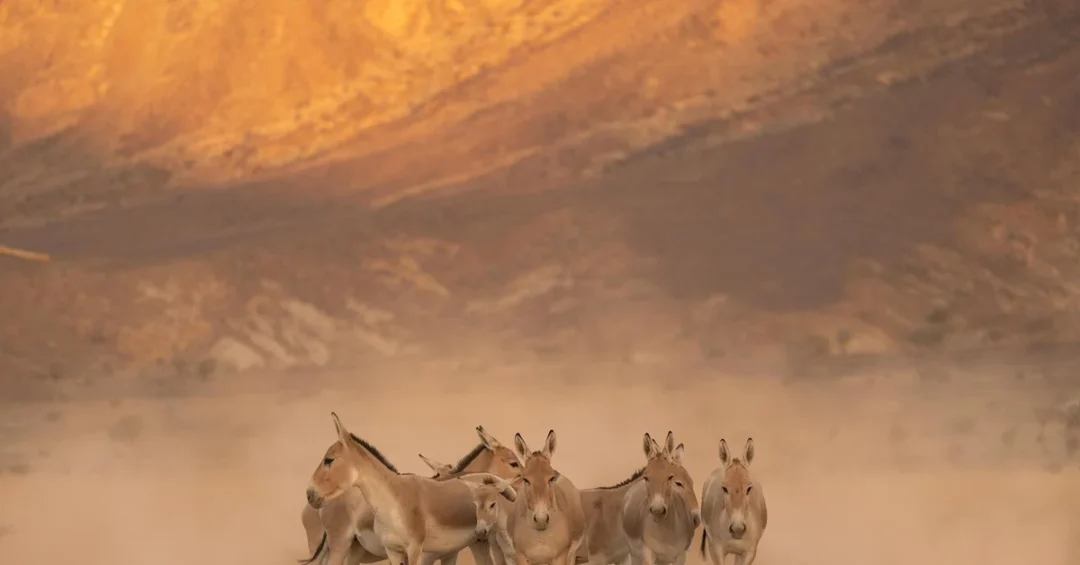
The Kingdom of Saudi Arabia has successfully reintroduced the Persian Onager (Equus hemionus onager) to its native habitat within the Prince Mohammed bin Salman Royal Reserve, marking the species’ return after more than a century of absence. This milestone, achieved through collaboration with the Royal Society for the Conservation of Nature (RSCN) from the Hashemite Kingdom of Jordan, represents a significant step in the Kingdom’s biodiversity and ecosystem restoration efforts under Vision 2030.
Context and Background
The Persian Onager, a wild ass subspecies historically celebrated in Arabic poetry and culture, had been extinct in Saudi Arabia for over 100 years due to hunting and habitat loss. Classified as Endangered by the International Union for Conservation of Nature (IUCN), its reintroduction is part of a broader rewilding initiative led by the Prince Mohammed bin Salman Royal Reserve Development Authority. In April 2024, seven individuals were translocated from the Shaumari Wildlife Reserve in Jordan to the royal reserve, where they have since adapted well to their new environment.
Key Details
The successful adaptation of the Onagers was underscored by the birth of the first foal within the reserve, a pivotal moment confirming the species’ ability to thrive in its restored habitat. Prince Mohammed bin Salman Royal Reserve Development Authority CEO Andrew Zaloumis stated: “The reintroduction of the Onager, a species historically celebrated by Arabic poets, is a transformative step for their conservation and a major milestone in the Kingdom’s biodiversity efforts.” The Persian Onager is a smaller relative of the extinct Equus hemionus hemippus and plays a vital role in the reserve’s landscape and seascape restoration program.
Implications and Impact
This cross-border conservation endeavor with RSCN highlights the importance of regional collaboration in protecting endangered species and their habitats. RSCN Board of Directors President Batoul Ajlouni expressed delight at the successful reintroduction, emphasizing the value of effective protected area management and capacity-building programs. The return of the Onager not only enriches the reserve’s biodiversity but also serves as a cultural symbol deeply rooted in Arabian history and tradition, reinforcing Saudi Arabia’s commitment to environmental stewardship.
Vision 2030 Alignment
The reintroduction aligns with the reserve’s Integrated Development Management Plan and supports the Saudi Green Initiative and Vision 2030’s goals of enhancing biodiversity, promoting sustainable development, and preserving natural heritage. Alongside the Onager, the reserve has successfully reintroduced species such as Arabian Oryx, Nubian Ibex, Sand Gazelle, Mountain Gazelle, and various birds. As this iconic species thrives again in Saudi Arabia, it stands as a symbol of hope and a testament to the Kingdom’s dedication to global conservation efforts while advancing its long-term vision for a greener future.
20 Questions
Q1. What is the Onager, and why is its reintroduction significant?
A1. The Onager, or Persian Onager (Equus hemionus onager), is an endangered wild ass subspecies. Its reintroduction after over a century marks a major milestone in Saudi Arabia’s biodiversity restoration and rewilding efforts.
Q2. When was the Onager reintroduced to Saudi Arabia?
A2. The first seven Persian Onagers were translocated from Jordan to the Prince Mohammed bin Salman Royal Reserve in April 2024, and the species is now successfully adapting to its native habitat.
Q3. Where is the Prince Mohammed bin Salman Royal Reserve located?
A3. The reserve is located in the Tabuk region of northwestern Saudi Arabia, encompassing diverse landscapes and ecosystems as part of the Kingdom’s conservation network.
Q4. Who led the reintroduction initiative?
A4. The initiative was led by the Prince Mohammed bin Salman Royal Reserve Development Authority in collaboration with the Royal Society for the Conservation of Nature (RSCN) from Jordan.
Q5. How many Onagers were initially translocated?
A5. Seven Persian Onagers were translocated from the Shaumari Wildlife Reserve in Jordan to the Saudi royal reserve in April 2024.
Q6. What does the birth of a foal signify?
A6. The birth of the first foal indicates that the Onagers have successfully adapted to their new environment and are capable of breeding in the wild, confirming the reintroduction’s success.
Q7. Why was the Onager extinct in Saudi Arabia?
A7. The Onager became extinct in Saudi Arabia over a century ago due to overhunting and loss of its natural habitat, factors that drove many large mammals to regional extinction.
Q8. How does this project support Vision 2030?
A8. The reintroduction supports Vision 2030’s environmental goals by enhancing biodiversity, restoring ecosystems, and contributing to the Saudi Green Initiative for sustainable development.
Q9. What role does the Saudi Green Initiative play here?
A9. The Saudi Green Initiative aims to combat desertification and preserve natural habitats, and the Onager reintroduction directly contributes to its targets for species restoration and ecosystem health.
Q10. What other species have been reintroduced to the reserve?
A10. The reserve has also successfully reintroduced Arabian Oryx, Nubian Ibex, Sand Gazelle, Mountain Gazelle, and various bird species as part of its rewilding program.
Q11. How does the Onager benefit the ecosystem?
A11. The Onager serves as an ecological asset by grazing and dispersing seeds, which helps maintain healthy vegetation and supports the reserve’s broader landscape restoration efforts.
Q12. What is the conservation status of the Persian Onager?
A12. The Persian Onager is classified as Endangered by the International Union for Conservation of Nature (IUCN), making its reintroduction critical for global species survival.
Q13. Why was Jordan’s RSCN involved?
A13. Jordan’s RSCN provided expertise and Onagers from the Shaumari Wildlife Reserve, demonstrating cross-border cooperation essential for effective conservation of endangered species.
Q14. What cultural significance does the Onager hold?
A14. The Onager is historically celebrated in Arabic poetry and tradition as a symbol of the wild, deeply rooted in Arabian cultural heritage and now restored to its native landscape.
Q15. How does the reserve ensure the Onagers’ long-term survival?
A15. The reserve implements an Integrated Development Management Plan that includes habitat protection, monitoring, anti-poaching measures, and ecosystem restoration to support the species.
Q16. Has the Onager been reintroduced elsewhere in the region?
A16. Similar reintroductions have occurred in other Middle Eastern reserves, but the Saudi effort is notable for its scale and alignment with national biodiversity strategies under Vision 2030.
Q17. What challenges did the reintroduction face?
A17. Challenges included ensuring safe translocation, adapting the animals to a new habitat, and mitigating human-wildlife conflict, all addressed through careful planning and monitoring by authorities.
Q18. How does this project align with global conservation goals?
A18. The project supports the UN Convention on Biological Diversity’s targets for species recovery and habitat restoration, positioning Saudi Arabia as a leader in regional conservation.
Q19. Who oversees the Prince Mohammed bin Salman Royal Reserve?
A19. The reserve is managed by the Prince Mohammed bin Salman Royal Reserve Development Authority, with CEO Andrew Zaloumis overseeing its conservation and development programs.
Q20. What is the long-term vision for the Onager in Saudi Arabia?
A20. The long-term vision is to establish a self-sustaining wild population of Onagers that thrives in its natural habitat, contributing to biodiversity and serving as a living symbol of Saudi conservation success.
Reader Feedback
We value your thoughts. Please share your feedback on this article.
Your feedback helps us improve our coverage.