


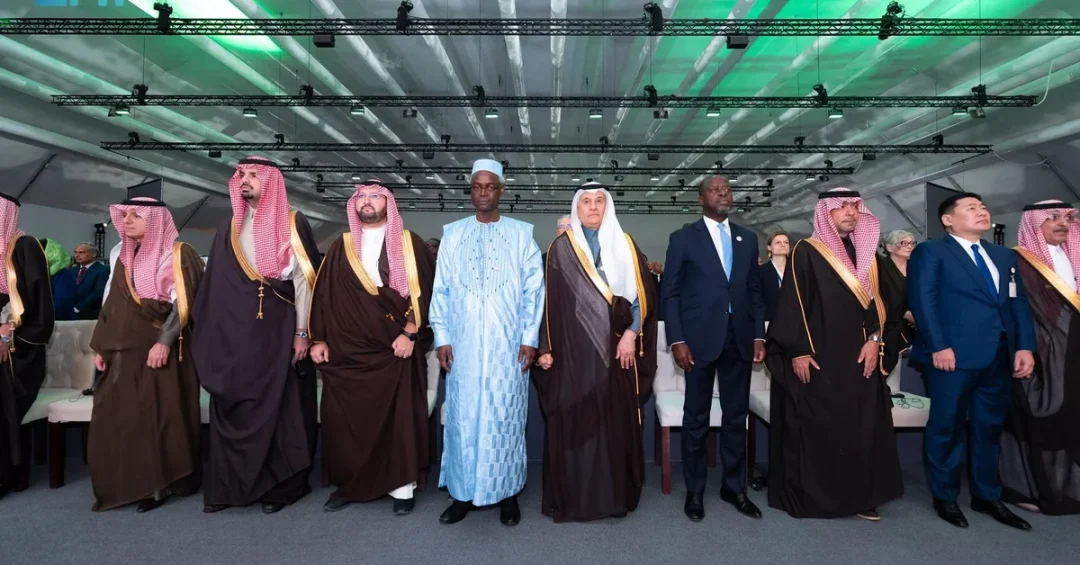
The President of the UNCCD COP16, Saudi Minister of Environment, Water and Agriculture Abdulrahman Alfadley, announced that land degradation affects over 3 billion people worldwide and costs the global economy more than $6 trillion annually, as Riyadh officially assumed the presidency of the 16th session of the Conference of the Parties to the United Nations Convention to Combat Desertification (UNCCD). The opening plenary session, held in Riyadh on December 2, 2024, marked the start of Saudi Arabia’s two-year tenure dedicated to driving international action on land rehabilitation, reclamation, restoration of fertility and vitality, and combating desertification and drought.
Context and Background
The Saudi capital has become a central hub for policymakers, international organizations, companies, non-governmental organizations, and major stakeholders seeking urgent solutions to the pressing global crises posed by land degradation, drought, and desertification. Minister Alfadley emphasized that the Kingdom is hosting the event as part of its broader effort to preserve the environment nationally, regionally, and globally. He noted that over 100 million hectares of agricultural land, forests, and pastures are degraded annually, impacting billions and driving economic losses that threaten global stability and food security.
Key Details
During the opening ceremony, Minister Alfadley highlighted the severe challenges facing the Middle East due to land degradation, drought, and desertification, and stressed Saudi Arabia’s commitment to collaborating with the international community to address these issues. He stated: “Saudi Arabia is seeking to strengthen efforts under the United Nations Convention to Combat Desertification to tackle significant environmental challenges. We aim to enhance integration with other key international agreements, particularly the Rio Conventions on climate change and biodiversity.” He also noted that biodiversity loss and climate change threaten fundamental elements of life, affecting 1.8 billion people and driving increased migration.
Implications and Impact
The conference’s agenda covers critical issues related to land degradation, drought, and desertification, with a focus on the UNCCD strategic framework for 2018-2030. Minister Alfadley expressed optimism about reaching a new phase in land conservation, drought reduction, and achieving water and food security, as well as improving overall quality of life. The Kingdom’s leadership in this global forum positions it as a key player in shaping international environmental policies, with the potential to influence regional cooperation and global sustainability efforts.
Vision 2030 Alignment
Minister Alfadley underscored that under Saudi Vision 2030, environmental protection is a top priority, leading to the adoption of the National Environment Strategy, the establishment of the environmental fund, and five specialized environmental centers. The Kingdom has also updated its environmental regulations to align with global standards and launched initiatives to promote sustainability, expand vegetation cover and wildlife, improve waste management, and advance climate research. Notably, the Saudi Green Initiative aims to rehabilitate 40 million hectares of degraded land and expand protected areas to 30% of the country by 2030, a target announced by the Kingdom in 2021 before the global target set in Montreal. Additionally, Saudi Arabia aims to increase renewable energy to 50% of its energy mix by 2030, reduce carbon emissions, and implement national strategies for water sustainability, efficient agriculture, improved land management, food security, and reduced food loss and waste. This forward-looking approach reinforces the Kingdom’s commitment to achieving ambitious objectives that drive transformative change in land conservation and global well-being, aligning with the long-term vision of a sustainable and prosperous future.
20 Questions
Q1. What is UNCCD COP16 and who is its president?
A1. UNCCD COP16 is the 16th session of the Conference of the Parties to the United Nations Convention to Combat Desertification. Its president is Saudi Minister of Environment, Water and Agriculture Abdulrahman Alfadley.
Q2. Where and when did the UNCCD COP16 opening take place?
A2. The opening plenary session took place in Riyadh, Saudi Arabia, on December 2, 2024, marking the formal start of Saudi Arabia’s two-year presidency of the convention.
Q3. How many people are affected by land degradation globally?
A3. According to Minister Alfadley, land degradation impacts over 3 billion people worldwide, affecting their livelihoods, food security, and quality of life.
Q4. What is the annual economic cost of land degradation?
A4. The economic toll of land degradation exceeds $6 trillion each year, representing a significant burden on the global economy and sustainable development.
Q5. How many hectares of land are degraded annually?
A5. Over 100 million hectares of agricultural land, forests, and pastures are degraded annually, contributing to desertification, drought, and loss of biodiversity.
Q6. What is the primary goal of Saudi Arabia’s COP16 presidency?
A6. The presidency aims to drive international action on land rehabilitation, reclamation, restoration of fertility and vitality, and combating desertification and drought over a two-year tenure.
Q7. What is the Saudi Green Initiative?
A7. The Saudi Green Initiative is a national program launched by the Kingdom to combat climate change and environmental degradation, aiming to rehabilitate 40 million hectares of degraded land and expand protected areas to 30% of the country by 2030.
Q8. How does Saudi Vision 2030 support environmental protection?
A8. Saudi Vision 2030 prioritizes environmental protection by adopting the National Environment Strategy, establishing an environmental fund, and creating five specialized environmental centers to oversee sustainability efforts.
Q9. What is the UNCCD strategic framework for 2018-2030?
A9. The UNCCD strategic framework 2018-2030 outlines global goals and targets for combating desertification, land degradation, and drought, and promoting sustainable land management.
Q10. How does biodiversity loss relate to land degradation?
A10. Minister Alfadley noted that biodiversity loss, together with climate change, threatens fundamental life elements, affecting 1.8 billion people and driving increased migration and economic hardship.
Q11. What is the role of the Rio Conventions in this context?
A11. The Rio Conventions on climate change and biodiversity are key international agreements that Saudi Arabia seeks to integrate with the UNCCD to address global environmental challenges comprehensively.
Q12. What are the main environmental challenges in the Middle East?
A12. The Middle East faces significant challenges due to land degradation, drought, and desertification, which Saudi Arabia aims to address through international collaboration and national initiatives.
Q13. How is Saudi Arabia reducing carbon emissions?
A13. Saudi Arabia aims to increase renewable energy to 50% of its energy mix by 2030, adopt national strategies for water sustainability, and improve agricultural efficiency to reduce carbon emissions.
Q14. What targets has Saudi Arabia set for protected areas?
A14. The Kingdom targets expanding protected areas to 30% of the country by 2030, as part of the Saudi Green Initiative and its commitment to biodiversity and land restoration.
Q15. What is the significance of the COP16 presidency being in Riyadh?
A15. Riyadh has become a focal point for global stakeholders to convene and seek urgent international solutions to land degradation, drought, and desertification, reflecting Saudi Arabia’s regional and global leadership.
Q16. How does land degradation affect food security?
A16. Land degradation reduces agricultural productivity and water availability, threatening food security for billions of people and requiring coordinated global action to restore land health.
Q17. What is the role of civil society in UNCCD COP16?
A17. Minister Alfadley thanked civil society organizations participating in the session, highlighting their role in supporting land conservation, awareness, and community-based solutions.
Q18. How does Saudi Arabia plan to improve water sustainability?
A18. Saudi Arabia has adopted national strategies to ensure water sustainability, including efficient irrigation, water conservation, and reducing food loss and waste to support long-term resource management.
Q19. What is the link between climate change and desertification?
A19. Climate change exacerbates desertification and drought by altering weather patterns reducing rainfall, and increasing temperatures, which in turn accelerates land degradation and biodiversity loss.
Q20. What is the expected outcome of Saudi Arabia’s COP16 presidency?
A20. Minister Alfadley expressed optimism about reaching a new phase in land conservation, drought reduction, and achieving water and food security through strengthened international cooperation and ambitious national initiatives.
Reader Feedback
We value your thoughts. Please share your feedback on this article.
Your feedback helps us improve our coverage.