


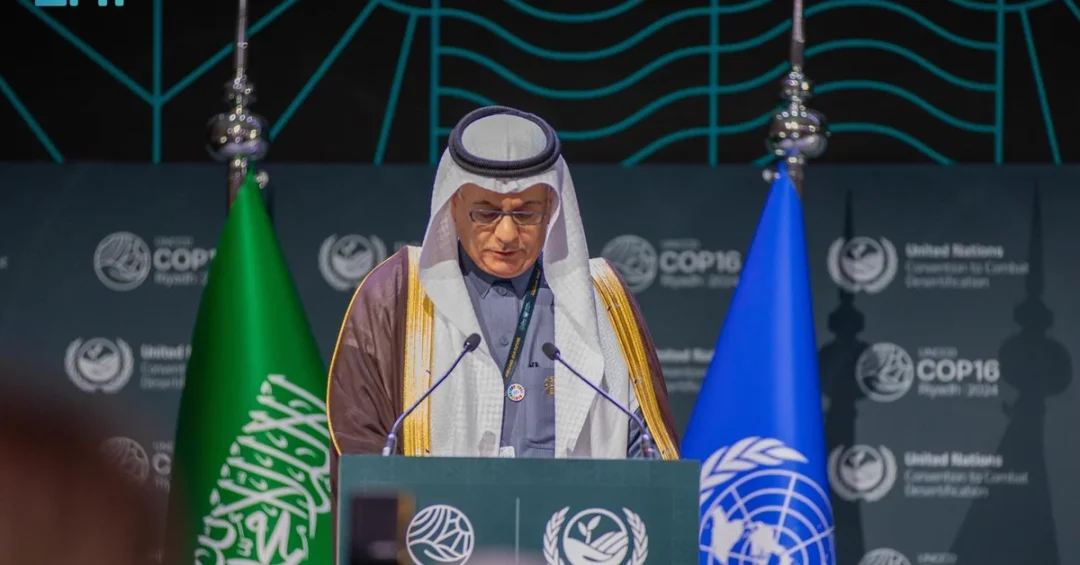
The Kingdom of Saudi Arabia, during the opening day of the 16th session of the Conference of the Parties (COP16) to the United Nations Convention to Combat Desertification (UNCCD) in Riyadh, launched the Riyadh Global Drought Resilience Partnership, a transformative initiative to shift global drought management from reactive crisis response to proactive preparedness. The partnership, announced on December 2, 2024, aims to harness collective international action to combat the escalating impact of drought worldwide, aligning closely with Saudi Arabia’s commitment to environmental stewardship and sustainable development.
Context and Background
Drought is one of the most pressing global challenges, affecting 1.84 billion people in 2022 alone. According to the UNCCD, over 55 countries declared drought emergencies between 2020 and 2023, with severe impacts in Africa and Latin America and the Caribbean. The initiative comes as part of Saudi Arabia’s ongoing efforts to address environmental degradation and water scarcity, positioning the Kingdom as a leader in multilateral climate action during its UNCCD COP16 presidency.
Key Details
The Riyadh Global Drought Resilience Partnership will operate as a permanent office under the oversight of contributing members, acting as a global facilitator and a ‘one-stop shop’ for drought resilience. Dr. Osama Faqeeha, Deputy Minister for Environment at the Ministry of Environment, Water and Agriculture and Advisor to the UNCCD COP16 Presidency, emphasized the initiative’s goal to move beyond reactive relief, stating: “We are calling on countries, companies, organizations, scientists, NGOs, financial institutions, and communities to join this pivotal partnership and become part of a global movement to build a drought-resilient future.” The partnership will prioritize unlocking new funding mechanisms, including credit, equity financing, insurance, and grants, and Saudi Arabia has committed to covering the expenses of the Partnership office for at least 10 years to ensure sustained support.
International Impact
The initiative has drawn strong support from global leaders. UNCCD Executive Secretary Ibrahim Thiaw noted, “While no nation is immune to drought, 85% of the people impacted by it live in low- and middle-income countries. In a globalized world, it is our collective responsibility and our shared interest to liberate everybody, everywhere, from the worst impacts of drought. I trust the Riyadh Global Drought Resilience Partnership will play an important role in mobilizing finance and political will for a more resilient future.” By connecting vulnerable communities with existing resources and enhancing early warning systems, the partnership aims to slow and reverse the devastating economic and human toll of drought, which displaces millions and threatens food and water security.
Vision 2030 Alignment
The Riyadh Global Drought Resilience Partnership directly supports Saudi Vision 2030, the Kingdom’s ambitious roadmap for economic diversification, environmental sustainability, and global leadership. By fostering international collaboration on drought resilience, Saudi Arabia reinforces its role as a catalyst for sustainable development and a hub for innovative solutions to global challenges, advancing a future where proactive preparedness protects lives and livelihoods worldwide.
20 Questions
Q1. What is the Riyadh Global Drought Resilience Partnership?
A1. It is a transformative initiative launched by Saudi Arabia at UNCCD COP16 to shift global drought management from reactive crisis response to proactive preparedness.
Q2. When was the partnership launched?
A2. The partnership was launched on December 2, 2024, during the opening day of the 16th session of the UNCCD Conference of the Parties in Riyadh.
Q3. Who announced the partnership?
A3. The partnership was announced by Saudi Arabia, with key remarks from Deputy Minister for Environment Dr. Osama Faqeeha and UNCCD Executive Secretary Ibrahim Thiaw.
Q4. What is the main goal of the partnership?
A4. The main goal is to enhance proactive drought preparedness through early warning systems, financing, vulnerability assessments, and risk mitigation.
Q5. How will the partnership operate?
A5. It will operate as a permanent office under member oversight, acting as a global facilitator connecting vulnerable countries with existing resources.
Q6. What is Saudi Arabia’s financial commitment to the partnership?
A6. Saudi Arabia will cover the expenses of the Partnership office for at least 10 years to ensure sustained operational support and long-term impact.
Q7. Which organizations are involved in the partnership?
A7. The partnership works with the UNCCD, countries, international organizations, scientists, NGOs, financial institutions, and communities.
Q8. Why is this partnership considered groundbreaking?
A8. It represents a transformative shift from reactive drought relief to proactive preparedness, integrating global institutions for collective impact.
Q9. How many people were affected by drought in 2022?
A9. According to the UNCCD, 1.84 billion people were affected by drought in 2022.
Q10. How many countries declared drought emergencies between 2020 and 2023?
A10. Over 55 countries declared drought emergencies during that period, based on UNCCD findings.
Q11. What are the main impacts of drought highlighted by the UNCCD?
A11. Drought causes food and water insecurity, displaces millions, and exacts a devastating economic toll on affected countries.
Q12. What is the role of UNCCD Executive Secretary Ibrahim Thiaw?
A12. He expressed support for the partnership, emphasizing its role in mobilizing finance and political will for a resilient future.
Q13. How does the partnership aim to improve drought resilience financing?
A13. It prioritizes unlocking new funding mechanisms such as credit, equity financing, insurance, and grants for vulnerable countries.
Q14. What does Dr. Osama Faqeeha mean by proactive preparedness?
A14. He means moving beyond reactive relief to early action, which is more cost-effective and saves lives and livelihoods.
Q15. Why is proactive drought resilience considered cost-effective?
A15. Proactive measures reduce the economic and human losses associated with reactive responses, making them more efficient in the long term.
Q16. What percentage of people affected by drought live in low- and middle-income countries?
A16. UNCCD data indicates that 85% of people impacted by drought live in low- and middle-income countries.
Q17. How does this initiative align with Saudi Vision 2030?
A17. It supports Vision 2030’s goals of economic diversification, environmental sustainability, and global leadership in sustainable development.
Q18. What is the UNCCD COP16?
A18. It is the 16th session of the Conference of the Parties to the United Nations Convention to Combat Desertification, hosted by Saudi Arabia.
Q19. How will the partnership enhance early warning systems?
A19. By leveraging global expertise and resources, it aims to improve vulnerability assessments and risk mitigation strategies.
Q20. What is the long-term vision for the partnership?
A20. The partnership seeks to build a drought-resilient future by fostering global collaboration and ensuring sustained support for vulnerable communities.
Reader Feedback
We value your thoughts. Please share your feedback on this article.
Your feedback helps us improve our coverage.