


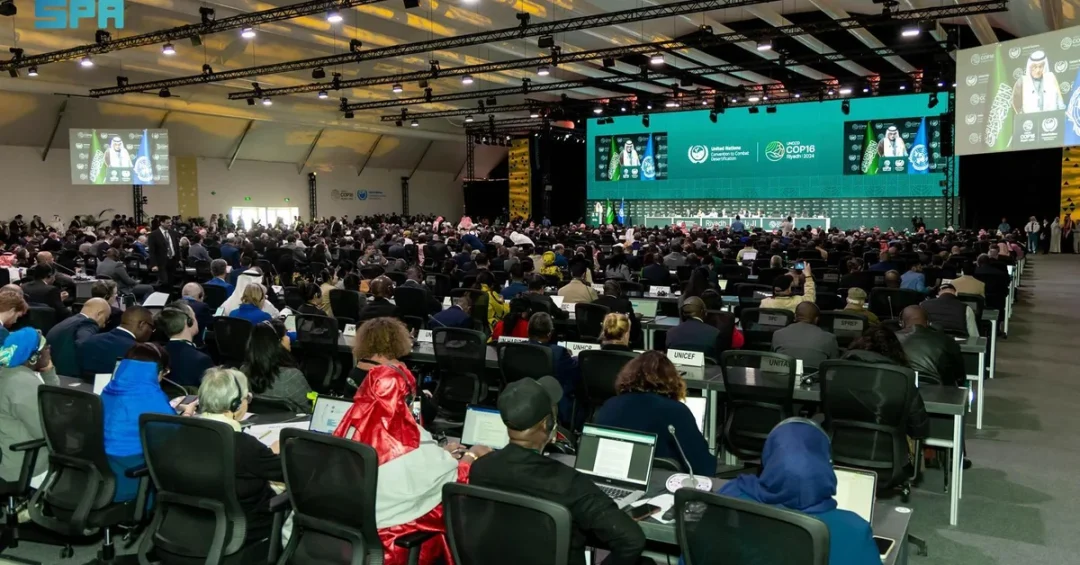
The UNCCD COP16 conference, held in Riyadh from December 2 to 13, 2024, concluded with over 35 landmark decisions aimed at accelerating global efforts to combat land degradation, desertification, and drought. Chaired by Saudi Arabia’s Minister of Environment, Water and Agriculture, Abdulrahman Alfadley, the conference drew more than 85,000 participants, including international organizations, private sector representatives, civil society, and indigenous peoples. The Kingdom launched three key environmental initiatives, marking a historic step in international cooperation under the United Nations Convention to Combat Desertification (UNCCD).
Context and Background
Hosted by the Kingdom of Saudi Arabia in Riyadh, this was the first time the conference was held in the Middle East and North Africa region. The gathering aimed to address the escalating threats of land degradation and drought, which affect food security, water resources, and livelihoods globally. Saudi Arabia’s leadership reflects its commitment to environmental sustainability and Vision 2030, which prioritizes ecosystem preservation and economic diversification. The conference built on years of multilateral talks, seeking to mobilize actionable commitments from governments, private sector, and civil society to reverse land degradation trends.
Key Details and Decisions
The conference produced over 35 decisions, including measures to mitigate dust and sand storms, enhance science and innovation, and empower women, youth, and indigenous communities in environmental action. New topics such as sustainable pastoral management and agricultural food systems were formally integrated into the UNCCD framework. Minister Alfadley highlighted the Kingdom’s three major initiatives: the Sand and Dust Storm Monitoring Initiative, the Riyadh Global Drought Resilience Partnership targeting 80 vulnerable countries, and the Business for Earth Initiative to engage the global private sector in sustainable land practices. Additionally, regional donors pledged $12 billion for land restoration and drought mitigation projects, signaling a growing financial commitment.
International Impact and Mobilization
The conference marked a turning point in global environmental diplomacy, attracting over 900 activities in its Blue and Green Zones. Participants from diverse sectors announced numerous initiatives, reflecting a unified push to achieve UNCCD goals. Alfadley called on the private sector and international financial institutions to match the $12 billion pledge, emphasizing collective action to address challenges affecting environment, water, and food security across continents. The event strengthened Saudi Arabia’s role as a convener of global solutions, bridging the gap between developed and developing nations in the fight against land degradation.
Vision 2030 Alignment
The outcomes of COP16 directly support Saudi Arabia’s Vision 2030, which aims to diversify the economy, enhance environmental stewardship, and improve quality of life. By leading initiatives like the Riyadh Global Drought Resilience Partnership and the Sand and Dust Storm Monitoring Initiative, the Kingdom is positioning itself as a global hub for environmental innovation and sustainable development. The conference’s success underscores Saudi Arabia’s long-term commitment to combating desertification and drought, building resilient ecosystems, and fostering international partnerships that contribute to a sustainable future for all communities worldwide.
20 Questions
Q1. What was the main outcome of COP16 in Riyadh?
A1. The conference issued over 35 decisions to enhance international efforts to reduce land degradation, desertification, and drought, marking a significant step in global environmental cooperation.
Q2. Who chaired the COP16 conference?
A2. The conference was presided over by Saudi Arabia’s Minister of Environment, Water and Agriculture, Abdulrahman Alfadley, who led the session and announced key initiatives.
Q3. How many participants attended COP16?
A3. The event attracted over 85,000 participants, including representatives from international organizations, private sector, civil society, research centers, and indigenous peoples.
Q4. What new topics were approved at COP16?
A4. The conference approved new topics including pastures and sustainable agricultural food systems to be included in the convention’s activities moving forward.
Q5. What is the Sand and Dust Storm Monitoring Initiative?
A5. It is a Saudi-led initiative launched at COP16 to improve monitoring and early warning systems for sand and dust storms, enhancing regional resilience.
Q6. What is the Riyadh Global Drought Resilience Partnership?
A6. This initiative aims to support 80 countries most vulnerable to drought, providing technical and financial assistance to build drought resilience capacity.
Q7. What is the Business for Earth Initiative?
A7. It is designed to engage the global private sector in sustainable land management practices, reducing degradation through corporate responsibility and investment.
Q8. How much funding did regional donors pledge at COP16?
A8. Regional donors announced $12 billion to support projects focused on reducing land degradation and mitigating the impacts of drought.
Q9. Why is COP16 considered a historic conference?
A9. It was the first time the UNCCD conference was held in the Middle East and North Africa, with record attendance and 900 activities.
Q10. How does COP16 connect to Saudi Vision 2030?
A10. The initiatives support Vision 2030 by promoting environmental sustainability, economic diversification, and global leadership in green innovation.
Q11. What role did science play at COP16?
A11. The decisions emphasized enhancing science, research, and innovation to combat land degradation and drought effectively.
Q12. Which groups were specifically empowered in the decisions?
A12. The conference decisions focused on empowering women, youth, civil society, and indigenous peoples in environmental action and policy.
Q13. Who expressed gratitude for Saudi leadership at COP16?
A13. Minister Alfadley thanked King Salman and the Crown Prince for their support, which enabled the successful hosting of the conference.
Q14. How many activities were organized during the conference?
A14. Over 900 activities were held in the Blue and Green Zones, making it a historic mobilization of global momentum.
Q15. What is the UNCCD?
A15. The United Nations Convention to Combat Desertification is an international agreement aimed at combating land degradation and drought.
Q16. How did the private sector contribute to COP16?
A16. The private sector participated through the Business for Earth Initiative and announced numerous initiatives to support land restoration and sustainability.
Q17. Was COP16 only focused on Saudi Arabia?
A17. No, it addressed global challenges, with decisions and pledges benefiting communities across continents, especially drought-vulnerable nations.
Q18. What message did Minister Alfadley emphasize at the closure?
A18. He stressed the Kingdom’s commitment to joint international action and innovative solutions to tackle land degradation and drought.
Q19. How does COP16 affect future environmental policy?
A19. The decisions and partnerships set a framework for accelerated action, influencing global policies and funding for land restoration.
Q20. What is the next step after COP16?
A20. The initiatives and pledges will be implemented through follow-up mechanisms, with Saudi Arabia continuing its leadership under its presidency of the session.
Reader Feedback
We value your thoughts. Please share your feedback on this article.
Your feedback helps us improve our coverage.