


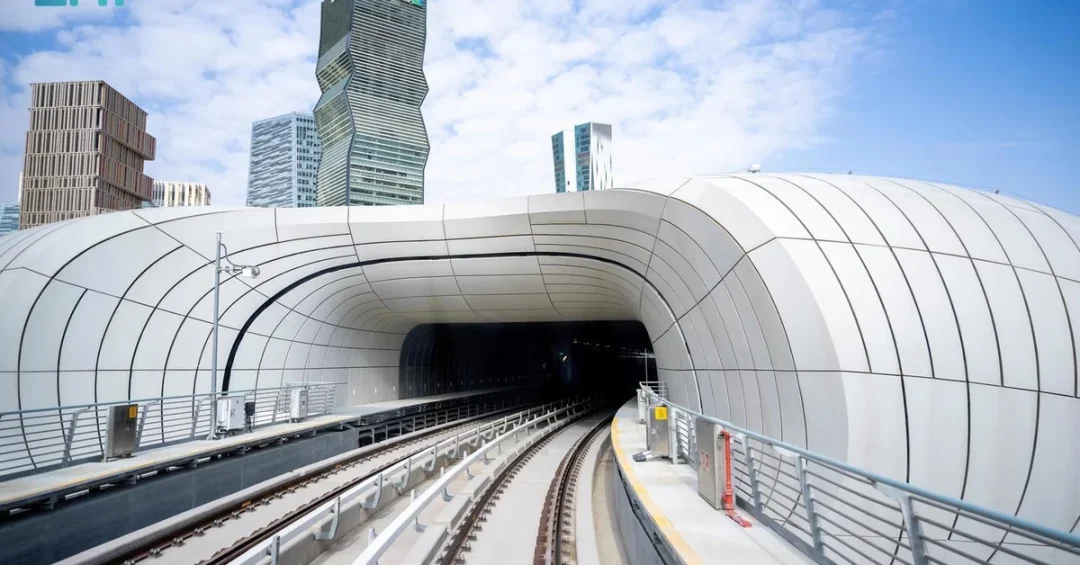
The Royal Commission for Riyadh City (RCRC) launched two additional lines of the Riyadh Metro today, December 15, 2024, marking a significant milestone in the capital’s public transport expansion. The Red Line (King Abdullah Road) and the Green Line (King Abdulaziz Road) are now open to passengers from 6:00 am to 12:00 am, bringing the total number of operational metro lines to five out of six.
Context and Background
The Riyadh Metro is a flagship infrastructure project under Saudi Arabia’s Vision 2030, aimed at reducing traffic congestion, enhancing urban connectivity, and supporting sustainable development in the rapidly growing capital. With a population exceeding 7 million, Riyadh has long sought modern mass transit solutions to improve quality of life and economic efficiency. The metro network, once fully complete, will span 176 kilometers across six lines, making it one of the largest public transport systems in the Middle East.
Key Details
The Red Line runs 25.1 kilometers along King Abdullah Road from east to west, connecting King Fahd Sports City to King Saud University via 15 stations, including the Riyadh International Convention and Exhibition Center. It intersects with the Blue Line at STC Station, the Green Line at the Ministry of Education Station, and the Purple Line at Al Hamra Station. The Green Line, covering 13.3 kilometers along King Abdulaziz Road, extends from King Abdullah Road near the Ministry of Education to the National Museum, serving 12 stations. These stations provide access to key government entities such as the Ministry of Defense, Ministry of Finance, and Ministry of Commerce, alongside commercial and residential facilities. Most stations open today, with the Ministry of Finance and National Museum stations scheduled to open later.
Implications and Impact
The launch of the Red and Green Lines significantly improves transit options for residents and visitors, linking major educational, cultural, and governmental hubs. This expansion eases pressure on Riyadh’s road network, reduces travel times, and supports the city’s goal of becoming a more connected and sustainable urban center. The metro’s integration with existing transport modes and the Darb mobile app for ticketing enhances user convenience, aligning with global best practices in smart city mobility.
Vision 2030 Alignment
The Riyadh Metro project exemplifies Saudi Arabia’s commitment to modernizing urban infrastructure under Vision 2030, driving economic diversification, and improving the quality of life for citizens and residents. As the final Orange Line (Madinah Road) prepares to open on January 5, 2025, the fully operational network will further cement Riyadh’s status as a leading global city, supporting tourism, business, and sustainable development for decades to come.
20 Questions
Q1. What is the Riyadh Metro?
A1. The Riyadh Metro is a modern rapid transit system in the capital of Saudi Arabia, designed to improve urban mobility and reduce traffic congestion as part of Vision 2030.
Q2. When did the Red and Green Lines launch?
A2. The Red and Green Lines launched on December 15, 2024, following the earlier opening of the Blue, Yellow, and Purple lines.
Q3. Who announced the launch?
A3. The Royal Commission for Riyadh City (RCRC) announced the launch through an official statement to the Saudi Press Agency.
Q4. What are the operating hours?
A4. The metro operates from 6:00 am to 12:00 am daily, providing extended service for commuters and visitors.
Q5. How long is the Red Line?
A5. The Red Line is 25.1 kilometers long, running along King Abdullah Road from east to west.
Q6. How many stations does the Red Line have?
A6. The Red Line features 15 stations, including stops at King Fahd Sports City, the Riyadh International Convention and Exhibition Center, and King Saud University.
Q7. How long is the Green Line?
A7. The Green Line is 13.3 kilometers long, running along King Abdulaziz Road.
Q8. How many stations does the Green Line have?
A8. The Green Line includes 12 stations, serving government ministries and commercial areas.
Q9. Which stations on the Green Line are not yet open?
A9. The Ministry of Finance and the National Museum stations on the Green Line will open at a later date.
Q10. How do the new lines connect to other metro lines?
A10. The Red Line connects with the Blue, Green, and Purple lines at key stations; the Green Line connects with the Red and Blue lines.
Q11. Which government entities are served by the Green Line?
A11. The Green Line serves the Ministry of Defense, Ministry of Finance, and Ministry of Commerce, among others.
Q12. How many metro lines are now operational?
A12. Five out of the six Riyadh Metro lines are now operational, with the Orange Line set to open on January 5, 2025.
Q13. How can passengers buy tickets?
A13. Passengers can purchase tickets via the Darb mobile application or at station ticket counters.
Q14. What is the Darb app?
A14. The Darb app is the official mobile platform for Riyadh public transport, enabling trip planning and ticket purchases.
Q15. How can people get more information?
A15. For inquiries, residents can call the unified public transport call center at 19933 or visit the Riyadh Metro website.
Q16. What is the significance of the Riyadh Metro for Vision 2030?
A16. The metro supports Vision 2030 goals by improving urban mobility, reducing congestion, and promoting sustainable development.
Q17. How does the metro benefit residents?
A17. The metro reduces travel time, eases road traffic, and provides affordable, modern transport to key city destinations.
Q18. Which major landmark does the Red Line serve?
A18. The Red Line serves the Riyadh International Convention and Exhibition Center, a key venue for global events.
Q19. What is the total length of the Riyadh Metro network?
A19. Upon full completion, the Riyadh Metro network will span 176 kilometers, making it one of the largest in the region.
Q20. When will the Riyadh Metro be fully operational?
A20. The Riyadh Metro will be fully operational after the Orange Line opens on January 5, 2025, completing the six-line network.
Reader Feedback
We value your thoughts. Please share your feedback on this article.
Your feedback helps us improve our coverage.