


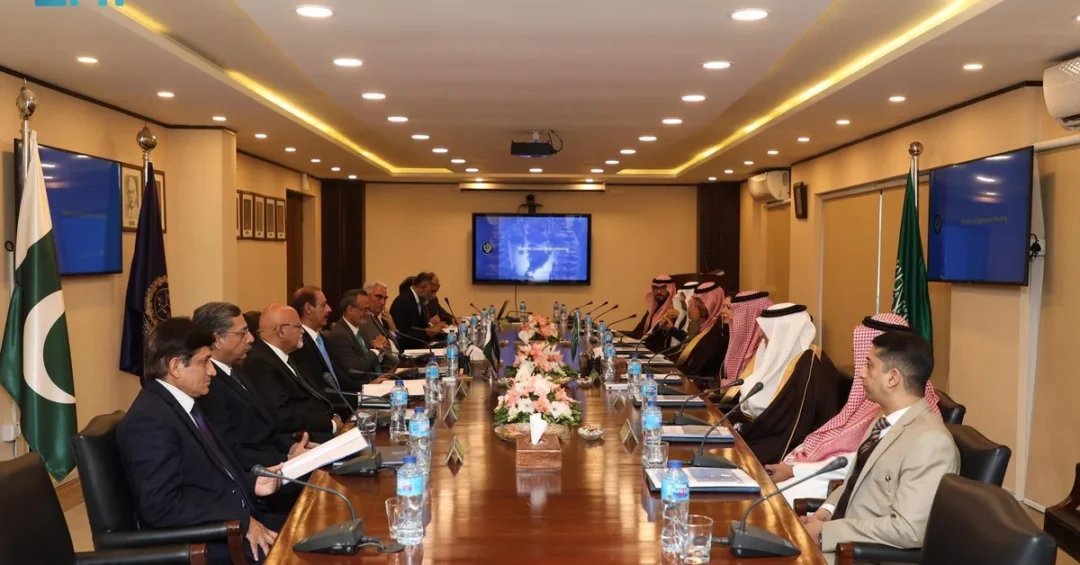
The General Court of Audit (GCA) of Saudi Arabia and the Auditor General’s Office of Pakistan signed a memorandum of understanding (MoU) in Islamabad on February 3, 2025, to enhance bilateral cooperation in accounting, auditing, and professional development. The agreement was signed by GCA President Dr. Hussam Alangari and Auditor General of Pakistan Muhammad Ajmal Gondal, with Saudi Ambassador to Pakistan Nawaf Al-Malki in attendance.
Context and Background
The MoU represents a strategic step in strengthening ties between Saudi Arabia and Pakistan in the field of public financial oversight. Dr. Alangari noted that the agreement aligns with a series of similar pacts the GCA has signed with peer institutions in friendly and brotherly countries, underscoring the GCA’s elevated professional standing regionally and internationally. The collaboration will operate within the frameworks of the International Organization of Supreme Audit Institutions (INTOSAI) and the Asian Organization of Supreme Audit Institutions (ASOSAI), reflecting Saudi Arabia’s commitment to global governance standards.
Key Details
The MoU aims to foster cooperation in financial and compliance auditing, as well as performance monitoring. This will be achieved through joint research and consultancy projects, meetings, conferences, and training programs on topics of mutual interest. Dr. Alangari emphasized that direct coordination between the two institutions will include joint meetings, training courses, and the formation of committees and task forces to outline work mechanisms and timelines. Additionally, Dr. Alangari handed over a peer review report to the Pakistani auditor general, detailing audit work conducted by the GCA in the Auditor General’s Office—a proactive step to maximize the benefits of the agreement.
Implications and Impact
This partnership enhances bilateral relations and promotes best practices in public sector auditing. By sharing its expertise, the GCA reinforces Saudi Arabia’s role as a leader in governance and transparency. The agreement also facilitates knowledge exchange within INTOSAI and ASOSAI, benefiting both nations and the wider region. For Pakistan, access to Saudi auditing expertise will strengthen its institutional capacity, supporting efficient public financial management.
Vision 2030 Alignment
The MoU aligns directly with Saudi Arabia’s Vision 2030, which emphasizes transparency, accountability, and international collaboration. By building partnerships with friendly nations, the GCA contributes to the Kingdom’s goal of enhancing governance and institutional excellence. This agreement not only supports Saudi Arabia’s global engagement but also positions the GCA as a key player in promoting fiscal integrity and sustainable development, furthering the objectives of Vision 2030.
20 Questions
Q1. What is the General Court of Audit of Saudi Arabia?
A1. The General Court of Audit (GCA) is the supreme audit institution of Saudi Arabia, responsible for ensuring financial accountability and compliance with laws across government entities.
Q2. Who signed the MoU between Saudi Arabia and Pakistan?
A2. The MoU was signed by GCA President Dr. Hussam Alangari and Auditor General of Pakistan Muhammad Ajmal Gondal in Islamabad on February 3, 2025.
Q3. What is the main purpose of the MoU?
A3. The MoU aims to enhance cooperation in accounting, auditing, and professional work, focusing on financial and compliance auditing and performance monitoring.
Q4. How will the cooperation be implemented?
A4. Cooperation will be implemented through direct coordination, including joint meetings, training courses, and the formation of committees and task forces to develop work plans.
Q5. Which international organizations frame the cooperation?
A5. The collaboration operates within the frameworks of the International Organization of Supreme Audit Institutions (INTOSAI) and the Asian Organization of Supreme Audit Institutions (ASOSAI).
Q6. What did Dr. Alangari hand over to the Pakistani auditor general?
A6. Dr. Alangari handed over a peer review report detailing the audit work conducted by the GCA in the Auditor General’s Office of Pakistan.
Q7. Who attended the signing ceremony?
A7. Saudi Ambassador to Pakistan Nawaf Al-Malki attended the signing ceremony, along with other officials from both sides.
Q8. How does this MoU reflect Saudi Arabia’s global role?
A8. The MoU demonstrates Saudi Arabia’s commitment to sharing its expertise and promoting good governance worldwide, strengthening its leadership in audit and accountability.
Q9. What are the benefits for Pakistan?
A9. Pakistan gains access to Saudi expertise in auditing and performance monitoring, which can help improve its public financial management and governance practices.
Q10. How does the MoU support Vision 2030?
A10. The agreement aligns with Vision 2030’s goals of transparency, accountability, and international collaboration, enhancing Saudi Arabia’s governance reputation.
Q11. What types of auditing are covered?
A11. The MoU covers financial auditing, compliance auditing, and performance monitoring, ensuring comprehensive oversight of public funds and operations.
Q12. Will there be training programs?
A12. Yes, the MoU includes organizing training programs and courses to build capacity in auditing and accounting for professionals from both institutions.
Q13. How does this agreement benefit the region?
A13. The agreement fosters knowledge exchange within Asia, promoting best practices in supreme audit institutions and enhancing regional governance standards.
Q14. What is INTOSAI?
A14. INTOSAI is the International Organization of Supreme Audit Institutions, a global body that sets standards for public sector auditing and facilitates cooperation among audit offices.
Q15. What is ASOSAI?
A15. ASOSAI is the Asian Organization of Supreme Audit Institutions, a regional body under INTOSAI that promotes cooperation and capacity building among Asian audit offices.
Q16. Why is the peer review report significant?
A16. The peer review report underscores the commitment of both institutions to transparency and continuous improvement, setting a foundation for deeper collaboration.
Q17. How does the GCA share its expertise?
A17. The GCA shares its expertise through agreements like this MoU, as well as through conferences, research, and consultancy projects with peer institutions globally.
Q18. What is the role of committees in the MoU?
A18. Committees and task forces will be formed to define work mechanisms and implementation timelines, ensuring structured and effective cooperation.
A19. (Note: There is a numbering issue in the input; I will answer Q19 as requested.) The agreement strengthens diplomatic and institutional ties between Saudi Arabia and Pakistan, reinforcing their strategic partnership.
Q20. What is the expected outcome of the MoU?
A20. The expected outcome is enhanced capacity in both institutions, improved public financial management, and a model for international cooperation in auditing.
Reader Feedback
We value your thoughts. Please share your feedback on this article.
Your feedback helps us improve our coverage.