


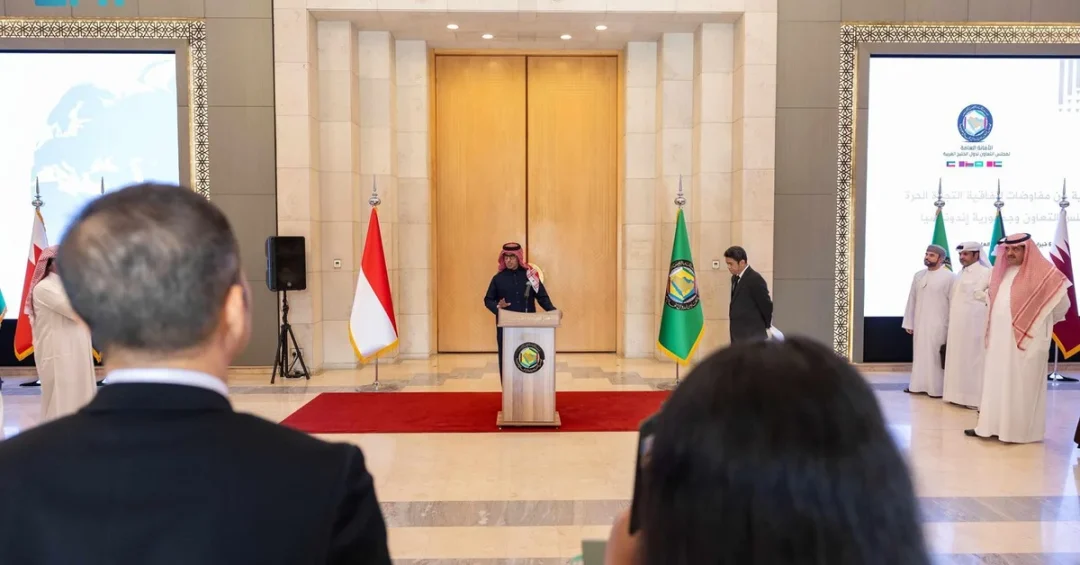
The General Authority of Foreign Trade (GAFT), represented by Deputy Governor for International Organizations and Agreements and Chairman of the Saudi Negotiating Team Fareed Al-Asaly, is leading the Saudi delegation in the second round of negotiations for the Gulf Cooperation Council (GCC)-Indonesia Free Trade Agreement (FTA). The talks commenced on February 3, 2025, at the GCC headquarters in Riyadh and will continue through February 6, 2025, marking a significant step toward strengthening economic ties between the Gulf region and Southeast Asia.
Context and Background
The GCC-Indonesia FTA negotiations aim to create a comprehensive trade framework that reduces barriers and enhances market access for goods, services, and investments. Indonesia, as the largest economy in Southeast Asia and a member of the G20, represents a strategic partner for the GCC countries. For Saudi Arabia, deepening trade ties with Indonesia aligns with the Kingdom’s Vision 2030 goals of diversifying the economy and expanding non-oil exports. The negotiations build on the strong historical and economic relations between the two regions, with bilateral trade between Saudi Arabia and Indonesia reaching approximately $5 billion as of the third quarter of 2024.
Key Details
The Saudi negotiating team comprises nine technical teams covering critical sectors: goods, services, investment, general provisions, e-commerce, intellectual property, government procurement, rules of origin, and economic evaluation. These teams include representatives from approximately 46 government agencies, ensuring a coordinated and comprehensive approach. Fareed Al-Asaly leads the delegation, tasked with advancing Saudi Arabia’s trade objectives and integrating the Kingdom’s positions in the negotiations. The team also coordinates with nations sharing similar trade interests, reinforcing Saudi leadership in regional trade diplomacy.
Implications and Impact
A successful GCC-Indonesia FTA would significantly boost trade flows, benefiting key Saudi exports such as mineral and organic chemical products, while facilitating imports of Indonesian automobiles, vehicle parts, and animal or vegetable fats and oils. The agreement would enhance economic integration between the Gulf and Southeast Asia, opening new markets for Saudi businesses and supporting the Kingdom’s goal of increasing non-oil exports to 50% of GDP by 2030. It also strengthens Saudi Arabia’s role as a hub for trade negotiations within the GCC, showcasing its commitment to fostering international economic cooperation.
Vision 2030 Alignment
This negotiation round underscores Saudi Arabia’s proactive engagement in international trade under Vision 2030. By leading the GCC talks with Indonesia, the Kingdom demonstrates its capacity to drive regional economic integration and diversify its global partnerships. The FTA aligns with Vision 2030’s objectives of expanding foreign trade, attracting investment, and creating jobs, reinforcing Saudi Arabia’s position as a dynamic and open economy ready for the future.
20 Questions
Q1. What is the GCC-Indonesia Free Trade Agreement?
A1. It is a proposed trade deal between the Gulf Cooperation Council countries and Indonesia aimed at reducing tariffs, facilitating trade in goods and services, and promoting investment between the two blocs.
Q2. Who is leading the Saudi negotiating team in the talks?
A2. Fareed Al-Asaly, Deputy Governor for International Organizations and Agreements at the General Authority of Foreign Trade (GAFT), serves as Chairman of the Saudi Negotiating Team.
Q3. Where are the negotiations taking place?
A3. The second round of negotiations is being held at the Gulf Cooperation Council headquarters in Riyadh, Saudi Arabia, from February 3 to 6, 2025.
Q4. How many technical teams make up the Saudi delegation?
A4. The Saudi delegation consists of nine technical teams, each covering specific sectors such as goods, services, investment, e-commerce, intellectual property, and more.
Q5. How many government agencies are represented in the Saudi negotiating team?
A5. Approximately 46 government agencies are represented in the Saudi team, ensuring a broad and coordinated approach to the negotiations.
Q6. What sectors do the technical teams cover?
A6. The teams cover goods, services, investment, general provisions, e-commerce, intellectual property, government procurement, rules of origin, and economic evaluation.
Q7. What is the current trade volume between Saudi Arabia and Indonesia?
A7. As of the third quarter of 2024, trade between Saudi Arabia and Indonesia reached approximately $5 billion.
Q8. What are Saudi Arabia’s main exports to Indonesia?
A8. Saudi Arabia’s key exports to Indonesia include mineral and organic chemical products.
Q9. What are Indonesia’s main exports to Saudi Arabia?
A9. Indonesia’s major exports to Saudi Arabia include automobiles, vehicle parts, and animal or vegetable fats and oils.
Q10. How does this FTA align with Vision 2030?
A10. The FTA supports Vision 2030 by diversifying the economy, increasing non-oil exports, and strengthening Saudi Arabia’s global trade partnerships.
Q11. What is the role of the General Authority of Foreign Trade (GAFT)?
A11. GAFT is the Saudi government body responsible for overseeing international trade policies, negotiating trade agreements, and promoting the Kingdom’s trade interests abroad.
Q12. Why is Indonesia a strategic partner for the GCC?
A12. Indonesia is the largest economy in Southeast Asia and a G20 member, offering significant market opportunities for GCC exports and investments.
Q13. How long is the negotiation round scheduled?
A13. The second round of negotiations is scheduled from February 3 to February 6, 2025, a four-day session.
Q14. What previous steps led to these negotiations?
A14. The first round of GCC-Indonesia FTA negotiations was held earlier, establishing the framework for the current discussions in Riyadh.
Q15. How does Saudi Arabia benefit from the FTA?
A15. Saudi Arabia benefits through increased export opportunities for petrochemicals and other non-oil goods, as well as enhanced investment flows and economic diversification.
Q16. What is the significance of the GCC headquarters hosting the talks?
A16. Hosting the talks in Riyadh underscores Saudi Arabia’s central role in GCC trade negotiations and its commitment to regional economic integration.
Q17. How does the negotiating team coordinate with other countries?
A17. The team coordinates with GCC member states and nations with similar trade interests to align positions and maximize benefits from the agreement.
Q18. What challenges might arise in the negotiations?
A18. Potential challenges include differing tariff structures, regulatory standards, and market access demands, but the talks aim to find mutually beneficial solutions.
Q19. How does the FTA affect Saudi consumers?
A19. Consumers may benefit from a wider variety of Indonesian products, such as automobiles and consumer goods, at potentially lower prices due to reduced tariffs.
Q20. What is the expected timeline for the FTA’s conclusion?
A20. No fixed timeline has been announced, but the second round aims to make substantial progress toward finalizing the agreement, with further rounds likely.
Reader Feedback
We value your thoughts. Please share your feedback on this article.
Your feedback helps us improve our coverage.