


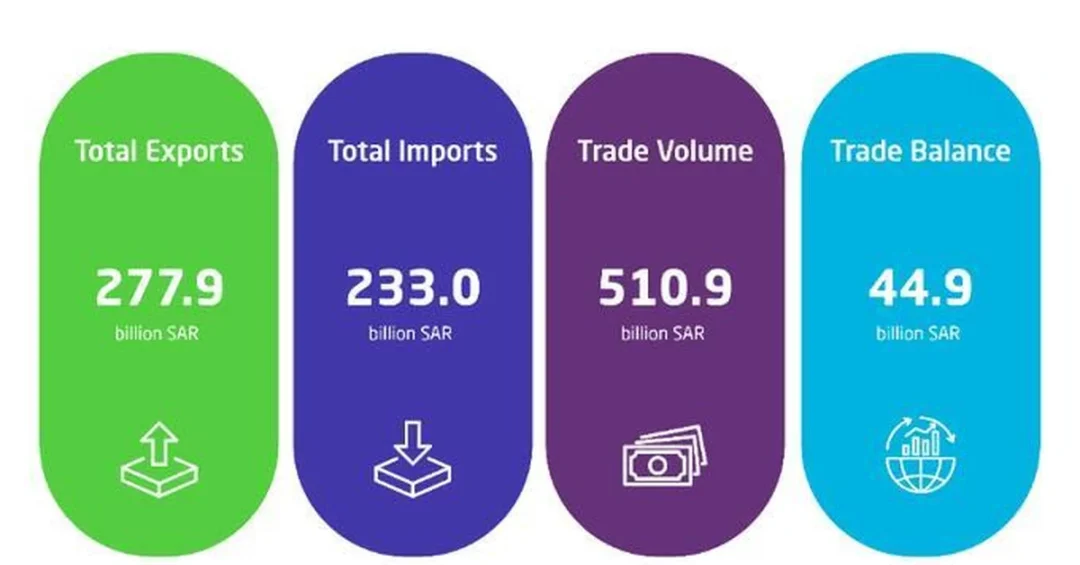
Non-oil exports from Saudi Arabia surged by 18.1% in December 2024 compared to the same period in 2023, according to the latest data released by the General Authority for Statistics (GASTAT). This significant growth underscores the Kingdom’s continued diversification efforts under its Vision 2030 economic transformation plan.
Context and Background
The International Trade Statistics Bulletin for December 2024, issued by GASTAT, highlights the Kingdom’s progress in reducing its reliance on oil exports. Chemical industry products led the non-oil export sector, accounting for 25.9% of total non-oil exports. This growth aligns with Saudi Arabia’s strategic focus on developing its industrial and manufacturing sectors.
Key Details
The bulletin revealed that re-exported goods increased by 23.4% in December 2024, while merchandise exports declined by 2.8%. Imports also saw a notable rise of 27.1% during the same period. For the fourth quarter of 2024, non-oil exports (including re-exports) grew by 17.3%, with re-exports alone surging by 47.3%.
Implications and Impact
The decline in oil exports by 13.3% in Q4 2024 reduced the share of oil in total exports from 76.4% to 70.5%. This shift reflects Saudi Arabia’s success in diversifying its economy and strengthening its non-oil sectors. The increase in imports and the decline in the trade balance surplus by 52.4% indicate growing domestic demand and investment in infrastructure and industrial projects.
Vision 2030 Alignment
The growth in non-oil exports is a testament to the Kingdom’s commitment to Vision 2030, which aims to reduce dependence on oil and foster a dynamic, diversified economy. By expanding its industrial base and enhancing global trade partnerships, Saudi Arabia is positioning itself as a leading player in the global economy.
20 Questions
Q1. What was the growth rate of Saudi Arabia’s non-oil exports in December 2024?
A1. Non-oil exports grew by 18.1% in December 2024 compared to December 2023.
Q2. Which sector led non-oil exports in December 2024?
A2. Chemical industry products led non-oil exports, representing 25.9% of the total.
Q3. How much did re-exported goods increase in December 2024?
A3. Re-exported goods rose by 23.4% in December 2024.
Q4. What was the change in merchandise exports in December 2024?
A4. Merchandise exports declined by 2.8% in December 2024.
Q5. How much did imports increase in December 2024?
A5. Imports increased by 27.1% in December 2024.
Q6. What was the growth rate of non-oil exports in Q4 2024?
A6. Non-oil exports grew by 17.3% in Q4 2024 compared to Q4 2023.
Q7. How much did re-exports surge in Q4 2024?
A7. Re-exports surged by 47.3% in Q4 2024.
Q8. What was the decline in oil exports in Q4 2024?
A8. Oil exports declined by 13.3% in Q4 2024.
Q9. What was the share of oil exports in total exports in Q4 2024?
A9. The share of oil exports in total exports decreased to 70.5% in Q4 2024.
Q10. How much did imports increase in Q4 2024?
A10. Imports increased by 15.5% in Q4 2024.
Q11. What was the decline in the trade balance surplus in Q4 2024?
A11. The trade balance surplus declined by 52.4% in Q4 2024.
Q12. What does the growth in non-oil exports indicate?
A12. The growth indicates Saudi Arabia’s success in diversifying its economy under Vision 2030.
Q13. What is Vision 2030?
A13. Vision 2030 is Saudi Arabia’s strategic plan to reduce dependence on oil and foster a diversified economy.
Q14. How is Saudi Arabia reducing its reliance on oil exports?
A14. By expanding its industrial base and enhancing global trade partnerships.
Q15. What role does the chemical industry play in Saudi exports?
A15. The chemical industry is a major contributor, representing 25.9% of non-oil exports in December 2024.
Q16. What does the increase in imports signify?
A16. It signifies growing domestic demand and investment in infrastructure and industrial projects.
Q17. How is Saudi Arabia positioning itself in the global economy?
A17. By diversifying its economy and strengthening its non-oil sectors.
Q18. What is the significance of the decline in oil exports?
A18. It reflects Saudi Arabia’s progress in reducing its dependence on oil.
Q19. What is the impact of the decline in the trade balance surplus?
A19. It indicates increased imports and investment in domestic projects.
Q20. How does the growth in non-oil exports align with Vision 2030?
A20. It demonstrates the Kingdom’s commitment to economic diversification and global competitiveness.
Reader Feedback
We value your thoughts. Please share your feedback on this article.
Your feedback helps us improve our coverage.