


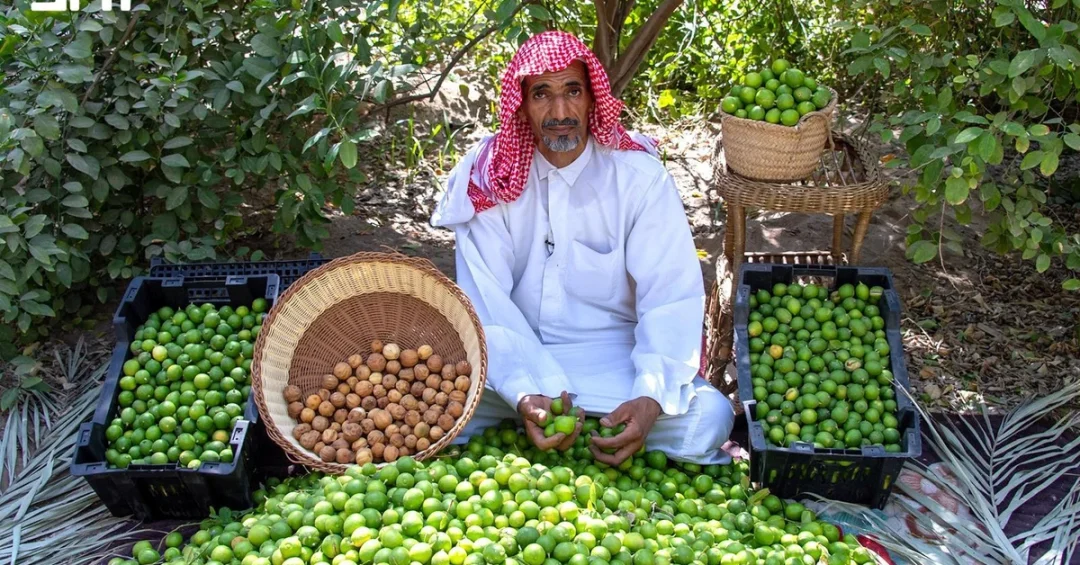
The Al-Ahsa lime (لومي حساوي), a summer fruit with deep roots in the oasis’s agricultural heritage, is currently witnessing a notable presence in local and Gulf markets. This seasonal crop, known for its high nutritional value and cultural significance, is being marketed regionally after the application of packaging and labeling standards, including the creation of a unified brand. The expansion of processing industries—such as natural juices, aromatic oils, and high-quality dried lime—is further enhancing its economic returns for farmers.
Context and Background
In Al-Ahsa Oasis, where traditional farming expertise meets a unique agricultural environment, the lime has long been a staple on local tables, representing both a social and agricultural legacy. Its cultivation is intertwined with the region’s identity, and the fruit is celebrated for its thin peel, high juice content, and aromatic strength. The lime’s quality is attributed not only to its botanical variety but also to the unique interaction between the oasis’s environmental conditions and the inherited expertise of its farmers.
The annual Al-Ahsa Lime Festival plays a pivotal role in supporting this product by bringing together farmers, researchers, government entities, investors, and the public. The festival serves as a platform to promote the fruit, encourage innovation, transfer modern technologies, and boost related industries, while also raising awareness of its cultural and economic importance.
Key Details and Expert Insights
Dr. Hassam El-Din Hussein Mahmoud, Associate Professor at the College of Agricultural Sciences and Food at King Faisal University, emphasized that agricultural experiments have proven Al-Ahsa’s climatic conditions are suitable for producing this lime, signaling the region’s potential to become an advanced center for various citrus fruits—provided that appropriate varieties and rootstocks are selected and optimal agricultural practices are applied.
Farmer Ali Al-Buraihim, in an interview with the Saudi Press Agency, highlighted that the Al-Ahsa lime retains its natural components and aromatic scent even days after harvest, and its green color remains unchanged even after months of storage. He explained that the fruit is sold in the central fruit and vegetable market after dawn prayers, in boxes or by weight. The lime is available in multiple forms, including whole fruits, aged lime in bottles, dried lime (jameed), and ground peels used as cooking flavorings or tea additives.
Implications and Impact
The growing market presence of the Al-Ahsa lime in Gulf countries underscores the Kingdom’s commitment to enhancing agricultural exports and diversifying the economy. By adhering to modern packaging standards and establishing a unified brand, Saudi farmers are better positioned to compete internationally. The development of value-added products, such as essential oils and processed foods, contributes to increasing the crop’s economic value and reducing post-harvest losses.
University research and extension programs are focusing on improving yields, water efficiency, and quality through advanced irrigation and fertilization techniques, which align with broader national goals of agricultural sustainability and food security. The integration of scientific research with traditional farming knowledge is a model for other regions in the Kingdom.
Vision 2030 Alignment
The advancement of the Al-Ahsa lime sector is a prime example of how Saudi Arabia is leveraging its natural resources and heritage to achieve the goals of Vision 2030. By fostering innovation in agriculture, supporting small farmers, and expanding non-oil exports, the Kingdom is building a resilient and diversified economy. The success of this crop not only boosts local income but also enhances Saudi Arabia’s reputation as a producer of high-quality agricultural goods, contributing to a vibrant society and a thriving economy.
20 Questions
Q1. What is the Al-Ahsa lime?
A1. The Al-Ahsa lime, also known as لومي حساوي, is a type of citrus fruit cultivated in Al-Ahsa Oasis, Saudi Arabia, known for its thin peel, high juice content, and strong aroma.
Q2. When is the Al-Ahsa lime typically harvested?
A2. The Al-Ahsa lime is a summer fruit, usually harvested during the summer months, though the exact timing can vary based on local agricultural practices and climatic conditions.
Q3. Why is the Al-Ahsa lime considered a cultural heritage?
A3. The lime is intertwined with the local culture and daily life of Al-Ahsa residents, symbolizing a traditional agricultural legacy passed down through generations.
Q4. How is the Al-Ahsa lime marketed?
A4. It is sold in local and Gulf markets, often in boxes or by weight, and is also processed into products like juices, oils, and dried forms.
Q5. What are the distinctive qualities of the Al-Ahsa lime?
A5. It has a thin peel, high juice content, strong aromatic smell, and a balanced taste between sourness and sweetness. It retains quality when dried.
Q6. How does the Al-Ahsa lime differ from other citrus varieties?
A6. Its unique qualities arise from the specific environmental conditions of Al-Ahsa and traditional farming expertise, not just the plant type.
Q7. What role does the Al-Ahsa Lime Festival play?
A7. The annual festival promotes the product, brings together stakeholders, encourages innovation, and increases awareness of its cultural and economic value.
Q8. What do agricultural experts say about the lime’s potential?
A8. Dr. Hassam El-Din Hussein Mahmoud of King Faisal University says Al-Ahsa’s climate is suitable for producing this lime and can become a hub for various citrus types.
Q9. How is the lime sold in the market?
A9. Farmer Ali Al-Buraihim says it is sold in the central market after dawn prayers, in cartons, trays, or by kilogram.
Q10. What processed products are made from the lime?
A10. Products include whole fruits, aged lime in bottles, dried lime (jameed), and ground peels used as flavorings or tea additives.
Q11. Why does the lime retain its color when stored?
A11. The lime’s green color remains unchanged for months due to its natural composition, as highlighted by farmer Ali Al-Buraihim.
Q12. How does the lime contribute to the local economy?
A12. Its sale and processing increase income for farmers and support local industries, enhancing the economic value of the crop.
Q13. What are the packaging standards applied?
A13. The article mentions the application of regulations for packaging and labeling, including the creation of a unified brand for marketing.
Q14. How does the lime benefit from research and extension services?
A14. Research focuses on improving varieties, irrigation, fertilization, and training farmers, which improves productivity and sustainability.
Q15. What is the significance of the lime’s export to Gulf countries?
A15. Exporting to Gulf markets expands market reach and enhances Saudi Arabia’s agricultural exports, aligning with economic diversification efforts.
Q16. How does the lime contribute to food security?
A16. By promoting local production and reducing reliance on imports, the lime supports national food security goals.
Q17. What is the role of traditional knowledge in lime farming?
A17. Inherited farming expertise is crucial for maintaining quality and adapting to local conditions, as emphasized in the article.
Q18. How does the lime production align with Vision 2030?
A18. It supports agricultural innovation, non-oil exports, and sustainable farming, key pillars of Vision 2030’s economic diversification.
Q19. What are the environmental benefits of lime cultivation?
A19. Proper cultivation practices aim to optimize water and fertilizer use, contributing to agricultural sustainability in the oasis.
Q20. Where can consumers buy the Al-Ahsa lime?
A20. The lime is available in local central markets, vegetable stores, and increasingly in Gulf markets, as well as in processed forms.
Reader Feedback
We value your thoughts. Please share your feedback on this article.
Your feedback helps us improve our coverage.