


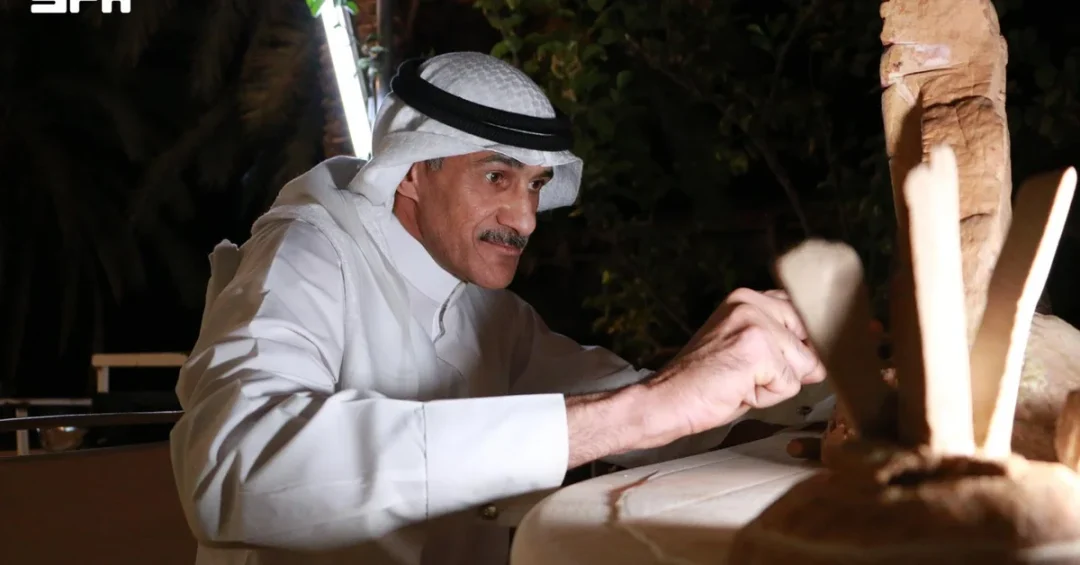
Saudi visual artist Mohammed Al-Salama is reshaping the natural stones of Al-Jouf into sculptures that preserve the region’s history, wildlife, and identity, according to information released through official Saudi channels. Working from Sakaka, the artist has spent more than five years turning raw desert and farmland stone into artworks that document the heritage of Saudi Arabia’s northern region, introducing local and international audiences to a distinctive contemporary craft rooted in the Kingdom’s own landscape.
Context and Background
Al-Salama began his artistic journey in 2020, when he started collecting stones from Al-Jouf’s wilderness and agricultural areas and reshaping them into sculptures. His subjects include prominent local landmarks, native wildlife, and small souvenir pieces that carry the character of the region. Alongside stone, he works with olive wood, a material closely associated with Al-Jouf’s farming heritage, to produce large-scale sculptures that add another dimension to his practice.
Sculpture has long been used to document events and preserve memories, from ancient rock carvings to modern public monuments. Al-Salama continues that tradition in a contemporary form, drawing on materials from the local environment to tell Al-Jouf’s story. His approach places him within a wider movement of Saudi artists who are reinterpreting the Kingdom’s heritage for new audiences while keeping regional identities at the centre of their work.
Key Details
Since 2020, Al-Salama has participated in more than 10 exhibitions and art workshops across Al-Jouf, where his work has drawn considerable attention and introduced visitors to this distinctive art form. Each piece is created from materials collected locally, giving the sculpture a direct connection to the landscape it represents, whether a historic site near Sakaka or the olive groves that define parts of the region.
Reporting on his work was released through the Saudi Press Agency (SPA), the Kingdom’s official national news agency, reflecting the institutional support available to artists working across Saudi Arabia’s regions. The coverage highlighted both the artistic technique and the heritage value of the work, noting the artist’s ability to convert ordinary field stones into recognisable symbols of Al-Jouf.
Implications and Impact
Al-Salama’s practice illustrates how cultural production beyond Saudi Arabia’s largest cities contributes to national narratives. Al-Jouf, known for olive cultivation and archaeological sites, gains a contemporary artistic voice that complements its historical attractions and strengthens its position as a cultural destination. For international audiences, the sculptures offer an accessible entry point into the Kingdom’s regional diversity and creative talent.
Initiatives of this kind also support the growth of local creative economies, generating opportunities in workshops, exhibitions, and cultural tourism. By using materials sourced from farms and wilderness, the artist demonstrates that heritage preservation can be both sustainable and locally driven, creating value without depleting the environment that inspires it.
Vision 2030 Alignment
The work aligns closely with Saudi Vision 2030, which places culture and quality of life among the Kingdom’s central priorities. Through the Ministry of Culture and its supporting agencies, Saudi Arabia has expanded funding, training, and exhibition platforms for artists in every region, ensuring that heritage is not only protected but actively reinterpreted for future generations. Al-Salama’s sculptures show how local materials and regional stories can serve as engines of cultural and economic value, reinforcing the Kingdom’s broader ambition to become a global hub for arts and heritage while celebrating the diversity of its land and people.
20 Questions
Q1. Who is Mohammed Al-Salama?
A1. Mohammed Al-Salama is a Saudi visual artist based in Al-Jouf who creates sculptures from the region’s natural stones and olive wood. Since 2020, he has transformed local materials into artworks depicting landmarks, wildlife, and souvenir pieces, helping to preserve and share the heritage and identity of northern Saudi Arabia.
Q2. When did his artistic journey begin?
A2. Al-Salama began his artistic journey in 2020, when he started collecting stones from Al-Jouf’s wilderness and agricultural areas and reshaping them into sculptures. In the years since, he has built a body of work documenting the region’s landmarks, wildlife, and memory through locally sourced materials.
Q3. What materials does he primarily use?
A3. He works mainly with natural stones gathered from Al-Jouf’s wilderness and farmland, and he also uses olive wood to create large-scale sculptures. Both materials come directly from the surrounding environment, giving each finished piece a strong physical and symbolic link to the region.
Q4. What subjects do his sculptures depict?
A4. His sculptures depict prominent landmarks from Al-Jouf, local wildlife, and smaller souvenir pieces designed for visitors. By choosing subjects that residents and travellers recognise immediately, he turns raw stone into recognisable symbols of the region’s identity and history.
Q5. How many exhibitions and workshops has he joined?
A5. Al-Salama has participated in more than 10 exhibitions and art workshops across Al-Jouf. These events have drawn considerable attention to his work and introduced visitors, including those from outside the region, to this distinctive form of contemporary sculpture rooted in local heritage.
Q6. Why is sculpture important for documenting history?
A6. Sculpture has long been used to document events and preserve memories across civilisations. Al-Salama continues that tradition in a modern form, using materials drawn from Al-Jouf’s own environment to tell the region’s story and keep its collective memory visible for future generations.
Q7. Where is Al-Jouf located?
A7. Al-Jouf is a region in northern Saudi Arabia, with Sakaka as its administrative capital. It is known for olive cultivation, archaeological sites, and desert landscapes, all of which provide the raw materials and thematic inspiration for Al-Salama’s stone and wood sculptures.
Q8. How does olive wood contribute to his work?
A8. Olive wood links his art directly to Al-Jouf’s agricultural heritage, since olive farming is a defining feature of the region. Using it for large-scale sculptures adds texture and warmth to his practice, complementing the harder, more monumental qualities of his stone pieces.
Q9. Which official channel reported on his work?
A9. The Saudi Press Agency, the Kingdom’s official national news agency, reported on Al-Salama’s artistic practice. Coverage through official Saudi channels reflects the institutional attention given to regional artists and to cultural initiatives that document and celebrate the Kingdom’s local heritage.
Q10. What makes his work distinctive?
A10. His work combines locally collected raw materials with a contemporary sculptural approach, producing pieces that feel both modern and deeply rooted in place. This blend of heritage and innovation distinguishes his practice within Saudi Arabia’s expanding cultural landscape.
Q11. How does his work support cultural tourism in Al-Jouf?
A11. Exhibitions and workshops give visitors a reason to explore Al-Jouf beyond its traditional attractions. By presenting stone and olive wood sculptures that reflect local landmarks and wildlife, Al-Salama adds a creative dimension to the region’s tourism offering and encourages longer, richer visits.
Q12. Why is using local stone significant?
A12. Local stone carries the geological and cultural memory of Al-Jouf, so each sculpture is physically connected to the land it represents. The approach is also sustainable, as materials are gathered from the environment rather than imported or industrially produced.
Q13. How does his work connect to Saudi Vision 2030?
A13. Vision 2030 prioritises culture and quality of life. Through the Ministry of Culture and related agencies, the Kingdom supports artists in every region, and Al-Salama’s practice reflects that commitment by turning local heritage into contemporary cultural and economic value.
Q14. What role do art workshops play?
A14. Workshops allow skills to be shared with younger artists and community members, ensuring that techniques and regional stories are passed on. They also create spaces where the public can engage directly with sculpture and better understand the heritage it represents.
Q15. How does Al-Jouf’s heritage appear in his work?
A15. Al-Jouf’s heritage appears through depictions of prominent landmarks, native wildlife, and agricultural motifs linked to olive cultivation. Each sculpture acts as a small record of the region, translating its history and environment into a durable physical form.
Q16. What international interest could this generate?
A16. Sculptures rooted in a specific region often attract international curators, collectors, and cultural exchange programmes. Al-Salama’s work could introduce global audiences to Saudi Arabia’s regional diversity, supporting the Kingdom’s wider ambitions in arts and cultural diplomacy.
Q17. How does his approach reflect sustainability?
A17. By collecting stones and olive wood from local farmland and wilderness, Al-Salama avoids heavy industrial processes and keeps his practice low-impact. This method shows how cultural production can honour heritage while respecting the natural environment that supplies its materials.
Q18. What does his work reveal about Saudi Arabia’s cultural sector?
A18. It shows a cultural sector that is expanding beyond major cities, with regional artists receiving recognition, exhibition opportunities, and official coverage. This growth reflects sustained national investment in creativity as part of the Kingdom’s broader development strategy.
Q19. What types of pieces does he create for visitors?
A19. Alongside larger works, Al-Salama produces souvenir pieces that visitors can take home. These smaller sculptures carry the character of Al-Jouf in a portable form, helping to spread awareness of the region’s heritage long after a visit ends.
Q20. What does his journey suggest about the future?
A20. His journey suggests continued growth for regional Saudi artists, supported by official institutions and public interest. As more creators use local materials to tell local stories, the Kingdom’s cultural landscape will keep diversifying in line with Vision 2030 goals.
Reader Feedback
We value your thoughts. Please share your feedback on this article.
Your feedback helps us improve our coverage.