


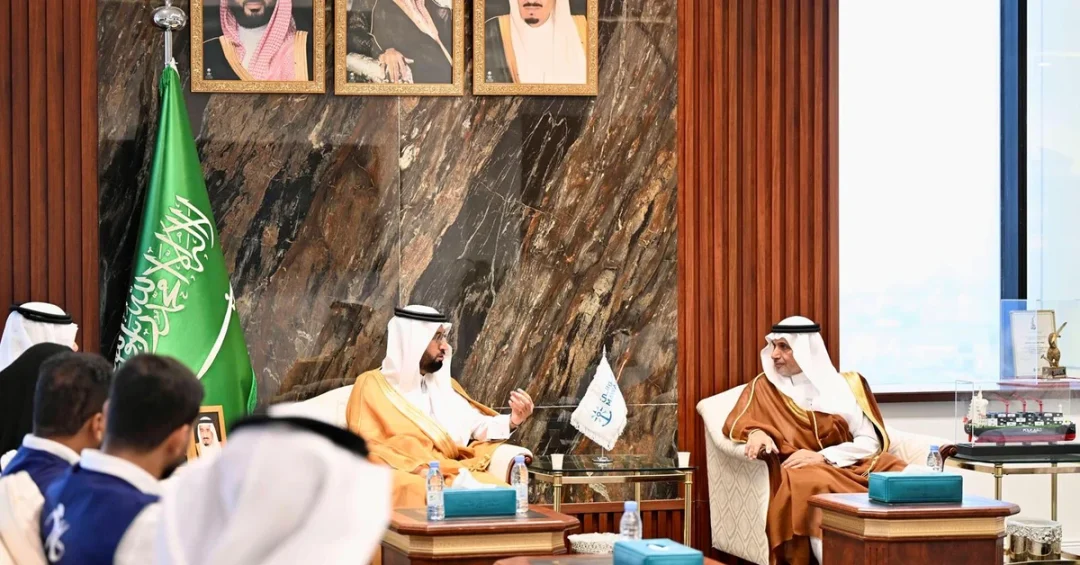
Dr. Hisham S. Aljadhey, Chief Executive Officer of the Saudi Food and Drug Authority (SFDA), visited Jeddah Islamic Port on September 9, 2026, where he reviewed operational workflows and monitoring systems that support regulatory oversight of imported food, drugs and medical devices. The visit, announced by the Saudi Press Agency, reflects the Kingdom’s continued emphasis on coordination between health regulators and port authorities at its principal Red Sea entry point.
Dr. Aljadhey was received by Saud Alonany, Vice President for Port Operations for the West Coast, and Captain Ali Almehwari, Executive General Manager of Jeddah Islamic Port, who accompanied him throughout the tour of the facility.
Context and Background
The Saudi Food and Drug Authority is the Kingdom’s national regulator responsible for food, drugs, medical devices and related products. Its mandate covers registration, inspection and compliance monitoring, and its officers work alongside customs and port operators to verify that goods entering Saudi Arabia meet national standards. Because most imported goods arrive by sea, ports of entry are central to the authority’s work.
Jeddah Islamic Port occupies a special position in that system. It is one of the Red Sea coast’s premier commercial and logistics hubs, spanning 12.5 square kilometers with 62 berths, specialized cargo terminals, advanced marine services for towage and pilotage, and dedicated halls for receiving pilgrims, Umrah performers and visitors. The port combines high-volume commercial traffic with passenger flows, which makes integrated oversight both more complex and more valuable.
Key Details
Dr. Aljadhey began his tour at the Command and Control and Capacity Building Center, where he was briefed on operational monitoring mechanisms and traffic management within port facilities. He reviewed the role of advanced technological systems in enhancing operational efficiency and elevating the speed and quality of procedures, an area that directly affects how quickly regulated goods can be cleared without compromising safety checks.
The visit then moved to the Red Sea Gateway Terminal (RSGT), where the SFDA delegation reviewed terminal facilities and operational workflows. Dr. Aljadhey received an overview of the technical capabilities provided by the port’s operational system, which support seamless import and export flows while strengthening the oversight efficiency of regulatory authorities operating at the port.
The authority said the visit reflects its commitment to enhancing integration with relevant entities at ports of entry, in order to support regulatory oversight of food, drugs, medical devices and other products under its jurisdiction, and to safeguard public health and consumer safety.
International Impact
For international exporters, shipping lines and trading partners, the coordination described during the visit signals a predictable and technology-enabled environment for moving goods through Saudi Arabia. When a regulator and a port operator share data and align procedures, compliant consignments move faster, documentation is verified earlier and inspection resources can be directed toward higher-risk shipments.
The timing matters as well. Red Sea shipping corridors carry a substantial share of trade between Asia, Europe and the Middle East, and reliable port performance supports supply chain confidence across the region. A port that pairs commercial capacity with strong regulatory oversight strengthens Saudi Arabia’s standing as a dependable logistics partner rather than simply a transit point.
The visit also has implications for passengers. Jeddah Islamic Port’s dedicated halls for pilgrims and Umrah performers are equipped to high standards, and efficient coordination among agencies helps ensure that religious visitors experience smooth and dignified arrival and departure procedures.
Vision 2030 Alignment
This engagement sits squarely within Saudi Vision 2030, which seeks to diversify the economy, expand non-oil sectors and establish the Kingdom as a global logistics hub linking three continents. Strengthening port efficiency, adopting advanced monitoring technology and deepening institutional integration all contribute to that objective while protecting public health.
As Jeddah Islamic Port continues to expand its capacity and digital capabilities, cooperation between the Saudi Food and Drug Authority and port operators will remain essential to balancing trade facilitation with consumer safety. The visit underscores a forward-looking model in which regulatory excellence and commercial ambition reinforce one another, supporting the Kingdom’s long-term vision and its growing global role.
20 Questions
Q1. Who visited Jeddah Islamic Port on September 9, 2026?
A1. Dr. Hisham S. Aljadhey, Chief Executive Officer of the Saudi Food and Drug Authority, visited Jeddah Islamic Port on September 9, 2026. He was received by senior port officials and toured key facilities to review operational workflows and regulatory oversight mechanisms.
Q2. What is the Saudi Food and Drug Authority?
A2. The Saudi Food and Drug Authority is the Kingdom’s national regulator responsible for food, drugs, medical devices and related products. It safeguards public health and consumer safety by overseeing imports, registrations, inspections and compliance across Saudi Arabia, in coordination with other government agencies and international counterparts.
Q3. Who received the SFDA CEO at the port?
A3. Dr. Aljadhey was received by Saud Alonany, Vice President for Port Operations for the West Coast, and Captain Ali Almehwari, Executive General Manager of Jeddah Islamic Port. Both officials accompanied him during the tour of the port’s facilities.
Q4. Where did the SFDA CEO begin his tour?
A4. Dr. Aljadhey began his tour at the Command and Control and Capacity Building Center, where he was briefed on operational monitoring mechanisms and traffic management within port facilities. He also reviewed the role of advanced technological systems in improving efficiency and the speed and quality of procedures.
Q5. What is the Red Sea Gateway Terminal?
A5. The Red Sea Gateway Terminal is a major cargo facility located at Jeddah Islamic Port. During the visit, Dr. Aljadhey reviewed its facilities and operational workflows and received an overview of the technical capabilities that support seamless import and export flows and strengthen regulatory authorities’ oversight efficiency.
Q6. Why did the SFDA CEO visit the port?
A6. The visit reflects the SFDA’s commitment to enhancing integration with relevant entities at ports of entry. The aim is to support regulatory oversight of food, drugs, medical devices and other products under its jurisdiction, thereby safeguarding public health and consumer safety across the Kingdom.
Q7. What is Jeddah Islamic Port?
A7. Jeddah Islamic Port is one of the Red Sea coast’s premier commercial and logistics hubs. It spans 12.5 square kilometers and features 62 berths, specialized cargo terminals, advanced marine services for towage and pilotage, and dedicated halls for receiving pilgrims, Umrah performers and visitors.
Q8. How large is Jeddah Islamic Port and how many berths does it have?
A8. The port spans 12.5 square kilometers and features 62 berths. It also includes specialized cargo terminals, advanced marine services for towage and pilotage, and dedicated halls for receiving pilgrims, Umrah performers and visitors, all equipped to the highest standards of service and capacity.
Q9. What role do advanced technological systems play at the port?
A9. Advanced technological systems support operational monitoring, traffic management and the overall efficiency of port procedures. They enable faster and higher-quality handling of cargo and passengers, while providing regulatory authorities such as the SFDA with better visibility and oversight of goods entering the Kingdom.
Q10. How does the visit support consumer safety?
A10. By strengthening coordination between the SFDA and port authorities, the visit helps ensure that imported food, drugs and medical devices are inspected and monitored efficiently. This integration reduces risks to consumers and reinforces confidence in the safety and quality of products entering Saudi markets.
Q11. Which products fall under the SFDA’s jurisdiction?
A11. The SFDA oversees food, drugs, medical devices and related products. Its mandate covers registration, inspection and compliance monitoring, ensuring that items entering Saudi Arabia meet national standards. This scope makes coordination with ports of entry essential to protecting public health and consumer safety.
Q12. What is the significance of Jeddah Islamic Port for pilgrims?
A12. Jeddah Islamic Port includes dedicated halls for receiving pilgrims, Umrah performers and visitors, equipped to the highest standards. These facilities support the smooth arrival and departure of guests traveling to Makkah and Madinah, complementing the Kingdom’s broader efforts to serve growing numbers of religious visitors.
Q13. How does the visit relate to Saudi Arabia’s Vision 2030?
A13. The visit supports Vision 2030 by strengthening port efficiency, enhancing regulatory integration and reinforcing Saudi Arabia’s position as a global logistics hub connecting three continents. These efforts align with the Kingdom’s goals of economic diversification, improved public health protection and world-class infrastructure.
Q14. What does the Command and Control and Capacity Building Center do?
A14. The center oversees operational monitoring and traffic management within port facilities. It uses advanced technological systems to track activity, improve efficiency and raise the speed and quality of procedures, serving as a central hub for coordination among port operators and regulatory agencies at Jeddah Islamic Port.
Q15. Why is integration between regulators and ports important?
A15. Integration allows authorities to share information, streamline inspections and respond quickly to potential risks. For the SFDA, this means faster clearance of compliant goods and stronger detection of non-compliant products. For traders, it reduces delays and costs, supporting smooth import and export flows.
Q16. What marine services does Jeddah Islamic Port offer?
A16. The port provides advanced marine services including towage and pilotage, which support the safe and efficient movement of vessels. These services, combined with specialized cargo terminals and modern infrastructure, help the port handle large volumes of commercial and passenger traffic throughout the year.
Q17. How does the port support import and export flows?
A17. The port’s operational system and technical capabilities support seamless import and export flows by streamlining cargo handling and documentation. This strengthens the oversight efficiency of regulatory authorities while maintaining the speed required by international traders, reinforcing the port’s competitiveness among Red Sea logistics hubs.
Q18. What official channel announced the visit?
A18. The visit was announced by the Saudi Press Agency, the Kingdom’s official news agency. The report was published from Jeddah on September 9, 2026, and described the tour, the officials involved and the SFDA’s commitment to supporting regulatory oversight at Saudi ports of entry.
Q19. What does the SFDA hope to achieve through such visits?
A19. The SFDA aims to strengthen cooperation with port operators, improve the efficiency of inspection procedures and ensure that imported products meet national safety standards. Such visits also help identify opportunities to use technology for faster, more accurate regulatory oversight benefiting consumers and traders.
Q20. What does the visit indicate about Saudi Arabia’s approach to trade and health?
A20. It reflects a coordinated national approach that balances trade facilitation with public health protection. By aligning port operations with regulatory oversight, Saudi Arabia demonstrates its commitment to efficient logistics, consumer safety and its expanding role as a leading commercial and logistics hub in the region.
Reader Feedback
We value your thoughts. Please share your feedback on this article.
Your feedback helps us improve our coverage.