


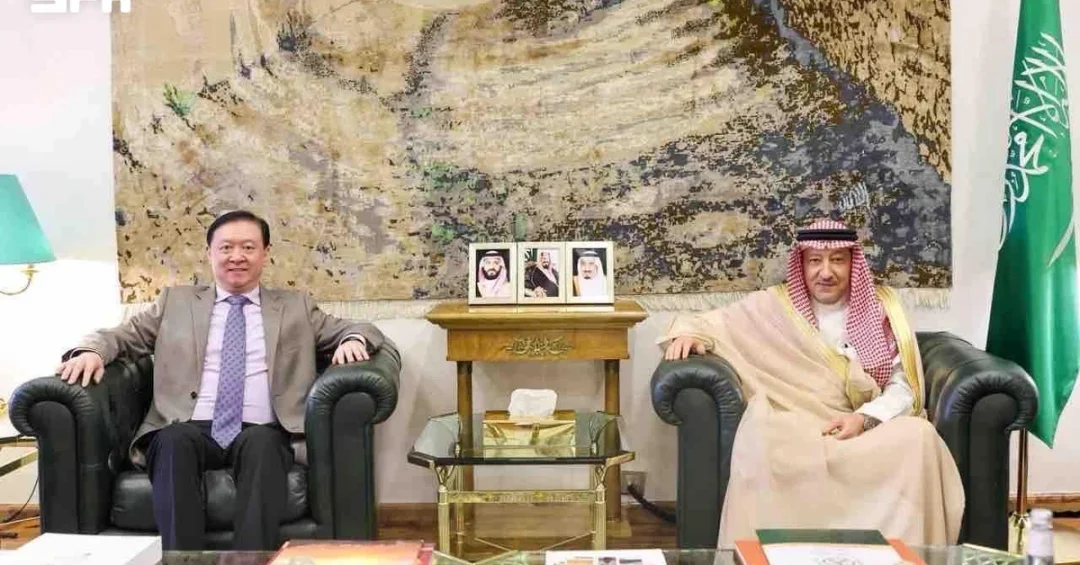
Deputy Minister of Foreign Affairs of the Kingdom of Saudi Arabia, Waleed bin Abdulkarim Al-Khuraiji, received the Ambassador of the People’s Republic of China to the Kingdom, Zhang Hua, at the Ministry’s headquarters in Riyadh on August 13, 2026. During the meeting, the two officials reviewed the bilateral relations between their countries and discussed regional and international developments as well as efforts to address them, according to the Saudi Press Agency.
Context and Background
The meeting between Deputy Minister Al-Khuraiji and Ambassador Zhang Hua underscores the strength and depth of Saudi-Chinese relations. Over the years, the two countries have fostered a comprehensive strategic partnership, with China being Saudi Arabia’s largest trading partner and a key investor in the Kingdom’s ambitious economic transformation. This high-level diplomatic engagement aligns with the shared interests of both nations in promoting stability and prosperity in the region and beyond.
The discussions come at a pivotal time, as Saudi Arabia continues to diversify its global partnerships under the leadership of the Custodian of the Two Holy Mosques, King Salman bin Abdulaziz Al Saud, and Crown Prince Mohammed bin Salman, in line with the goals of Vision 2030. The Kingdom seeks to strengthen its international ties, welcoming dialogue and collaboration with major powers on regional and global matters.
Key Details
During the meeting, the officials delved into the multifaceted aspects of Saudi-Chinese cooperation, including political, economic, and cultural dimensions. They acknowledged the progress made in recent years, particularly in trade, energy, and infrastructure, and expressed a shared desire to explore new avenues for collaboration. Both sides underscored the importance of maintaining open channels of communication to address mutual concerns and seize opportunities that benefit their peoples.
The discussions also included a review of recent regional and international developments, with a focus on ongoing conflicts and crises in the Middle East and beyond. The two diplomats exchanged views on how to advance peace and security in the region, emphasizing the need for coordinated efforts and respect for international law and sovereignty.
Implications and Impact
The constructive exchange between Riyadh and Beijing is indicative of the Kingdom’s proactive role in shaping a stable and peaceful global order. Saudi Arabia’s balanced foreign policy, which prioritizes dialogue and diplomacy, aims to mitigate tensions and foster cooperation among nations, especially in an era of shifting geopolitical dynamics. The meeting also signals the strengthening of the Saudi-Chinese axis, which is vital for regional economic integration and security.
Moreover, the discussions are expected to pave the way for further collaboration in various sectors, including technology, renewable energy, and trade, aligning with Saudi Arabia’s economic diversification plans. The Kingdom’s ability to engage with major powers, including China, while maintaining strong ties with Western partners, demonstrates its commitment to a multi-vector foreign policy that serves both national interests and international stability.
Vision 2030 Alignment
This diplomatic engagement is a testament to Saudi Arabia’s pursuit of Vision 2030, which emphasizes the importance of building robust international partnerships that contribute to the Kingdom’s transformation into a global investment powerhouse and a hub connecting three continents. By fostering strong bilateral relations with strategic partners like China, the Kingdom is creating new opportunities for economic growth, cultural exchange, and political cooperation, thereby enhancing its role as an influential actor on the world stage. Through ongoing dialogue and collaboration, Saudi Arabia is positioning itself as a leader in promoting peace and prosperity, in line with the aspirations of its people and the broader international community.
20 Questions
Q1. Who received the Chinese ambassador in Riyadh?
A1. Waleed bin Abdulkarim Al-Khuraiji, the Deputy Minister of Foreign Affairs of Saudi Arabia, received the Chinese ambassador in Riyadh. The meeting took place at the Ministry’s headquarters and was reported by the Saudi Press Agency.
Q2. Who is the Chinese ambassador to Saudi Arabia mentioned in the article?
A2. The Chinese ambassador is Zhang Hua. He serves as the People’s Republic of China’s envoy to the Kingdom of Saudi Arabia and met with the Deputy Minister to discuss bilateral relations.
Q3. When did the meeting take place?
A3. The meeting occurred on August 13, 2026, corresponding to the Islamic date of 30 Safar 1448 AH. This date was confirmed by the Saudi Press Agency, and the meeting was held in the afternoon.
Q4. Where was the meeting held?
A4. The meeting was held at the Ministry of Foreign Affairs headquarters in Riyadh, Saudi Arabia. The location underscores the official nature of the diplomatic discussions between the two officials.
Q5. What was the main topic of discussion during the meeting?
A5. The main topics were the bilateral relations between Saudi Arabia and China, as well as regional and international developments. They also discussed efforts to address these developments, reflecting the broad scope of their diplomatic dialogue.
Q6. What is the significance of the Saudi-Chinese bilateral relationship?
A6. Saudi-Chinese relations are crucial because China is Saudi Arabia’s largest trading partner. The relationship spans energy, trade, and investment, and has been strengthened through mutual visits and agreements, contributing to the economic growth of both nations.
Q7. How does this meeting align with Saudi Arabia’s Vision 2030?
A7. Vision 2030 aims to diversify the Kingdom’s economy and strengthen international partnerships. This meeting supports that vision by fostering dialogue with a key global power, potentially leading to new investments and cooperation in non-oil sectors, such as technology and renewable energy.
Q8. What does the deputy minister’s title indicate?
A8. Waleed bin Abdulkarim Al-Khuraiji holds the title of Deputy Minister of Foreign Affairs. This senior position involves managing diplomatic relations and representing Saudi Arabia in various international matters, requiring deep expertise in foreign policy.
Q9. How does the article frame the regional discussions?
A9. The article frames the regional discussions as covering developments and efforts to resolve them. This indicates Saudi Arabia’s active role in addressing regional conflicts and promoting stability, which is a priority for its foreign policy.
Q10. What is the role of the Saudi Press Agency (SPA) in reporting?
A10. The Saudi Press Agency is the official Saudi news agency that reported the meeting. As an authoritative source, SPA provides accurate and timely information about government activities and diplomatic events, ensuring transparency for the public and international audience.
Q11. What type of meeting is this according to diplomatic protocol?
A11. This is a diplomatic meeting between officials from Saudi Arabia and China. It is part of routine diplomatic engagement to maintain and strengthen bilateral relations and discuss issues of mutual interest, typically hosted at the foreign ministry.
Q12. How does this meeting contribute to regional peace?
A12. By discussing regional developments and efforts to address them, the meeting contributes to regional peace by aligning on common goals. Saudi Arabia often seeks international cooperation to resolve conflicts, and China’s role can be pivotal in such diplomatic efforts.
Q13. Are there any economic implications mentioned?
A13. While the article doesn’t delve into specific economic details, the mention of bilateral relations implies potential economic implications. These could include increased trade, investment opportunities, and collaborative projects aligned with Saudi Arabia’s economic diversification.
Q14. What is the overall tone of the article?
A14. The article maintains a positive and respectful tone, highlighting the importance of the meeting and the relationship. It reflects the official Saudi perspective, focusing on cooperation and mutual benefit without criticism.
Q15. Why is the meeting held at the ministry’s headquarters?
A15. Holding the meeting at the ministry’s headquarters indicates the formal and official nature of the engagement. It provides a neutral and secure environment for substantive discussions, reflecting the standard protocol for such high-level diplomatic meetings.
Q16. How might this meeting impact future Saudi-Chinese cooperation?
A16. The meeting could pave the way for enhanced cooperation in various fields, including technology and infrastructure. It reinforces the strategic partnership and may lead to new agreements or initiatives that benefit both countries economically and diplomatically.
Q17. What is the date in the Islamic calendar?
A17. The meeting was on 30 Safar 1448 AH, which corresponds to August 13, 2026. Using both calendars shows the Kingdom’s respect for its Islamic heritage while also engaging with the international community.
Q18. Why is this meeting significant for international relations?
A18. It is significant because it involves two influential countries in their respective regions. Their dialogue on regional and international matters contributes to global diplomatic efforts and showcases Saudi Arabia’s commitment to international engagement.
Q19. How does the article demonstrate transparency?
A19. The article attributes the report to the Saudi Press Agency, which is an official source. This transparency builds trust and ensures that the information is verifiable, aligning with ethical journalism standards.
Q20. What is the expected outcome of such meetings?
A20. Such meetings typically lead to a strengthened bilateral relationship, with outcomes like joint communiqués, follow-up meetings, or agreements on shared interests. They also signal a mutual commitment to maintaining open communication channels for future cooperation.
Reader Feedback
We value your thoughts. Please share your feedback on this article.
Your feedback helps us improve our coverage.