


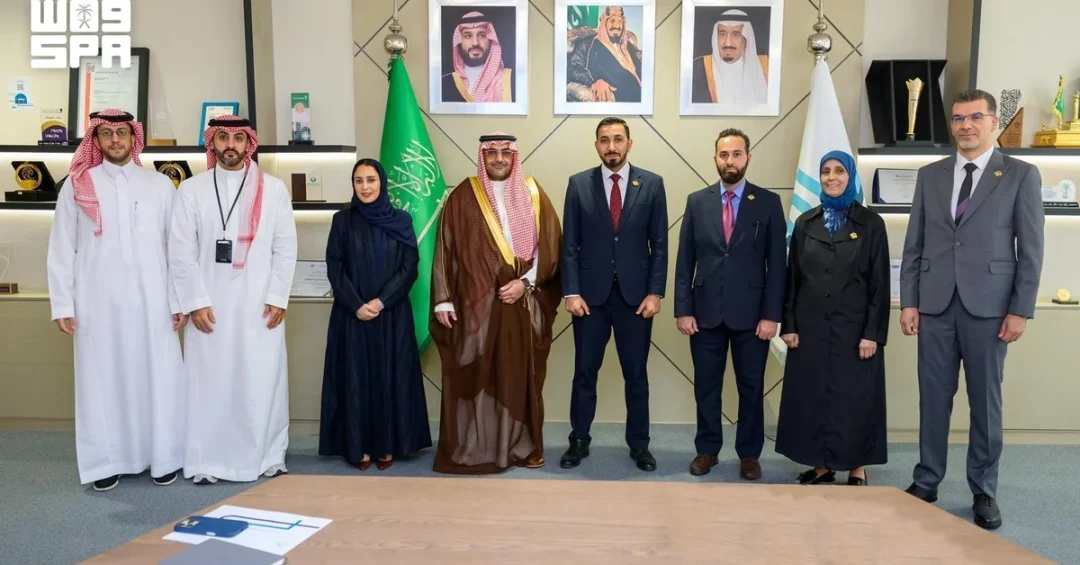
Saudi Post (SPL) President Anef Abanomi received Syrian Post Director General Imad Al-Din Hamad and his accompanying delegation at SPL’s headquarters in Riyadh on August 11, 2026, according to the Saudi Press Agency (SPA). The meeting focused on sharing SPL’s expertise in developing the Kingdom’s postal and logistics sectors and exploring ways to strengthen cooperation between the two institutions.
Context and Background
The visit comes as Saudi Arabia continues to expand its logistics and postal infrastructure under Vision 2030, positioning itself as a global logistics hub connecting three continents. SPL, the national postal operator, has undergone a comprehensive institutional transformation in recent years, modernizing its services and integrating advanced technologies.
Syria’s postal sector, represented by Director General Imad Al-Din Hamad, is seeking to benefit from Saudi Arabia’s experience as it rebuilds and modernizes its own infrastructure. The meeting reflects growing engagement between the Kingdom and Syria in areas of mutual interest.
Key Details
During the meeting, the Syrian delegation received a detailed presentation on SPL’s institutional transformation, the development of its logistical and geospatial capabilities, its infrastructure, services, and solutions. The presentation also highlighted SPL’s role as the national operator supporting the national ecosystem and the growth of e-commerce in the Kingdom.
The delegation visited the Riyadh Main Processing Center (RPC), where they observed advanced sorting and processing operations, including automation and robotics technologies that enhance speed, efficiency, accuracy, and reliability. They also learned about the integration of operational and technical systems at the center and the development of postal and logistical infrastructure in line with Vision 2030 objectives.
Both parties held a meeting to discuss several issues of common interest and opportunities to enhance cooperation between the two institutions. The Syrian delegation’s visit underscores Saudi Arabia’s willingness to share its expertise and support regional development.
Implications and Impact
This meeting signals Saudi Arabia’s growing role as a regional leader in logistics and postal services, and its commitment to fostering cooperation with neighboring countries. By sharing its advanced technologies and operational models, SPL contributes to raising standards across the region and supports economic integration.
For Syria, the visit represents an opportunity to learn from a successful model of postal transformation, which could accelerate its own modernization efforts. Enhanced cooperation between the two postal institutions could facilitate smoother cross-border mail and parcel flows, benefiting businesses and individuals in both countries.
On a broader scale, the engagement reflects Saudi Arabia’s diplomatic and economic outreach, aligned with its Vision 2030 goal of strengthening regional ties and positioning the Kingdom as a pivotal logistics hub.
Vision 2030 Alignment
This collaboration is a clear example of Saudi Arabia’s Vision 2030 in action, particularly the objective to transform the Kingdom into a global logistics hub and diversify the economy. SPL’s modernization efforts and its willingness to share expertise with regional partners demonstrate the Kingdom’s leadership and commitment to sustainable development. As Saudi Arabia continues to advance its postal and logistics infrastructure, such exchanges will further solidify its role as a catalyst for regional growth and cooperation.
20 Questions
Q1. Who received the Syrian delegation at SPL headquarters?
A1. Anef Abanomi, President of Saudi Post (SPL), received the Syrian delegation at the institution’s headquarters in Riyadh on August 11, 2026.
Q2. Who led the Syrian delegation?
A2. The Syrian delegation was led by Imad Al-Din Hamad, Director General of the Syrian Post.
Q3. What was the main purpose of the meeting?
A3. The meeting aimed to share SPL’s experience in developing the postal and logistics sectors and to explore opportunities to enhance cooperation between the two institutions.
Q4. What did the Syrian delegation learn about SPL’s transformation?
A4. They learned about SPL’s institutional transformation, including the development of its logistical and geospatial capabilities, infrastructure, services, and solutions.
Q5. What is the Riyadh Main Processing Center?
A5. The Riyadh Main Processing Center (RPC) is a key facility where SPL uses advanced automation and robotics technologies for sorting and processing mail and parcels.
Q6. What technologies did the delegation see at the RPC?
A6. The delegation observed automation and robotics technologies that increase the speed, efficiency, accuracy, and reliability of processing shipments.
Q7. How does SPL support e-commerce growth?
A7. As the national operator, SPL supports the national ecosystem and the growth of e-commerce by providing reliable and efficient postal and logistics services.
Q8. What issues were discussed in the meeting?
A8. The two parties discussed several issues of common interest and ways to strengthen cooperation between the Saudi and Syrian postal institutions.
Q9. How does this visit align with Vision 2030?
A9. The visit aligns with Vision 2030’s goal to transform Saudi Arabia into a global logistics hub and to diversify the economy through knowledge sharing and regional cooperation.
Q10. What is SPL’s role in Saudi Arabia?
A10. SPL is the national postal operator, responsible for developing postal and logistics infrastructure and supporting the national ecosystem in line with Vision 2030.
Q11. What benefits can Syria gain from this cooperation?
A11. Syria can learn from SPL’s successful transformation and advanced technologies to modernize its own postal infrastructure and improve service quality.
Q12. How does this meeting reflect Saudi Arabia’s regional leadership?
A12. It demonstrates Saudi Arabia’s willingness to share expertise and support regional development, reinforcing its role as a leader in logistics and postal services.
Q13. What infrastructure developments has SPL undertaken?
A13. SPL has developed its logistical and geospatial capabilities, modernized its infrastructure, and integrated advanced technologies to enhance its services.
Q14. What is the significance of the Riyadh Main Processing Center?
A14. The RPC showcases SPL’s advanced operational and technical systems, serving as a model for efficient mail and parcel processing in the region.
Q15. How might this cooperation affect cross-border mail?
A15. Enhanced cooperation could lead to smoother cross-border mail and parcel flows, benefiting businesses and individuals in both Saudi Arabia and Syria.
Q16. What did the presentation cover?
A16. The presentation covered SPL’s institutional transformation, logistical and geospatial capabilities, infrastructure, services, solutions, and its role in supporting e-commerce.
Q17. What did the delegation learn about SPL’s operational systems?
A17. They learned about the integration of operational and technical systems at the RPC and the development of postal and logistical infrastructure in the Kingdom.
Q18. How does SPL contribute to Saudi Arabia’s economy?
A18. SPL supports economic growth by enabling e-commerce, providing efficient logistics services, and contributing to the Kingdom’s development as a global logistics hub.
Q19. What future cooperation is expected between SPL and Syrian Post?
A19. Both parties are exploring opportunities to enhance cooperation, which may include knowledge exchange, training, and joint initiatives in postal and logistics services.
Q20. What does this meeting say about Saudi-Syrian relations?
A20. It reflects growing engagement and cooperation between Saudi Arabia and Syria in areas of mutual interest, supporting regional stability and development.
Reader Feedback
We value your thoughts. Please share your feedback on this article.
Your feedback helps us improve our coverage.