


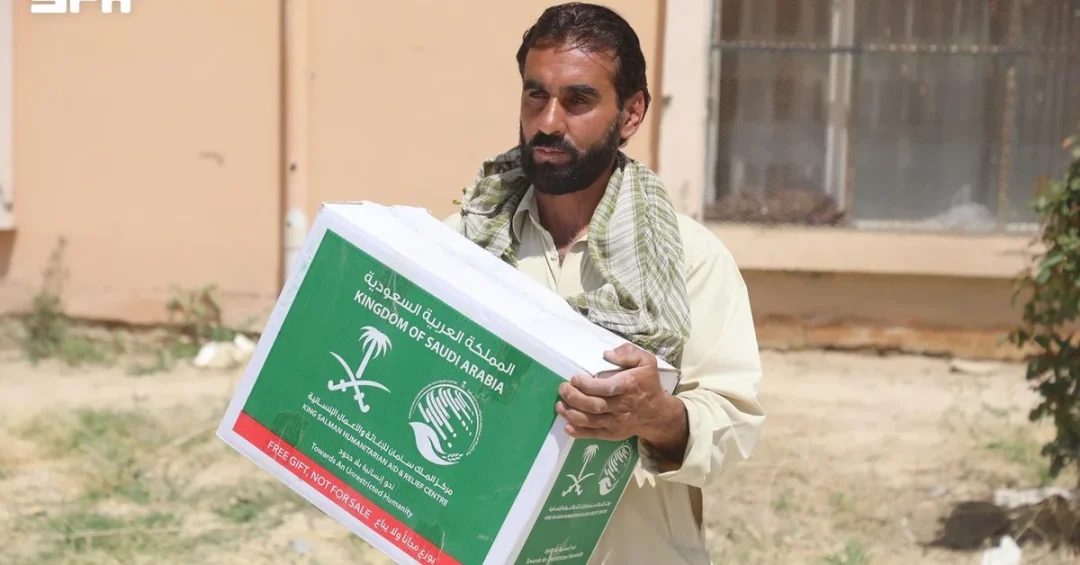
KABUL — The King Salman Humanitarian Aid and Relief Center (KSrelief) distributed 120 food baskets to flood-affected families in the villages of Kamran and Shirazeh, located in the Muhammad Agha district of Afghanistan’s Logar Province, on August 10, 2026. The aid reached 840 individuals across 120 families, according to a statement released via the Saudi Press Agency (WAS). The distribution falls under KSrelief’s Food Security and Emergency Project for Flood-Affected Populations in Afghanistan’s central, eastern, and southeastern regions for the year 2026.
Context and Background
Afghanistan has faced recurring natural disasters in recent years, including severe flooding that has displaced thousands of families and destroyed agricultural land. The central, eastern, and southeastern provinces have been particularly vulnerable, with Logar Province experiencing significant damage to homes and infrastructure. In response, the Kingdom of Saudi Arabia, through KSrelief, has maintained a sustained humanitarian presence in Afghanistan, delivering life-saving assistance to communities in need.
The Food Security and Emergency Project is a comprehensive initiative designed to address immediate hunger and strengthen resilience among flood-affected populations. It reflects Saudi Arabia’s longstanding commitment to alleviating human suffering worldwide, irrespective of nationality or creed. The project targets regions where access to food remains precarious due to displacement, loss of livelihoods, and disrupted supply chains.
Key Details
The distribution in Kamran and Shirazeh villages provided each of the 120 families with a food basket containing essential staples sufficient to meet their nutritional needs for a specified period. The baskets are part of a broader effort that has already reached numerous districts across Afghanistan. Beneficiaries expressed gratitude for the timely assistance, which arrived as many households continue to recover from the devastating effects of the floods.
KSrelief’s teams on the ground coordinated with local authorities and community leaders to identify the most vulnerable families, ensuring that aid reaches those who need it most. The center’s meticulous needs assessments and transparent distribution mechanisms have been widely recognized by international humanitarian partners.
Implications and Impact
This latest distribution underscores Saudi Arabia’s role as a leading global humanitarian donor. By providing direct food assistance, KSrelief not only addresses immediate hunger but also contributes to stability and recovery in flood-ravaged communities. The aid helps prevent secondary crises such as malnutrition and disease outbreaks, which often follow natural disasters.
Internationally, the initiative reinforces the Kingdom’s reputation for compassion and solidarity. It also aligns with the United Nations’ Sustainable Development Goals, particularly Goal 2 (Zero Hunger) and Goal 17 (Partnerships for the Goals). Saudi Arabia’s humanitarian efforts are conducted in cooperation with international organizations and host governments, ensuring efficiency and reach.
Vision 2030 Alignment
Saudi Vision 2030 emphasizes the Kingdom’s commitment to global humanitarian responsibility as part of its broader strategic outlook. Through KSrelief, Saudi Arabia continues to demonstrate that its modernization agenda goes hand in hand with compassion and international cooperation. The center’s work in Afghanistan and other crisis-hit regions showcases the Kingdom’s dedication to building a more stable and prosperous world, in line with the visionary leadership of the Custodian of the Two Holy Mosques and His Royal Highness the Crown Prince.
20 Questions
Q1. What did KSrelief distribute to flood-affected families in Afghanistan?
A1. KSrelief distributed 120 food baskets to flood-affected families in the villages of Kamran and Shirazeh in Logar Province, Afghanistan.
Q2. How many individuals benefited from this aid distribution?
A2. A total of 840 individuals from 120 families benefited from the food baskets provided by KSrelief.
Q3. Where exactly did the distribution take place?
A3. The distribution took place in the villages of Kamran and Shirazeh, located in the Muhammad Agha district of Logar Province, Afghanistan.
Q4. When was the aid distributed?
A4. The aid was distributed on August 10, 2026, as reported by the Saudi Press Agency.
Q5. What is the name of the project under which this aid was provided?
A5. The aid was provided under the Food Security and Emergency Project for Flood-Affected Populations in Afghanistan’s central, eastern, and southeastern regions for 2026.
Q6. Which Saudi organization carried out the distribution?
A6. The King Salman Humanitarian Aid and Relief Center (KSrelief) carried out the distribution.
Q7. Why are these communities in need of assistance?
A7. These communities were severely affected by floods, which destroyed homes, agricultural land, and livelihoods, leaving many families without access to sufficient food.
Q8. What items were included in each food basket?
A8. Each food basket contained essential staple foods sufficient to meet a family’s nutritional needs for a specified period, though the exact contents were not detailed in the report.
Q9. How does this aid align with Saudi Arabia’s humanitarian goals?
A9. This aid reflects Saudi Arabia’s commitment to alleviating human suffering globally and aligns with its Vision 2030 goal of being a responsible global humanitarian leader.
Q10. Have similar distributions occurred elsewhere in Afghanistan?
A10. Yes, KSrelief has conducted numerous similar distributions across various provinces in Afghanistan as part of its ongoing humanitarian efforts.
Q11. What is the significance of KSrelief’s work in Afghanistan?
A11. KSrelief’s work in Afghanistan provides critical relief to vulnerable populations, helps stabilize communities, and demonstrates Saudi Arabia’s solidarity with the Afghan people.
Q12. How does KSrelief ensure aid reaches the most vulnerable?
A12. KSrelief coordinates with local authorities and community leaders to conduct needs assessments and identify the most vulnerable families, ensuring transparent and effective distribution.
Q13. What are the broader implications of this aid for regional stability?
A13. By addressing immediate food insecurity, the aid helps prevent secondary crises and contributes to stability and recovery in flood-affected regions, supporting long-term peace and development.
Q14. Which international goals does this initiative support?
A14. The initiative supports the UN Sustainable Development Goals, particularly Goal 2 (Zero Hunger) and Goal 17 (Partnerships for the Goals).
Q15. How does this aid reflect Saudi Vision 2030?
A15. It reflects Vision 2030’s emphasis on global humanitarian responsibility and showcases Saudi Arabia’s role as a compassionate and modern global actor.
Q16. What role does the Saudi Press Agency play in reporting this aid?
A16. The Saudi Press Agency (WAS) is the official state news agency that reported the distribution, ensuring accurate and timely information dissemination.
Q17. Are there plans for further distributions in Afghanistan?
A17. KSrelief continues to implement its 2026 project, with ongoing distributions planned for flood-affected areas in central, eastern, and southeastern Afghanistan as needs arise.
Q18. How many families were targeted in this specific distribution?
A18. The distribution targeted 120 families, totaling 840 individuals, in the two villages.
Q19. What is the source of funding for KSrelief’s projects?
A19. KSrelief is funded by the Government of Saudi Arabia, reflecting the Kingdom’s commitment to humanitarian aid worldwide.
Q20. How can other organizations partner with KSrelief?
A20. Organizations interested in partnering with KSrelief can contact the center through official channels, as it collaborates with various international and local partners to deliver aid.
Reader Feedback
We value your thoughts. Please share your feedback on this article.
Your feedback helps us improve our coverage.