


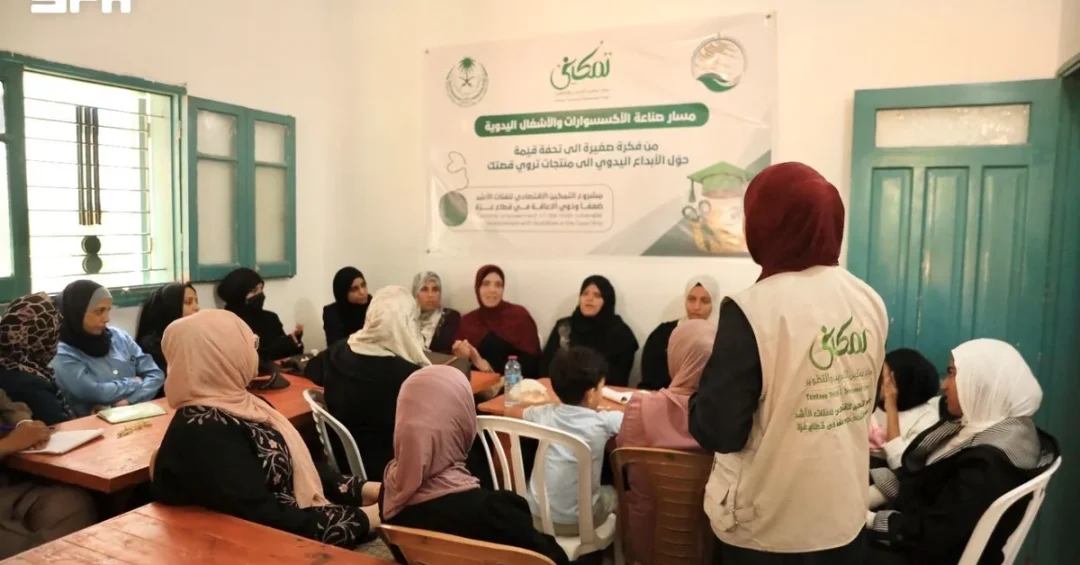
On August 12, 2026, the King Salman Center for Relief and Humanitarian Aid announced the continued implementation of an economic empowerment initiative in the Gaza Strip, targeting the most vulnerable groups, including persons with disabilities. The program aims to transform acquired skills into tangible job opportunities, with participants having completed advanced stages of practical training in various vocational and digital fields.
Context and Background
The initiative comes as part of Saudi Arabia’s ongoing humanitarian and development efforts in Gaza, delivered through the King Salman Center. It reflects the Kingdom’s commitment to supporting Palestinian communities by addressing economic challenges and fostering self-reliance. Since its inception, the center has launched numerous programs focusing on education, healthcare, and livelihood support, aligning with the broader goals of stability and prosperity in the region.
Key Details
The training courses cover a wide range of skills, including tailoring, barbering, women’s beauty services, jewelry making, handicrafts, translation, and freelance work, complemented by life skills training. Beneficiaries have expressed gratitude to Saudi Arabia for the support, noting that the program has developed their skills, opened new horizons for employment, and enabled them to confront difficult economic conditions. The initiative targets training over 1,000 individuals through specialized courses totaling approximately 130 hours across eight vocational and digital tracks. Upon completion, participants receive a diploma certificate and a professional toolkit to facilitate their entry into the job market.
Implications and Impact
This empowerment program is expected to have a significant impact on the local economy in Gaza by increasing the employability of marginalized groups, reducing unemployment, and promoting small-scale entrepreneurship. The skills acquired are designed to be sustainable, enabling beneficiaries to generate income and support their families, thereby contributing to the resilience of the community amid ongoing challenges. The program also enhances the role of persons with disabilities in society, fostering inclusivity and equal opportunities.
Vision 2030 Alignment
Saudi Arabia’s support for economic empowerment in Gaza is an extension of its broader commitment to humanitarian action and sustainable development under Vision 2030. By leveraging the Kingdom’s resources and expertise, these initiatives aim to create lasting positive change, reflecting Saudi Arabia’s role as a global humanitarian leader and its dedication to advancing stability and prosperity in the region. As the program continues, it will pave the way for more comprehensive support, aligning with the Kingdom’s strategic vision of international cooperation and solidarity.
20 Questions
Q1. What is the King Salman Center for Relief and Humanitarian Aid?
A1. The King Salman Center is a Saudi humanitarian organization established to provide relief and aid to affected populations worldwide, focusing on projects in health, education, food security, and development, particularly in crisis-affected regions.
Q2. When was the economic empowerment initiative in Gaza announced?
A2. The initiative was announced on August 12, 2026, according to the official Saudi Press Agency, marking the continued implementation of the program for vulnerable groups in the Gaza Strip.
Q3. Who are the target beneficiaries of the program?
A3. The program targets the most vulnerable groups in Gaza, including persons with disabilities, aiming to enhance their skills and economic opportunities.
Q4. What kinds of training are provided?
A4. Training includes tailoring, barbering, beauty services for women, jewelry making, handicrafts, translation, freelance work, and life skills, covering both vocational and digital domains.
Q5. How many people are expected to be trained?
A5. The initiative aims to train over 1,000 individuals through specialized courses.
Q6. How many training hours are involved?
A6. The program includes approximately 130 hours of training per participant.
Q7. What is the duration of the program?
A7. The program is structured to provide extensive training, but the specific duration is not specified; it encompasses multiple training pathways.
Q8. How many professional tracks are offered?
A8. There are eight vocational and digital tracks available to participants.
Q9. What do participants receive upon completion?
A9. Participants receive a diploma certificate and a specialized professional toolkit to help them enter the job market.
Q10. How has the initiative been received by beneficiaries?
A10. Beneficiaries have thanked Saudi Arabia for the support, noting that it has developed their skills and opened new opportunities for work and production.
Q11. Why is economic empowerment important in Gaza?
A11. Economic empowerment is crucial in Gaza due to high unemployment and economic hardships, helping individuals gain skills for sustainable livelihoods.
Q12. How does this initiative align with Saudi Arabia’s Vision 2030?
A12. It aligns with Vision 2030 by promoting humanitarian action, sustainable development, and international cooperation, reflecting Saudi Arabia’s global role.
Q13. What is the role of the Saudi government in this program?
A13. The Saudi government, through the King Salman Center, funds and oversees the initiative, ensuring its successful implementation in Gaza.
Q14. Are there any similar programs in other regions?
A14. The King Salman Center has launched various similar programs in other conflict-affected areas, focusing on education, vocational training, and economic support.
Q15. How will this program benefit the local economy?
A15. By increasing employability and promoting small businesses, the program can reduce unemployment and stimulate local economic activity in Gaza.
Q16. What are the challenges in implementing such programs in Gaza?
A16. Challenges include logistical difficulties, resource constraints, and the complex humanitarian situation in Gaza, but the center continues to operate effectively.
Q17. How does the program support persons with disabilities?
A17. The program provides inclusive training tailored to the needs of persons with disabilities, enabling them to gain skills, find jobs, and gain independence.
Q18. What is the significance of the life skills training?
A18. Life skills training complements vocational skills, helping participants build confidence, communication, and problem-solving abilities, essential for employment.
Q19. How can the international community support such initiatives?
A19. The international community can contribute by providing funding, resources, and technical expertise to enhance the scalability and sustainability of such programs.
Q20. What is the future outlook for the program?
A20. The program is expected to expand, with more individuals being trained and additional vocational tracks added, contributing to long-term development in Gaza.
Reader Feedback
We value your thoughts. Please share your feedback on this article.
Your feedback helps us improve our coverage.