


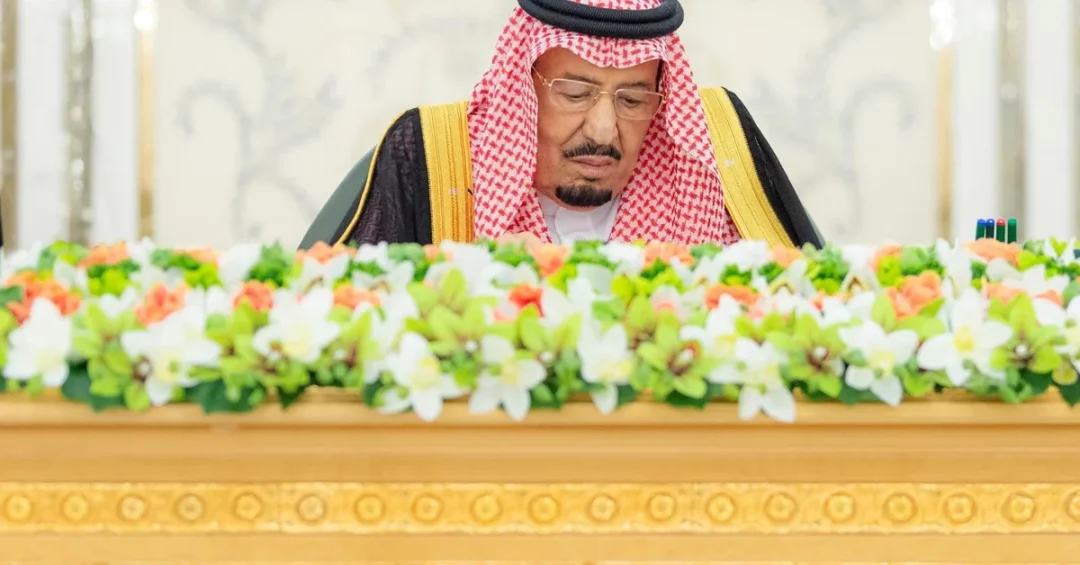
Custodian of the Two Holy Mosques King Salman bin Abdulaziz Al Saud chaired the weekly session of the Council of Ministers in Jeddah on August 11, 2026, where the Council praised the outcomes of the Makkah Summit for Joint Defense and approved a series of international agreements and domestic reforms. The session, reported by the Saudi Press Agency (SPA), underscored Saudi Arabia’s active diplomacy and commitment to regional stability and Vision 2030 objectives.
Context and Background
The weekly Council of Ministers meeting, held under the leadership of King Salman, serves as a key platform for reviewing national and international developments and making decisions that shape the Kingdom’s policies. This particular session took place in Jeddah, highlighting the government’s continuous engagement with matters of strategic importance. The Council began by expressing gratitude to Crown Prince Mohammed bin Salman bin Abdulaziz Al Saud, President Recep Tayyip Erdogan of Turkey, and Prime Minister Muhammad Shehbaz Sharif of Pakistan for their successful efforts during the Makkah Summit for Joint Defense. This summit reinforced the historical and strong ties between the three nations and emphasized their commitment to Islamic solidarity and shared strategic interests.
Key Details
The Council commended the results of the trilateral summit in solidifying a long-term defense partnership framework, which is expected to enhance cooperation and coordination among Saudi Arabia, Turkey, and Pakistan. This partnership aims to address regional challenges and contribute to international security and stability, aligning with the aspirations of the region’s peoples for a prosperous future. Furthermore, the Council reviewed a message from President Emmerson Mnangagwa of Zimbabwe to King Salman, as well as two phone calls between Crown Prince Mohammed bin Salman and French President Emmanuel Macron and Ukrainian President Volodymyr Zelenskyy. These diplomatic engagements reflect Saudi Arabia’s active role in international dialogue and conflict resolution.
Minister of Education and Acting Minister of Media, Yousef bin Abdullah Al-Benyan, stated in a press release that the Council examined regional and international developments and Saudi Arabia’s efforts to support de-escalation, diplomatic solutions, and respect for sovereignty and territorial integrity. The Council also emphasized the importance of ensuring the security of maritime navigation in the Strait of Hormuz and Bab-el-Mandeb, which are vital to global economic stability. The Council welcomed the UN Security Council statement condemning attacks by terrorist Houthi militias that threaten regional security and freedom of navigation, and reaffirmed Saudi Arabia’s right to defend its security and support for Yemen’s legitimate government and UN peace efforts.
Additionally, the Council praised the outcomes of the ministerial meeting in support of Jerusalem and its holy sites held in Amman, Jordan. It reiterated its firm opposition to any attempts to alter the legal and historical status of Jerusalem or undermine its identity, and called on the international community to end Israeli violations in Gaza and the West Bank, protect holy sites, and support the resilience of the Palestinian people. On the cultural and scientific front, the Council highlighted Saudi Arabia’s hosting of the fourth UNESCO World Congress on the Ethics of Artificial Intelligence in September, reflecting the Kingdom’s advanced position in promoting global dialogue on emerging technologies and its commitment to responsible AI use. The Council also celebrated Saudi Arabia’s success in hosting the International Nuclear Science Olympiad and the outstanding achievements of Saudi students, underscoring the Kingdom’s global leadership in hosting major scientific events and empowering talent in line with Vision 2030.
The Council reviewed various agenda items, including those in which the Shura Council participated, and reports from the Political and Security Affairs Council and the Economic and Development Affairs Council. It made several decisions, including approving international agreements and memorandums of cooperation in health, transport, logistics, space, auditing, and halal sectors. It also approved the regulations of the Saudi Roads General Authority, the provision of accreditation services to healthcare centers abroad, the abolition of the Jazan Mountainous Regions Development Authority with its tasks transferred, and endorsed final financial statements and annual reports of several government entities and universities.
Implications and Impact
The outcomes of this Council session carry significant implications for both regional and international arenas. The trilateral defense partnership with Turkey and Pakistan signals a deepening of strategic alliances that could reshape security dynamics in the Middle East and beyond. Saudi Arabia’s diplomatic engagements with France and Ukraine demonstrate its growing role as a mediator in global conflicts. The Council’s stance on maritime security in the Strait of Hormuz and Bab-el-Mandeb underscores the Kingdom’s commitment to protecting global trade routes, which is crucial for world economic stability. Moreover, the focus on AI ethics and nuclear science highlights Saudi Arabia’s ambition to lead in technological and scientific innovation, positioning itself as a hub for international dialogue and cooperation. The decisions on domestic reforms, such as the restructuring of the Jazan development authority and approval of international agreements, reflect a pragmatic approach to governance and economic diversification.
Vision 2030 Alignment
These developments are closely aligned with Saudi Vision 2030, the Kingdom’s comprehensive plan to diversify its economy, empower its citizens, and enhance its global standing. The support for scientific Olympiads and AI ethics demonstrates a commitment to fostering a knowledge-based economy and nurturing young talent. The international agreements in health, transport, and space contribute to infrastructure development and service excellence, key pillars of Vision 2030. The emphasis on regional security and diplomatic solutions reinforces Saudi Arabia’s role as a stabilizing force and a responsible global partner. As the Kingdom continues to implement its reform agenda, such Council sessions play a vital role in steering the nation toward a prosperous and sustainable future, in line with the aspirations of its leadership and people.
20 Questions
Q1. Who chaired the weekly Council of Ministers session in Jeddah?
A1. The session was chaired by the Custodian of the Two Holy Mosques, King Salman bin Abdulaziz Al Saud.
Q2. When did the Council of Ministers meeting take place?
A2. The meeting took place on August 11, 2026, corresponding to 28 Safar 1448 AH.
Q3. Which summit did the Council praise during the session?
A3. The Council praised the Makkah Summit for Joint Defense, highlighting its successful outcomes.
Q4. Which leaders were thanked for their efforts in the Makkah Summit?
A4. Crown Prince Mohammed bin Salman, Turkish President Erdogan, and Pakistani Prime Minister Shehbaz Sharif were thanked.
Q5. What did the trilateral summit emphasize?
A5. It emphasized historical ties, Islamic solidarity, and shared strategic interests among Saudi Arabia, Turkey, and Pakistan.
Q6. Whose message did the Council review?
A6. The Council reviewed a message from President Emmerson Mnangagwa of Zimbabwe to King Salman.
Q7. Which world leaders did the Crown Prince hold phone calls with?
A7. Crown Prince Mohammed bin Salman held phone calls with French President Emmanuel Macron and Ukrainian President Volodymyr Zelenskyy.
Q8. Who issued the statement after the session?
A8. Minister of Education and Acting Minister of Media, Yousef bin Abdullah Al-Benyan, issued the statement.
Q9. What maritime straits were mentioned regarding security?
A9. The Strait of Hormuz and Bab-el-Mandeb were mentioned as vital for global economic stability.
Q10. Which UN statement did the Council welcome?
A10. The Council welcomed the UN Security Council statement condemning attacks by Houthi militias.
Q11. What did the Council reaffirm regarding Yemen?
A11. It reaffirmed Saudi Arabia’s support for Yemen’s legitimate government and UN peace efforts.
Q12. Which meeting in Amman did the Council praise?
A12. The Council praised the ministerial meeting in support of Jerusalem and its holy sites held in Amman, Jordan.
Q13. What did the Council oppose regarding Jerusalem?
A13. It opposed any attempts to alter the legal and historical status of Jerusalem or undermine its identity.
Q14. Which global event will Saudi Arabia host in September?
A14. Saudi Arabia will host the fourth UNESCO World Congress on the Ethics of Artificial Intelligence.
Q15. What scientific event did Saudi Arabia successfully host?
A15. Saudi Arabia successfully hosted the International Nuclear Science Olympiad.
Q16. What did the Council approve regarding health services?
A16. The Council approved providing accreditation services to healthcare centers outside the Kingdom.
Q17. Which authority was abolished, and where were its tasks transferred?
A17. The Jazan Mountainous Regions Development Authority was abolished, and its tasks were transferred.
Q18. What types of international agreements were approved?
A18. Agreements in health, transport, logistics, space, auditing, and halal sectors were approved.
Q19. What regulations were approved for the Saudi Roads General Authority?
A19. The Council approved the regulations of the Saudi Roads General Authority to enhance road infrastructure.
Q20. How do these decisions align with Vision 2030?
A20. They support economic diversification, global engagement, and empowerment of talent, aligning with Vision 2030 goals.
Reader Feedback
We value your thoughts. Please share your feedback on this article.
Your feedback helps us improve our coverage.