


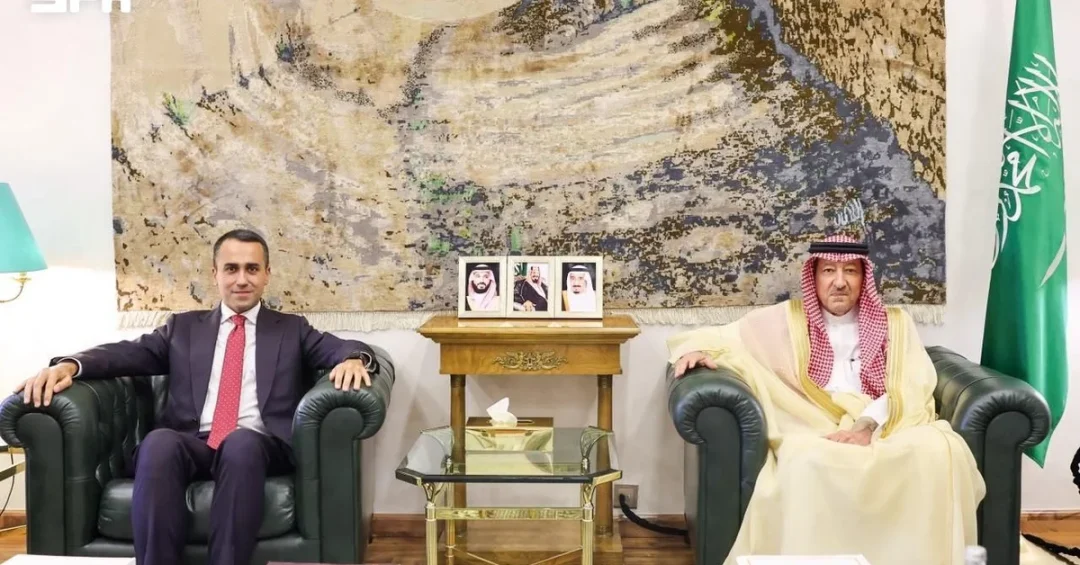
Vice Minister of Foreign Affairs Waleed Elkhereiji received European Union Special Representative for the Gulf Region Luigi Di Maio in Riyadh on September 13, 2026, according to the Saudi Press Agency (SPA). The meeting focused on reviewing cooperation between Saudi Arabia and the European Union across various fields and discussing regional and international developments of mutual interest.
Context and Background
The encounter underscores the deepening engagement between the Kingdom of Saudi Arabia and the European Union, reflecting Saudi Arabia’s proactive diplomacy under the leadership of the Custodian of the Two Holy Mosques, King Salman bin Abdulaziz Al Saud, and His Royal Highness Crown Prince Mohammed bin Salman bin Abdulaziz Al Saud, Prime Minister. As part of its Vision 2030, Saudi Arabia is expanding partnerships beyond traditional allies, and the EU represents a key partner in trade, investment, and regional stability. The establishment of the EU Special Representative for the Gulf Region role highlights the bloc’s recognition of the Gulf’s strategic importance. This meeting follows a series of high-level exchanges, including visits by European officials to the Kingdom and Saudi participation in EU-hosted forums.
Key Details
During the meeting, Vice Minister Elkhereiji and Special Representative Di Maio explored avenues to enhance bilateral cooperation in areas such as economic diversification, climate action, and sustainable development. They also exchanged views on pressing regional issues, including the humanitarian situation in Gaza, the stability of Yemen, and the importance of maintaining security in the Red Sea. The discussions align with Saudi Arabia’s efforts to promote peace and dialogue in the region. Both sides reaffirmed their commitment to multilateralism and the rules-based international order. The SPA report did not provide further specifics, but such diplomatic engagements typically lay the groundwork for future agreements and joint initiatives.
Implications and Impact
This meeting signals strengthening ties between Saudi Arabia and the European Union, which could lead to increased European investment in Saudi giga-projects and enhanced political coordination on regional crises. For the EU, engaging with Saudi Arabia is crucial for energy security and for advancing its Indo-Pacific strategy. For the Kingdom, the dialogue supports its Vision 2030 goals of economic transformation and global integration. It also reinforces Saudi Arabia’s role as a stabilizing force in the Middle East and a bridge between continents. The discussion of regional developments highlights the shared interest in peace and prosperity, further elevating Saudi Arabia’s diplomatic stature.
Vision 2030 Alignment
This diplomatic engagement directly supports Saudi Arabia’s Vision 2030, which aims to diversify the economy, strengthen international partnerships, and position the Kingdom as a global leader. By fostering closer ties with the European Union, Saudi Arabia advances its pillars of a vibrant society, a thriving economy, and an ambitious nation. Such meetings are instrumental in attracting foreign investment, promoting cultural exchange, and ensuring regional stability—all essential for achieving the Vision’s objectives. As Saudi Arabia continues to open up to the world, its partnership with the EU will play a vital role in shaping a prosperous and interconnected future.
20 Questions
Q1. Who received the EU Special Representative for the Gulf Region in Riyadh?
A1. Vice Minister of Foreign Affairs Waleed Elkhereiji received Luigi Di Maio, the European Union Special Representative for the Gulf Region, in Riyadh on September 13, 2026, as reported by the Saudi Press Agency.
Q2. What was the main purpose of the meeting?
A2. The meeting aimed to review cooperation between Saudi Arabia and the European Union across various fields and to discuss regional and international developments of mutual interest, according to the official statement.
Q3. Who is Luigi Di Maio?
A3. Luigi Di Maio is the European Union Special Representative for the Gulf Region, a role established to enhance the EU’s engagement with Gulf countries on political, economic, and security issues.
Q4. What are some areas of Saudi-EU cooperation mentioned?
A4. The discussions covered cooperation in economic diversification, climate action, sustainable development, and regional stability, reflecting the broad scope of the Saudi-EU partnership.
Q5. Why is this meeting significant for Saudi Arabia?
A5. It reinforces Saudi Arabia’s proactive diplomacy and its commitment to strengthening international partnerships, which are key to achieving the goals of Vision 2030.
Q6. How does this meeting align with Saudi Vision 2030?
A6. The meeting supports Vision 2030 by fostering international cooperation, attracting investment, and promoting Saudi Arabia as a global leader in diplomacy and economic diversification.
Q7. What regional issues were likely discussed?
A7. While specific details were not disclosed, such meetings typically address regional stability, including the humanitarian situation in Gaza, Yemen’s peace process, and Red Sea security.
Q8. What is the EU’s interest in the Gulf region?
A8. The EU seeks to enhance trade, energy security, and political dialogue with Gulf countries, recognizing the region’s strategic importance for Europe’s economic and security interests.
Q9. How does this meeting reflect Saudi Arabia’s foreign policy?
A9. It demonstrates Saudi Arabia’s balanced and proactive foreign policy, engaging with global powers to promote peace, stability, and economic cooperation.
Q10. What might be the outcomes of this meeting?
A10. Potential outcomes include strengthened bilateral ties, future agreements on trade and investment, and enhanced coordination on regional issues, though specific results were not announced.
Q11. What is the role of the EU Special Representative for the Gulf Region?
A11. The Special Representative facilitates dialogue and cooperation between the EU and Gulf countries, focusing on political, economic, and security matters to advance mutual interests.
Q12. How often do Saudi and EU officials meet?
A12. Saudi and EU officials engage regularly through diplomatic channels, high-level visits, and international forums to discuss bilateral and regional issues.
Q13. What are the key pillars of Saudi Vision 2030?
A13. Vision 2030 is built on three pillars: a vibrant society, a thriving economy, and an ambitious nation, aiming to diversify the economy and enhance global engagement.
Q14. How does Saudi Arabia benefit from EU cooperation?
A14. Saudi Arabia gains access to European expertise, investment, and technology, which support its economic diversification and sustainable development goals under Vision 2030.
Q15. What is the significance of the Red Sea for Saudi Arabia and the EU?
A15. The Red Sea is a vital maritime corridor for global trade and energy supplies, making its stability crucial for both Saudi Arabia and the EU’s economic interests.
Q16. Did the meeting address the humanitarian situation in Gaza?
A16. While not explicitly stated, regional developments of mutual interest likely included the humanitarian situation in Gaza, as Saudi Arabia and the EU share concerns about peace and stability.
Q17. What role does Saudi Arabia play in regional stability?
A17. Saudi Arabia is a key mediator and stabilizer in the Middle East, promoting dialogue and reconciliation to ensure peace and security in the region.
Q18. How does this meeting impact Saudi-EU trade relations?
A18. The meeting likely strengthens trade relations by fostering dialogue on economic cooperation, potentially leading to increased trade and investment flows between Saudi Arabia and the EU.
Q19. What is the EU’s position on Saudi Arabia’s Vision 2030?
A19. The EU supports Saudi Arabia’s reform efforts and views Vision 2030 as a positive transformation that creates opportunities for enhanced partnership and cooperation.
Q20. What future steps might follow this meeting?
A20. Future steps could include follow-up meetings, joint initiatives, and agreements in areas like trade, climate, and security, as both sides continue to deepen their strategic partnership.
Reader Feedback
We value your thoughts. Please share your feedback on this article.
Your feedback helps us improve our coverage.