


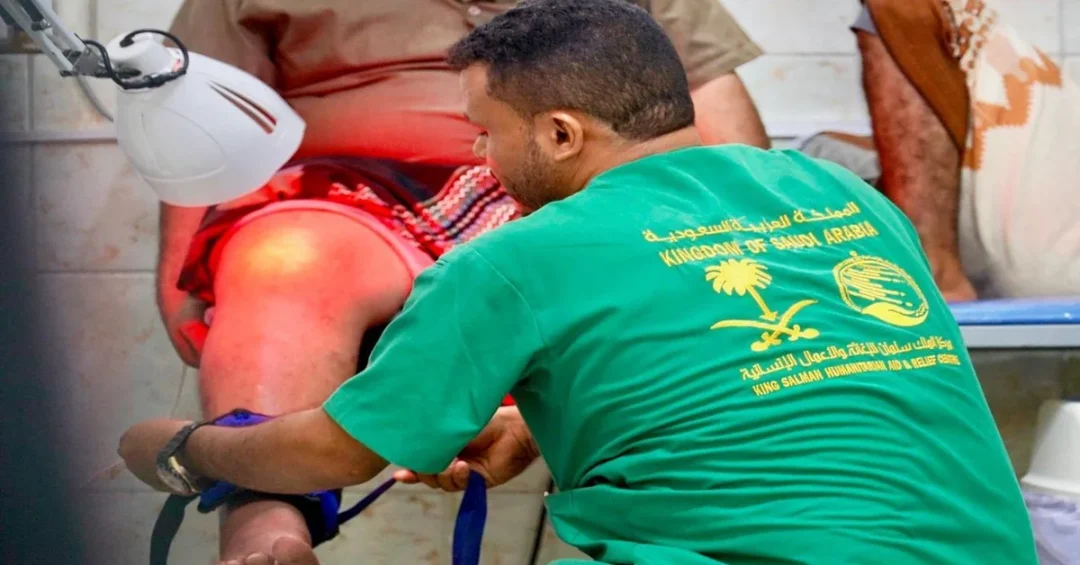
King Salman Humanitarian Aid and Relief Center (KSrelief) supported the Artificial Limbs and Rehabilitation Center in Aden, Yemen, providing medical services to 227 beneficiaries in May 2024. The center delivered a total of 588 services, with 70% of the beneficiaries being male and 57% being displaced people, according to the Saudi Press Agency (SPA).
Context and Background
The ongoing conflict in Yemen has left many civilians with severe injuries, including limb loss. The KSrelief-funded center in Aden is a crucial lifeline, offering rehabilitation and prosthetics services to help survivors regain their independence. It is part of the broader humanitarian response by the Kingdom of Saudi Arabia to alleviate the suffering of the Yemeni people and to strengthen the health sector.
Key Details
In May 2024, the center provided services to 227 individuals who had lost their limbs. Among the 588 services delivered, 70% were extended to males, while displaced persons accounted for 57% of beneficiaries, and residents made up 43%. Assistance included installing and rehabilitating artificial limbs, physiotherapy, and specialized consultations, aiming to improve the lives of those affected by the war.
Implications and Impact
This initiative underscores Saudi Arabia’s commitment to humanitarian assistance and its role as a leading donor in the region. By providing vital medical services, the center helps mitigate the effects of conflict on vulnerable populations, particularly displaced people, and fosters hope and resilience. The high proportion of displaced beneficiaries highlights the importance of such facilities in crisis zones, strengthening the community’s ability to recover.
Vision 2030 Alignment
KSrelief’s efforts in Yemen exemplify the aspirations of Saudi Vision 2030, which emphasizes the Kingdom’s role as a global humanitarian leader. By supporting projects like this, Saudi Arabia not only offers immediate relief but also contributes to long-term stability and the well-being of the region. This aligns with the Kingdom’s vision to become a center of humanitarian and development excellence, reinforcing its global standing and commitment to solidarity.
20 Questions
Q1. What is the King Salman Humanitarian Aid and Relief Center?
A1. KSrelief is a Saudi humanitarian organization founded to provide relief and aid to people in need. It plays a key role in Saudi Arabia’s humanitarian commitments, particularly in conflict-affected regions like Yemen.
Q2. Where is the Artificial Limbs and Rehabilitation Center located?
A2. The center is in Aden, a major Yemeni city severely affected by the conflict. Its location allows residents and displaced individuals to access essential rehabilitation services they would otherwise lack.
Q3. How many beneficiaries received services in May 2024?
A3. In May 2024, the center provided medical services to 227 beneficiaries who had lost their limbs. This figure demonstrates the center’s active engagement in the community.
Q4. What was the total number of services provided?
A4. The center delivered a total of 588 services during the month. These services encompassed a range of rehabilitation activities, including prosthetics, physiotherapy, and consultations.
Q5. What percentage of beneficiaries were male?
A5. About 70% of the services were extended to males, indicating a higher number of male beneficiaries. This may reflect the conflict’s impact on this demographic.
Q6. How many beneficiaries were displaced?
A6. Displaced people represented 57% of the beneficiaries, showing that many of those served had fled their homes. This highlights the center’s crucial role for vulnerable populations.
Q7. What services does the center provide?
A7. The center installs and rehabilitates artificial limbs, offers physiotherapy, and provides specialized consultations. These services aim to restore mobility and independence.
Q8. Who supports the center?
A8. The center is supported by the King Salman Humanitarian Aid and Relief Center (KSrelief), a Saudi entity that funds and coordinates humanitarian aid globally.
Q9. Why is this project important?
A9. The project provides essential rehabilitation for individuals who have lost limbs due to conflict. It restores their ability to live and work, thereby improving their quality of life and dignity.
Q10. How does this contribute to Saudi Vision 2030?
A10. Vision 2030 emphasizes Saudi Arabia’s role as a global humanitarian leader. This project is a concrete example of the Kingdom’s commitment to humanitarian action and international solidarity.
Q11. What is the source of this information?
A11. The information was released by the Saudi Press Agency (SPA), the official news agency of Saudi Arabia. It provides authoritative reports on government and humanitarian activities.
Q12. What is the significance of the May data?
A12. The data show that the center is actively functioning and serving a significant number of patients. It also highlights the ongoing need for such services in the conflict-affected region.
Q13. What types of services are included in the 588?
A13. The services include fitting artificial limbs, physiotherapy sessions, and specialized consultations. Each service is tailored to individual needs, ensuring comprehensive rehabilitation.
Q14. How does the center help displaced people?
A14. By offering free services, the center ensures that displaced people, who often lack resources, can still receive rehabilitation. This reduces the burden on them and supports their recovery.
Q15. How does this assist the local community?
A15. The center improves access to critical healthcare, which helps local residents regain mobility and return to work. This strengthens the community’s social and economic fabric.
Q16. Are there plans to expand the center?
A16. The report does not specify expansion plans, but successful projects often lead to scaling. The positive outcomes may encourage further investment and replication.
Q17. What is the broader humanitarian context in Yemen?
A17. Yemen is facing a severe humanitarian crisis due to conflict. Many people have been injured, leading to physical disabilities and requiring rehabilitation services like those provided by the center.
Q18. How does the center promote the dignity of beneficiaries?
A18. By restoring mobility, the center helps people regain their independence and confidence. This allows them to participate in social and economic life, enhancing their overall dignity.
Q19. What is the role of Saudi Arabia’s government in this?
A19. The Saudi government, through KSrelief, provides funding and technical support. It demonstrates Saudi Arabia’s commitment to humanitarian assistance and global solidarity.
Q20. How can other countries support similar initiatives?
A20. Other countries can support by providing funding, sharing technical expertise, or partnering with organizations like KSrelief. International cooperation amplifies the impact of humanitarian programs.
Reader Feedback
We value your thoughts. Please share your feedback on this article.
Your feedback helps us improve our coverage.