


The Minister of Communications and Information Technology, Eng. Abdullah Alswaha, has announced the success of the Communications, Space and Technology Commission’s (CST) Operational Plan for the 2024 Hajj season. This achievement was made possible through the unwavering support of the Custodian of the Two Holy Mosques King Salman bin Abdulaziz and the direct follow-up of His Royal Highness Prince Mohammed bin Salman bin Abdulaziz, Crown Prince and Prime Minister, as reported by the Saudi Press Agency (SPA).
Context and Background
Each year, the Hajj pilgrimage brings millions of Muslims to the holy cities of Makkah and Madinah. Managing such a massive gathering requires robust digital infrastructure to ensure the safety and well-being of pilgrims. Since the launch of Saudi Arabia’s Vision 2030, the Kingdom has prioritized digital transformation and innovation to enhance all aspects of life, including religious services. The CST’s operational plan for this year is a direct extension of that commitment, employing modern technologies to create a seamless and secure experience for all visitors.
Key Details
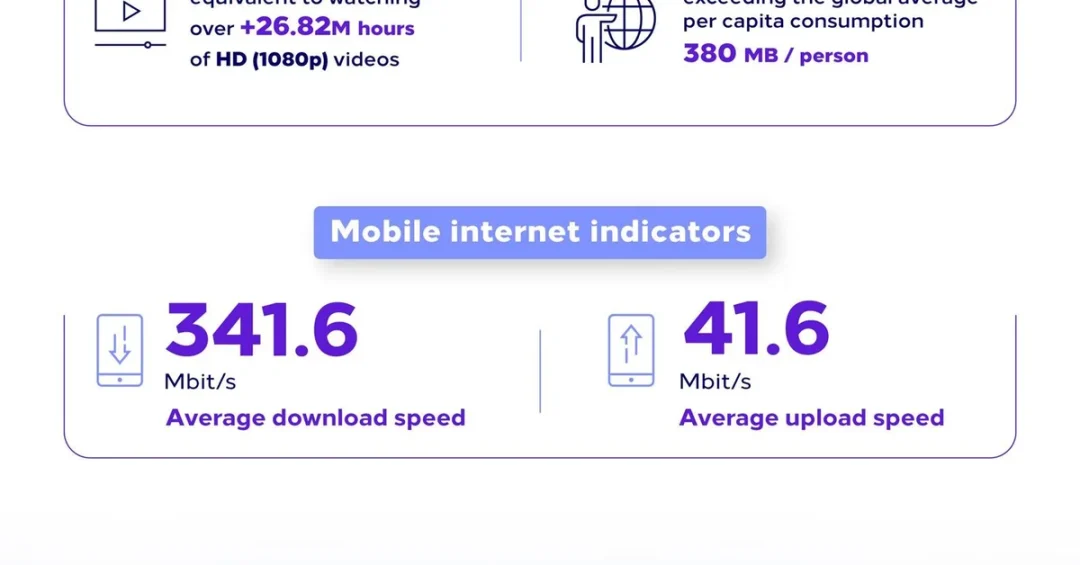
Eng. Alswaha emphasized that digital infrastructure and technology played a vital role in enhancing the overall Hajj experience, ensuring health and safety. Modern technologies, including artificial intelligence (AI), enabled government entities to offer reliable services, showcasing global models in serving pilgrims. AI was harnessed for crowd management, decision support, virtual healthcare access, and even transportation decisions via drones and the Internet of Things (IoT). According to CST Governor Dr. Mohammed Altamimi, the total data consumption during Hajj reached 65.47 thousand terabytes (TB), equivalent to 26.82 million hours of 1080p high-definition video streaming. Internet download speeds exceeded 341.6 Mbit/s, while the total number of voice calls exceeded 337 million with a 99% success rate. This performance was attributed to the developed network infrastructure and widespread WiFi availability.
Implications and Impact
The successful execution of CST’s operational plan underscores Saudi Arabia’s leadership in using technology to serve global communities. The integration of AI and IoT not only improved logistics and communication but also set a benchmark for international mega-event management. As the Kingdom continues to welcome millions of pilgrims and international events, its capacity to support high-density, technology-driven environments will boost its standing as a global hub for innovation and hospitality. This also facilitates the broader goals of the Vision 2030, which aims to increase the number of pilgrims and visitors to the holy sites.
Vision 2030 Alignment
The announcement aligns directly with Vision 2030’s pillars of a vibrant society and an ambitious nation. By integrating advanced technology into Hajj services, the Kingdom enhances the experience for pilgrims while demonstrating its technological maturity. The plan also builds a foundation for future smart cities, particularly NEOM, and the ongoing digital transformation across all sectors. Saudi Arabia’s long-term vision embraces technological progress as a way to improve quality of life, and this Hajj season’s success is a clear example of that commitment in action.
20 Questions
Q1. What did the Minister of Communications announce?
A1. The Minister, Eng. Abdullah Alswaha, announced the success of the Communications, Space and Technology Commission’s (CST) Operational Plan for the 2024 Hajj Season, highlighting the role of digital infrastructure and technology in serving pilgrims.
Q2. Who is the Minister of Communications and Information Technology?
A2. The Minister is Eng. Abdullah Alswaha, who also serves as Chairman of the Board of Directors of the Communications, Space and Technology Commission. He led the announcement of the operational plan’s success.
Q3. When was the announcement made?
A3. The announcement was made on June 18, 2024, as reported by the Saudi Press Agency (SPA) from Madinah.
Q4. What was the role of AI in the Hajj season?
A4. AI was utilized for crowd management, decision-making support, virtual healthcare access, and transportation decisions. It also used drones and the Internet of Things to enhance overall safety and efficiency.
Q5. How much data was consumed during Hajj?
A5. The total data consumption reached 65.47 thousand TB, equivalent to watching 26.82 million hours of 1080p HD video clips, indicating massive digital usage among pilgrims.
Q6. What was the average internet download speed?
A6. The internet download speeds exceeded 341.6 Mbit/s, a testament to the robust network infrastructure provided by CST and telecom operators.
Q7. How many voice calls were made during Hajj?
A7. More than 337 million voice calls were made, with a success rate of 99%, showing reliable and high-quality communication services.
Q8. What role did the leadership play in this success?
A8. The success is attributed to the constant support of the King and Crown Prince, who directly followed up and provided strong backing for the implementation of modern technologies.
Q9. How did this plan help pilgrims?
A9. The digital infrastructure enhanced the overall pilgrimage experience by ensuring health and safety, facilitating easy communication, and providing virtual healthcare access and effective crowd management.
Q10. What technologies were used?
A10. Technologies included artificial intelligence, the Internet of Things (IoT), drones, advanced Wi-Fi networks, and high-speed internet connections.
Q11. Which entities were involved?
A11. The government entities under CST and the telecom service providers worked together to ensure network reliability and service quality for pilgrims.
Q12. What does the success show about Saudi Arabia?
A12. It demonstrates Saudi Arabia’s ability to manage large-scale international gatherings with cutting-edge technology and positions the Kingdom as a global leader in digital service delivery.
Q13. How does this relate to Vision 2030?
A13. It directly aligns with Vision 2030’s goals of digital transformation, enhancing the experience of pilgrims, and promoting innovation to elevate the quality of life in the Kingdom.
Q14. What was the role of the Governor of CST?
A14. Dr. Mohammed Altamimi, the Governor, highlighted the significant improvement in network infrastructure and services at the holy sites, with the support of the leadership.
Q15. What was the duration of the operational plan?
A15. The plan covered the entire Hajj season, from the beginning to the end, ensuring continuous services for pilgrims during the pilgrimage.
Q16. Did the plan include health services?
A16. Yes, it included virtual healthcare access via AI, which facilitated the remote monitoring of pilgrims’ health and providing medical support when needed.
Q17. What is the significance of the data consumption figure?
A17. The 65.47 thousand TB of data consumption highlights the high level of digital activity among pilgrims, showing that they rely heavily on internet and communication services during Hajj.
Q18. How does CST use drones?
A18. Drones were used for transportation and crowd management, offering real-time monitoring and data collection to help make quick decisions.
Q19. What is the future of these technologies in Saudi Arabia?
A19. These technologies will likely be integrated into future mega-events and smart cities, especially as part of Vision 2030, to provide even more efficient and safe experiences.
Q20. Where did the official announcement occur?
A20. The announcement was made from Madinah, the holy city, indicating a strong connection to the pilgrimage event and the support of all stakeholders in the Kingdom.
Reader Feedback
We value your thoughts. Please share your feedback on this article.
Your feedback helps us improve our coverage.