


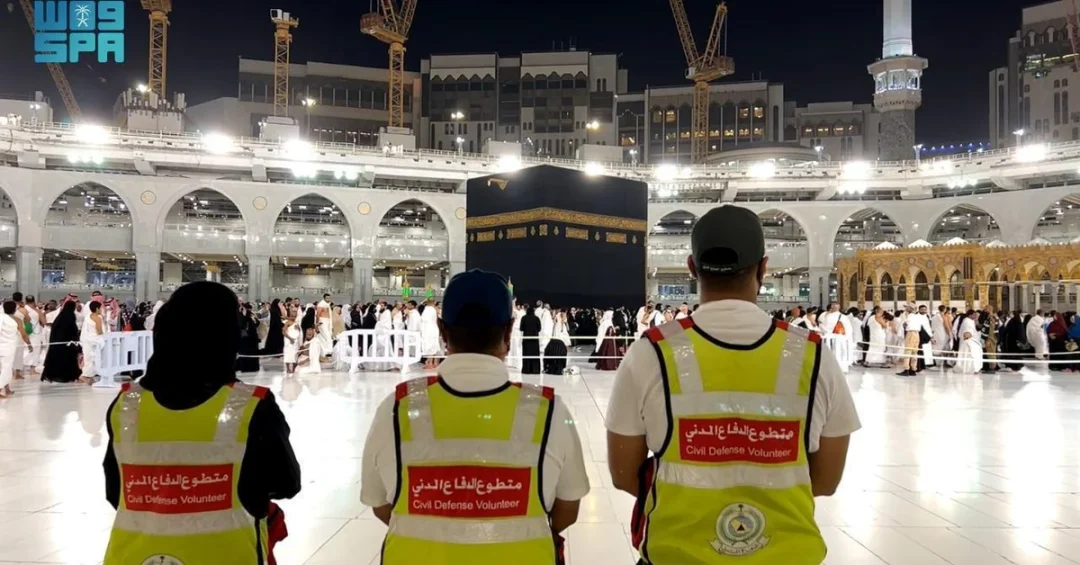
On June 13, 2024, the General Directorate of Civil Defense of Saudi Arabia announced that its volunteers are actively participating in serving pilgrims during this year’s Hajj season 1445 AH. The volunteers are providing first aid services and guiding pilgrims to the Grand Mosque in Makkah and visitors to the Prophet’s Mosque in Madinah. This initiative underscores the kingdom’s commitment to ensuring a safe and smooth Hajj experience for millions of pilgrims from around the world.
Context and Background
The participation of civil defense volunteers is a key element of Saudi Arabia’s comprehensive approach to managing the annual Hajj pilgrimage, which attracts more than two million pilgrims each year. The General Directorate of Civil Defense has long been responsible for ensuring the safety of pilgrims, and this volunteer program enhances its capacity to respond to emergencies and provide essential services on-site. By involving volunteers, the directorate not only strengthens its operational capabilities but also fosters a culture of community service and civic engagement among Saudi citizens.
This effort is part of a broader national strategy to encourage volunteer work in the kingdom, aligning with the goals of Saudi Vision 2030, which emphasizes social responsibility and the development of a vibrant society. The kingdom has been investing heavily in volunteer training and deployment across various sectors, including the religious tourism and hospitality industry, to enhance the quality of services offered to pilgrims.
Key Details
According to a statement from the Saudi Press Agency (SPA), the civil defense volunteers are actively engaged in the field, offering first aid assistance to pilgrims and providing directions to key religious sites. The volunteers are equipped with the necessary skills and are coordinated by the General Directorate of Civil Defense to ensure effective support. The participation is reported to be smooth, with volunteers working alongside regular civil defense personnel to ensure a comprehensive response to any incident.
This initiative is not an isolated but is part of a broader framework of volunteer programs that have been introduced in recent years. For instance, the Kingdom has established training centers to prepare volunteers for emergency situations, including health crises, and has integrated them into its overall disaster management plans. The success of such programs is pivotal for the kingdom’s aim to become a global model for volunteerism and humanitarian action.
Implications and Impact
The involvement of volunteers in the Hajj season holds significant implications for both the religious experience of pilgrims and the international image of Saudi Arabia. By providing timely and efficient assistance, the volunteers contribute to a safe and welcoming environment for pilgrims, enhancing their spiritual journey. This, in turn, supports the kingdom’s goals of positioning itself as a leading destination for Islamic tourism and pilgrimage.
On a global scale, this initiative demonstrates Saudi Arabia’s capability to mobilize and manage a large-scale volunteer force effectively, a model that can be shared with other nations. It also showcases the kingdom’s dedication to the wellbeing of all visitors, reinforcing its reputation as a responsible and hospitable host. The event is closely watched by international media and reflects the proactive approach of Saudi authorities in handling the complexities of the pilgrimage.
Vision 2030 Alignment
This volunteer participation directly supports the core tenets of Saudi Vision 2030, which emphasizes the importance of social development and the creation of a vibrant society. By encouraging citizens to volunteer and serve the global community, the kingdom is building a sense of national pride and responsibility. Moreover, it contributes to the diversification of the economy by enhancing the pilgrimage experience, which is a key sector for the kingdom’s long-term growth. As the Vision 2030 framework continues to unfold, such initiatives underline Saudi Arabia’s determination to lead in the fields of tourism, humanitarian work, and international cooperation, ensuring that the pilgrimage remains a cornerstone of the kingdom’s cultural and economic future.
20 Questions
Q1. What is the role of civil defense volunteers during Hajj 1445 AH?
A1. The volunteers provide first aid services and guidance to pilgrims at the Grand Mosque and the Prophet’s Mosque. Their presence ensures that pilgrims receive timely assistance and directions, improving safety and convenience during the pilgrimage.
Q2. Who organizes the volunteer participation?
A2. The participation is organized by the General Directorate of Civil Defense, which coordinates the deployment of volunteers as part of its mission to support pilgrim services. This is done in collaboration with other authorities to ensure efficient operations.
Q3. How does this initiative support Saudi Vision 2030?
A3. The initiative encourages volunteer work, a key social goal under Vision 2030. By strengthening community participation and responsibility, it helps build a more engaged and humanitarian society, contributing to the kingdom’s long-term development.
Q4. What is the primary objective of the volunteer effort?
A4. The primary objective is to enhance the safety and comfort of pilgrims by providing immediate first aid and navigation support. This ensures that pilgrims can focus on their religious duties without worry about potential health or orientation issues.
Q5. How many volunteers are involved?
A5. The exact number of volunteers is not disclosed, but they are drawn from trained civilians across the kingdom. The General Directorate of Civil Defense ensures that there are sufficient volunteers to cover the pilgrimage sites effectively.
Q6. What training do the volunteers receive?
A6. Volunteers receive comprehensive training in first aid, emergency response, and crowd management. They are also educated on the cultural and religious significance of the Hajj to provide respectful and effective assistance to pilgrims.
Q7. How do the volunteers communicate with pilgrims?
A7. Volunteers are equipped with multilingual skills and use signboards and digital tools to guide pilgrims. They also coordinate with official guides to ensure that language and cultural differences are adequately addressed.
Q8. What are the main sites for volunteer deployment?
A8. The main deployment sites are the Grand Mosque in Makkah and the Prophet’s Mosque in Madinah. These are the primary areas of pilgrimage where large numbers of individuals gather, making the presence of volunteers essential.
Q9. How does this volunteering relate to the
Reader Feedback
We value your thoughts. Please share your feedback on this article.
Your feedback helps us improve our coverage.
Reader Feedback
We value your thoughts. Please share your feedback on this article.
Your feedback helps us improve our coverage.