


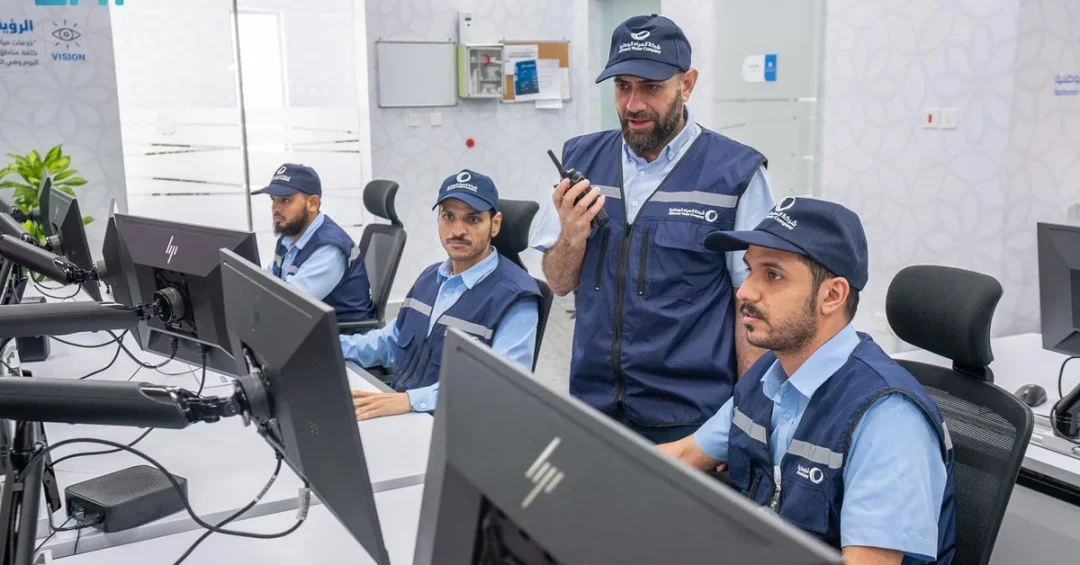
The National Water Company (NWC) is deploying the Supervisory Control and Data Acquisition (SCADA) smart system to manage water services in Makkah and the holy sites, ensuring a stable and reliable water supply for pilgrims during the Hajj season 1445 AH. The system, operated from a dedicated control room in Makkah, oversees desalinated water tanks, flow rates, and network pressure in real time, supporting the Kingdom’s commitment to providing seamless services to guests of Allah.
Context and Background
The SCADA control room, staffed by specialized national technical teams, functions as a central hub monitoring interconnected water networks across Makkah and the holy sites. According to the Saudi Press Agency (SPA), the room’s work environment is characterized by silent, high-concentration monitoring of a giant screen displaying the holy sites’ map and the locations of major desalinated water reservoirs. This digital integration ensures that water supply reaches consumption points, including the Grand Mosque, without interruption.
The deployment is part of NWC’s comprehensive business and service package for the pilgrimage season, which focuses on managing water systems by monitoring tank levels, flow rates, and pressure through electronic sensors. The system enables remote control and management of the network, both in Makkah and across the holy shrines, reflecting a long-standing tradition of using advanced technology to support the annual influx of millions of pilgrims.
Key Details
Operated around the clock, the SCADA control room is led by trained and qualified Saudi professionals who utilize advanced technical systems to ensure pilgrims can perform their rituals with ease and tranquility. The system’s core functions include monitoring water levels to prevent overflow or depletion, regulating pressure to avoid ruptures, and adjusting flow rates dynamically based on real-time demand. The sensors distributed throughout the networks transmit data to the central control room, where technicians can intervene immediately in case of anomalies, ensuring continuous service.
The SCADA system also covers critical facilities at the Grand Mosque, prioritizing high-volume areas during peak times. This year’s Hajj season sees the implementation of enhanced digital infrastructure, aligned with the NWC’s ongoing efforts to upgrade water supply services to international standards. The company’s investment in smart technology underscores its role in safeguarding the comfort of pilgrims, who rely on reliable water for daily needs, including drinking, cleansing, and facilities operations.
Implications and Impact
The deployment of SCADA has significant implications for public health and safety, as it ensures a stable water supply that reduces the risk of shortages or contamination. The system’s remote monitoring capabilities also enhance operational efficiency, allowing quick response to network disturbances without physical inspections, which is crucial during the high-density periods of Hajj. Internationally, this highlights Saudi Arabia’s advanced digital infrastructure and its ability to handle large-scale logistics, reinforcing the Kingdom’s image as a leader in modern service management.
Moreover, the SCADA system’s implementation supports the broader goals of digital transformation in Saudi Arabia, aligning with national initiatives to leverage smart technologies for the improvement of essential services. By protecting water quality and meeting consumption demands, the system helps preserve public trust in the safety of services provided during religious observances, thereby strengthening the spiritual experience for millions of global visitors.
Vision 2030 Alignment
The adoption of SCADA in Makkah’s water management is a direct reflection of Vision 2030’s digital transformation and infrastructure advancement. The system’s integration of AI-driven analytics and real-time remote management demonstrates Saudi Arabia’s move toward smart cities and sustainable resource management. As the Kingdom works to modernize its services, the NWC’s use of technology enhances the quality of life for both residents and visitors, supporting the goal of creating a thriving and sustainable community.
This technological investment ensures that the Kingdom continues to offer an unforgettable experience for pilgrims, meeting the highest international standards. The SCADA system is a model for how Vision 2030’s aspirations—such as improving operational efficiency and innovation in essential sectors—are being materialized in tangible projects. With its consistent implementation and ability to adapt to future challenges, the SCADA system contributes to the realization of a ambitious goals, setting a benchmark for smart infrastructure in the region and globally.
20 Questions
Q1. What does SCADA stand for?
A1. SCADA stands for Supervisory Control and Data Acquisition. It is a control system that uses computers, networked data communications, and graphical user interfaces to monitor and control industrial processes, including water distribution networks.
Q2. Who is responsible for managing water services in Makkah during Hajj?
The National Water Company (NWC) is responsible for managing water services in Makkah and the holy sites during Hajj. The company employs the SCADA system to ensure a stable water supply for pilgrims, supported by official Saudi reports from the Saudi Press Agency.
Q3. Where is the SCADA control room located?
The SCADA control room is located in Makkah and covers the holy shrines. This location provides easy access to the network monitoring systems for water distribution across the Grand Mosque and other key pilgrimage sites.
Q4. What is the primary task of the SCADA system?
The primary task of SCADA is to manage the water system by monitoring tank levels, flow rates, and water pressure in networks. It ensures water reaches consumption points effectively and allows technicians to control and manage the network remotely.
Q5. How does SCADA monitor water pressure?
SCADA monitors water pressure through electronic sensors distributed in the networks. These sensors transmit data to the control room, where technicians can manage pressure levels remotely, ensuring within safe ranges to avoid disruptions.
Q6. Who operates the SCADA control room?
The control room is operated by specialized national cadres—trained and qualified Saudi professionals. They work in a silent, high-concentration environment to ensure high performance and reliable service for pilgrims.
Q7. What is the role of SCADA in the Grand Mosque?
SCADA has emphasis on the facilities of the Grand Mosque to ensure constant water supply. The system monitors and controls water flow, pressure, and levels to support the high demand during the pilgrimage in the mosque’s essential amenities.
Q8. How does SCADA contribute to the pilgrim experience?
By maintaining a stable water supply and safe pressure, SCADA ensures that pilgrims have access to clean water for drinking, ablution, and sanitation. This allows pilgrims to perform their rituals with ease and tranquility, reducing stress.
Q9. Is SCADA used only during Hajj season?
While highlighted during Hajj, SCADA operates around the clock throughout the year. Its continuous use ensures constant water management, supporting residents and visitors in Makkah and the holy sites beyond the pilgrimage season.
Q10. What are the benefits of SCADA for water management?
SCADA provides real-time data on water levels, flow rates, and pressure, enabling efficient water management. It allows for quick detection of leaks or anomalies, reduces manual work, and optimizes resource distribution, leading to cost savings.
Q11. How does SCADA support Vision 2030?
SCADA supports Vision 2030 by advancing digital transformation and infrastructure modernization. The system enhances the quality of services, contributes to sustainability, and promotes innovation, key goals of the Kingdom’s strategic plan.
Q12. What happens if a leak is detected in the network?
If a leak is detected, the SCADA system alerts technicians in the control room. They can quickly identify the location and take corrective actions, such as shutting valves or sending maintenance teams, to minimize water loss and damage.
Q13. Are the staff in the control room given special training?
Yes, staff receive specialized training to operate the SCADA system effectively. They are trained to use the advanced technical systems and handle potential challenges in water management, ensuring they are prepared for all situations.
Q14. What kind of data does SCADA monitor?
SCADA monitors data such as water levels in tanks, flow rates through pipes, and pressure at various points. This data is transmitted via sensors and displayed on the central screen for technicians to analyze and respond.
Q15. How does SCADA help with water availability during peak times?
During peak times, SCADA can adjust flow rates and pressure to meet increased demand. It allows quick reallocation of resources from less-used areas, ensuring availability of water at all facilities, especially during busy Hajj days.
Q16. Is SCADA a fully automated system?
SCADA is a semi-automated system—it collects data automatically but requires human decision-making for actions. The technicians interpret the data and make remote adjustments, combining automation with human judgment for effective control.
Q17. How does SCADA ensure water quality?
SCADA primarily monitors hydraulic parameters, but can also be integrated with sensors for water quality. If needed, it can detect factors like turbidity and alert operators, although the primary focus is on quantity and pressure management.
Q18. What are the future enhancements for SCADA in Makkah?
Future enhancements could include advanced AI algorithms for predictive analysis, increased use of Internet of Things (IoT) devices, and integration with other smart city systems. This would enable more efficient and proactive water management.
Q19. How does SCADA help reduce water wastage?
By maintaining optimal pressure and monitoring flow, SCADA helps detect leaks quickly and manage consumption. It enables precise control of distribution, reducing overflows and leaks, thereby minimizing water wastage in the network.
Q20. Is SCADA a reliable system for critical services?
Yes, SCADA is a proven reliable system for critical services. With real-time monitoring and remote control capabilities, it ensures continuous water supply, and is trusted for its stability in demanding environments such as the Hajj season.
Reader Feedback
We value your thoughts. Please share your feedback on this article.
Your feedback helps us improve our coverage.