


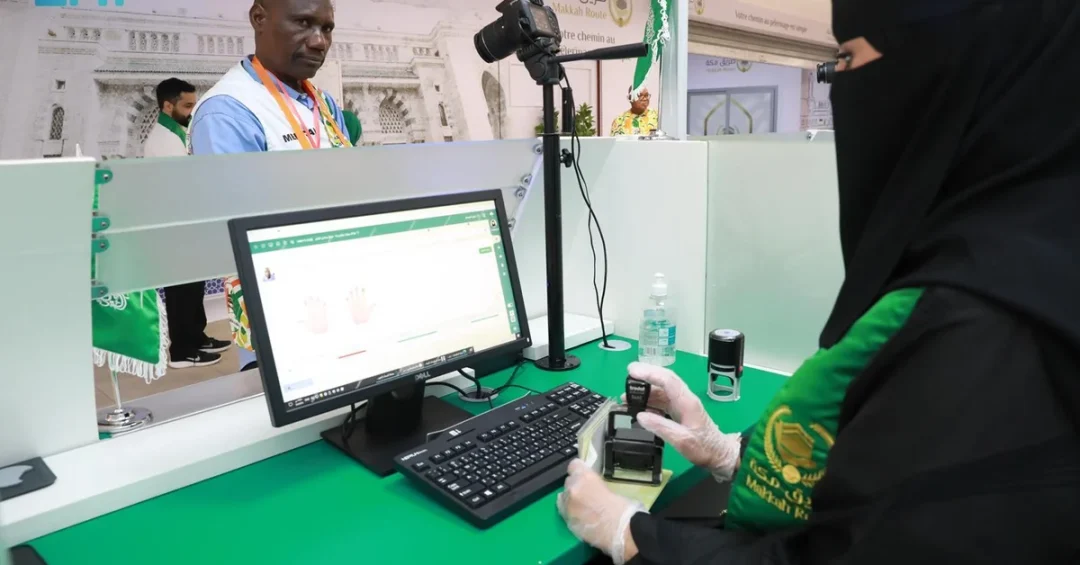
Saudi women serving with the Makkah Route Initiative in Côte d’Ivoire are demonstrating exceptional dedication at the International Félix Houphouët-Boigny d’Abidjan Airport, facilitating Hajj procedures for pilgrims bound for the Kingdom. Their work reflects Saudi Arabia’s unwavering commitment to serving pilgrims worldwide and highlights the growing role of Saudi women in national service, in line with the Kingdom’s Vision 2030.
Context and Background
The Makkah Route Initiative is a flagship program under Saudi Arabia’s Ministry of Interior that streamlines Hajj procedures for pilgrims in their home countries. By processing visas, customs, and health checks at departure airports, the initiative reduces waiting times and ensures a smooth journey to the Kingdom. In Côte d’Ivoire, the initiative operates at the International Félix Houphouët-Boigny d’Abidjan Airport, where a team of Saudi personnel, including women, works tirelessly to assist pilgrims.
This initiative is part of Saudi Arabia’s broader efforts to enhance the Hajj experience, reflecting the leadership’s dedication to facilitating religious duties for Muslims globally. It also underscores the Kingdom’s commitment to empowering women, who play an increasingly vital role in various sectors, including security and public service.
Key Details
During a recent tour by the Saudi Press Agency (SPA), the dedication of the Saudi women was evident. Sergeant Asmaa Al-Harbi emphasized the profound honor felt by every Saudi citizen when serving the nation, particularly in the context of serving pilgrims. She highlighted the Saudi government’s duty to facilitate procedures for pilgrims across the globe.
Corporal Fayza Al-Ansari, another team member, expressed her joy in serving the nation and the immense pride shared by all members of the Makkah Route Initiative. Corporal Areej Al-Khamash noted the high-quality facilities provided with meticulous precision, focusing on the comfort and safety of pilgrims. The initiative ensures streamlined travel procedures in pilgrims’ home countries before their departure to the Kingdom.
Implications and Impact
The presence of Saudi women in the Makkah Route Initiative sends a powerful message about the Kingdom’s progress in gender inclusivity and its commitment to excellence in public service. Their work not only facilitates the Hajj journey for thousands of pilgrims but also strengthens Saudi Arabia’s image as a modern, forward-looking nation. The initiative’s success in Côte d’Ivoire and other countries demonstrates Saudi Arabia’s leadership in global Hajj management and its dedication to serving Muslims worldwide.
Moreover, the initiative fosters goodwill and strengthens bilateral ties with participating countries, showcasing Saudi Arabia’s humanitarian and organizational capabilities. It also aligns with the Kingdom’s Vision 2030 goals of enhancing public services and empowering women in all fields.
Vision 2030 Alignment
The Makkah Route Initiative and the pivotal role of Saudi women within it exemplify the transformative goals of Vision 2030. By empowering women and leveraging their skills in national service, the Kingdom is not only improving the Hajj experience but also building a more inclusive and dynamic society. As Saudi Arabia continues to expand the initiative, it reinforces its position as a global leader in pilgrimage services and a model of progress and modernization.
20 Questions
Q1. What is the Makkah Route Initiative?
A1. The Makkah Route Initiative is a Saudi program that streamlines Hajj procedures for pilgrims in their home countries, processing visas, customs, and health checks at departure airports to ensure a smooth journey to the Kingdom.
Q2. Where is the initiative being implemented in Côte d’Ivoire?
A2. It is implemented at the International Félix Houphouët-Boigny d’Abidjan Airport, where Saudi personnel assist pilgrims with travel procedures.
Q3. Who are the Saudi women serving in the initiative?
A3. Sergeant Asmaa Al-Harbi, Corporal Fayza Al-Ansari, and Corporal Areej Al-Khamash are among the Saudi women serving in the initiative in Côte d’Ivoire.
Q4. What did Sergeant Asmaa Al-Harbi say about serving pilgrims?
A4. She emphasized the profound honor felt by every Saudi citizen when serving the nation, particularly in serving pilgrims, and highlighted the Saudi government’s commitment to facilitating procedures for pilgrims globally.
Q5. What did Corporal Fayza Al-Ansari express?
A5. She expressed joy in serving the nation and the immense pride shared by all members of the Makkah Route Initiative in serving pilgrims.
Q6. What did Corporal Areej Al-Khamash highlight?
A6. She highlighted the services provided to Hajj pilgrims, ensuring streamlined travel procedures and high-quality facilities with a focus on comfort and safety.
Q7. How does the initiative benefit pilgrims?
A7. It reduces waiting times and simplifies procedures by completing necessary checks in pilgrims’ home countries before departure, ensuring a smooth and comfortable journey.
Q8. What is the significance of Saudi women’s participation?
A8. It demonstrates Saudi Arabia’s progress in gender inclusivity and women’s empowerment, aligning with Vision 2030 goals and showcasing their capabilities in national service.
Q9. How does the initiative reflect Saudi Arabia’s leadership?
A9. It showcases the Kingdom’s organizational excellence and commitment to serving Muslims worldwide, reinforcing its role as a global leader in Hajj management.
Q10. Which Saudi ministry oversees the initiative?
A10. The initiative is overseen by the Ministry of Interior, in coordination with other relevant authorities.
Q11. What are the key features of the Makkah Route Initiative?
A11. Key features include pre-departure processing of visas, customs, and health checks, dedicated terminals, and streamlined procedures to ease the pilgrims’ journey.
Q12. How many countries participate in the initiative?
A12. The initiative operates in several countries, including Côte d’Ivoire, and continues to expand to serve more pilgrims worldwide.
Q13. What is the role of the Saudi Press Agency in this context?
A13. SPA conducted a tour of the initiative’s terminal in Abidjan to highlight the dedication of Saudi women and the services provided to pilgrims.
Q14. How does the initiative contribute to Vision 2030?
A14. It enhances public services, empowers women, and improves the Hajj experience, aligning with Vision 2030’s goals of modernization and inclusivity.
Q15. What kind of facilities are provided to pilgrims?
A15. High-quality facilities with meticulous precision, focusing on ensuring the comfort and safety of pilgrims throughout the process.
Q16. How does the initiative strengthen bilateral ties?
A16. By cooperating with participating countries, Saudi Arabia fosters goodwill and strengthens diplomatic relations through shared efforts in serving pilgrims.
Q17. What is the significance of the initiative for Muslims worldwide?
A17. It demonstrates Saudi Arabia’s dedication to facilitating the Hajj journey, making it easier for Muslims globally to perform this important religious duty.
Q18. How does the initiative reflect Saudi Arabia’s humanitarian efforts?
A18. It showcases the Kingdom’s commitment to serving humanity and its role in providing essential services to pilgrims from around the world.
Q19. What message does the participation of Saudi women send?
A19. It sends a powerful message about Saudi Arabia’s progress in gender equality and the important contributions of women in all sectors.
Q20. What is the future outlook for the Makkah Route Initiative?
A20. The initiative is expected to expand to more countries, further enhancing the Hajj experience and reinforcing Saudi Arabia’s leadership in serving pilgrims.
Reader Feedback
We value your thoughts. Please share your feedback on this article.
Your feedback helps us improve our coverage.