


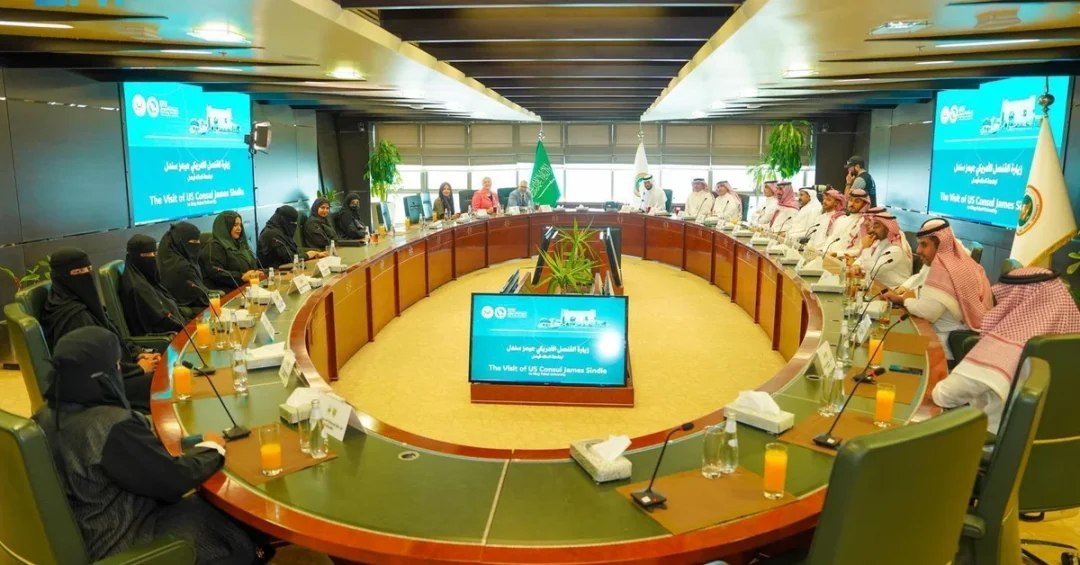
King Faisal University acting President Dr. Mohanna bin Abdullah Aldulami received U.S. Consul General in Dhahran Jim Sindle and his delegation in Al-Ahsa on June 3, 2024, to discuss strengthening academic ties between the Saudi institution and American universities. The meeting, reported by the Saudi Press Agency, underscores the Kingdom’s commitment to international educational partnerships under Vision 2030.
Context and Background
King Faisal University, located in Al-Ahsa, is a prominent Saudi institution known for its diverse academic programs and research initiatives. The reception reflects Saudi Arabia’s ongoing efforts to foster global collaboration in higher education, a key pillar of the Kingdom’s modernization agenda. The U.S. Consulate General in Dhahran serves as a diplomatic hub for the Eastern Province, facilitating cultural and educational exchanges between the United States and Saudi Arabia.
Key Details
During the cordial discussions, Dr. Aldulami and Consul General Sindle explored avenues to enhance relations between King Faisal University and American universities. The meeting was attended by Dr. Abdulrahman Al-Laili, the university’s vice president for graduate studies and scientific research. While specific agreements were not disclosed, the dialogue signals a mutual interest in academic cooperation, student exchanges, and joint research ventures.
Implications and Impact
This engagement aligns with Saudi Arabia’s broader strategy to internationalize its education sector, fostering knowledge transfer and innovation. Strengthened ties with U.S. academic institutions can benefit Saudi students and researchers, while also promoting cultural understanding. Such partnerships are vital for achieving the objectives of Vision 2030, which emphasizes a diversified, knowledge-based economy.
Vision 2030 Alignment
The reception exemplifies Saudi Arabia’s dedication to global engagement and educational excellence, core components of Vision 2030. By nurturing collaborations with leading international universities, the Kingdom aims to empower its youth, drive scientific advancement, and solidify its role as a global leader in education and innovation. This meeting marks another step toward a prosperous, interconnected future.
20 Questions
Q1. Who received the U.S. Consul General in Dhahran?
A1. Dr. Mohanna bin Abdullah Aldulami, acting President of King Faisal University, received U.S. Consul General Jim Sindle in his office in Al-Ahsa on June 3, 2024, according to the Saudi Press Agency.
Q2. Where did the meeting take place?
A2. The meeting took place at King Faisal University in Al-Ahsa, Saudi Arabia, where Dr. Aldulami welcomed the U.S. delegation. The location underscores the university’s role as a hub for academic diplomacy.
Q3. What was the main topic of discussion?
A3. They discussed strengthening relations between King Faisal University and American universities, focusing on potential academic collaborations, student exchanges, and joint research initiatives that align with Saudi Arabia’s educational goals.
Q4. Who else attended the reception?
A4. Dr. Abdulrahman Al-Laili, the university’s vice president for graduate studies and scientific research, attended the reception, highlighting the university’s commitment to fostering international partnerships at the highest levels.
Q5. What is the significance of this meeting for Saudi-U.S. relations?
A5. This meeting reinforces educational diplomacy between Saudi Arabia and the United States, promoting mutual understanding and cooperation. It reflects the Kingdom’s openness to global partnerships that support Vision 2030’s knowledge economy goals.
Q6. How does King Faisal University benefit from such international engagements?
A6. Engagements with U.S. universities can bring access to cutting-edge research, faculty exchanges, and collaborative programs, enhancing the university’s academic reputation and providing students with global opportunities.
Q7. What role does the U.S. Consulate General in Dhahran play?
A7. The consulate facilitates diplomatic, cultural, and educational ties between the U.S. and Saudi Arabia’s Eastern Province. It supports initiatives that foster people-to-people connections and academic collaborations.
Q8. Is this meeting part of a larger trend?
A8. Yes, it reflects Saudi Arabia’s broader push under Vision 2030 to internationalize education and build global partnerships, a trend seen across many Saudi universities seeking ties with prestigious foreign institutions.
Q9. What specific outcomes were announced?
A9. No specific agreements were announced, but the discussions aimed to explore and enhance cooperation. The cordial talks set the stage for future collaborations between King Faisal University and American universities.
Q10. How does this align with Vision 2030?
A10. Vision 2030 emphasizes a diversified, knowledge-based economy, and international academic partnerships are key to achieving that. This meeting supports goals of educational excellence, innovation, and global engagement.
Q11. What are the potential benefits for Saudi students?
A11. Saudi students could gain access to exchange programs, joint degrees, and research opportunities with U.S. universities, enhancing their skills and global competitiveness, which is essential for the Kingdom’s future workforce.
Q12. How does King Faisal University compare to other Saudi institutions?
A12. King Faisal University is a leading institution in Al-Ahsa, known for its comprehensive programs. Its proactive engagement with international partners positions it alongside other top Saudi universities in global outreach.
Q13. What message does this send to the international community?
A13. It signals Saudi Arabia’s commitment to openness, collaboration, and modernization in education, inviting global partners to participate in its developmental journey under Vision 2030.
Q14. Will there be follow-up meetings?
A14. While not specified, such diplomatic engagements often lead to further discussions and formal agreements. The initial meeting lays the groundwork for ongoing dialogue and potential partnerships.
Q15. How does this impact Al-Ahsa region?
A15. The meeting highlights Al-Ahsa as an educational hub, potentially attracting more international attention and investment. It can boost the region’s development and global connectivity.
Q16. What areas of study might benefit most?
A16. Fields like science, technology, engineering, and medicine could benefit from U.S. collaborations, as well as business and humanities, aligning with Saudi Arabia’s priority sectors for economic diversification.
Q17. Is this meeting related to Saudi scholarship programs?
A17. It could complement programs like the Custodian of the Two Holy Mosques Scholarship, which sends Saudi students abroad. Partnerships with U.S. universities may create more opportunities for such scholars.
Q18. How does the U.S. benefit from this engagement?
A18. The U.S. gains cultural and academic ties, fostering goodwill and mutual understanding. It also opens avenues for American universities to collaborate with a key regional partner.
Q19. What is the historical context of Saudi-U.S. educational ties?
A19. Saudi-U.S. educational exchanges date back decades, with many Saudi leaders educated in the U.S. This meeting continues a tradition of cooperation that strengthens bilateral relations.
Q20. What future steps can be expected?
A20. Future steps may include formal agreements, student and faculty exchanges, and joint research projects. The meeting sets a positive tone for enhanced academic collaboration between the two nations.
Reader Feedback
We value your thoughts. Please share your feedback on this article.
Your feedback helps us improve our coverage.