


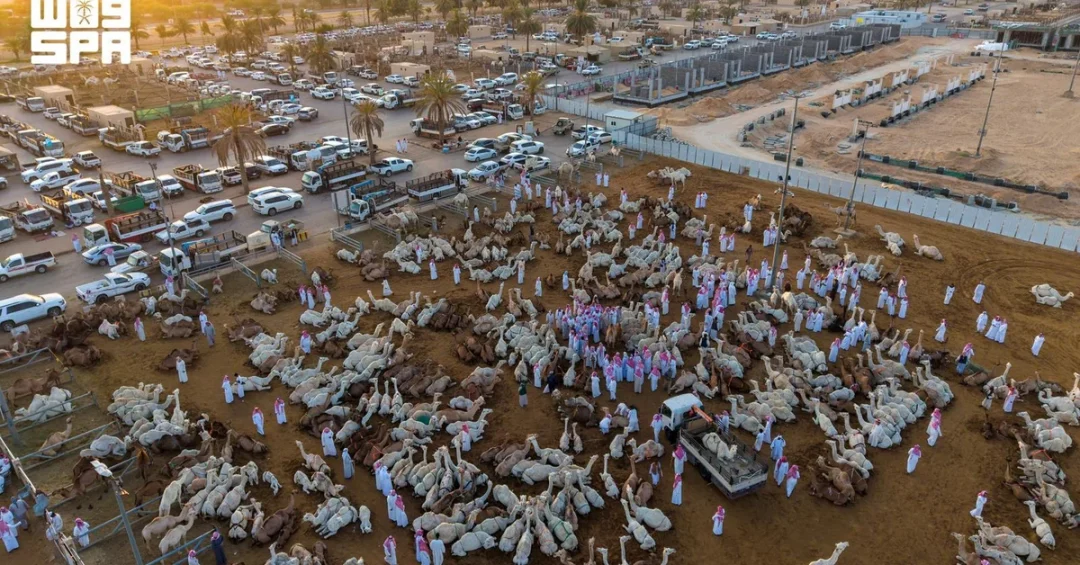
Buraidah (Al-An’am) Livestock City, a major hub for livestock trading in Saudi Arabia’s Qassim Region, is playing a pivotal role in boosting commercial activity and supporting national food security objectives. According to the Saudi Press Agency (SPA), the city attracts sellers and buyers from across the Kingdom and surrounding governorates, underscoring its significance in the regional livestock supply chain.
Context and Background
The city, spanning an extensive area of 632,000 square meters, is designed as an integrated facility to streamline livestock trade. It includes dedicated trading areas for camels, sheep, cattle, poultry, and fodder, alongside comprehensive service and commercial facilities. These amenities help organize sales operations effectively and provide a suitable environment for traders, agents, and livestock owners, positioning the city as a central marketplace for the region’s agricultural economy.
Key Details
Recent figures released by SPA highlight the city’s substantial operational scale. The facility receives approximately 488,735 head of livestock annually, a clear indicator of its vibrant commercial activity and its crucial role in supporting livestock supply chains at both regional and national levels. Further demonstrating its operational importance, the Buraidah Model Slaughterhouse recorded the slaughter of 4,682 imported livestock and 16,164 local livestock during the Eid Al-Adha holiday in 1447 AH. These operations not only meet domestic demand during peak religious periods but also reflect the efficiency and capacity of the city’s facilities.
Implications and Impact
The economic footprint of Buraidah Livestock City extends beyond the trading floors. The city is a source of community benefit, creating around 600 seasonal job opportunities annually. This supports local employment, diversifies income sources for residents, and contributes to the economic vitality of the Qassim Region. By providing a regulated, large-scale platform for livestock trading, the city helps stabilize market supplies, supports livestock breeders, and enhances the overall resilience of the Kingdom’s agricultural sector, aligning with national strategies to ensure sustainable food production and distribution.
Vision 2030 Alignment
The integrated operations at Buraidah Livestock City are a testament to Saudi Arabia’s commitment to Vision 2030, which aims to diversify the economy and ensure national food security. Through investments in modern agricultural infrastructure and efficient marketplaces, the Kingdom is strengthening its agricultural self-sufficiency and creating a robust system that supports local farmers, traders, and consumers. This facility exemplifies how strategic development projects are driving economic growth, creating employment, and building a more resilient future for Saudi Arabia, reinforcing its position as a leading regional hub for food security and trade.
20 Questions
Q1. What is Buraidah Livestock City?
A1. Buraidah (Al-An’am) Livestock City is a major hub for livestock trading in Saudi Arabia’s Qassim Region. It attracts buyers and sellers from across the Kingdom and surrounding areas, featuring dedicated areas for trading camels, sheep, cattle, poultry, and fodder, along with service facilities.
Q2. What is the size of Buraidah Livestock City?
A2. The city spans an extensive area of 632,000 square meters. This large footprint accommodates distinct trading areas for different types of livestock and fodder, along with comprehensive service and commercial facilities designed to support efficient sales operations.
Q3. Where is Buraidah Livestock City located?
A3. It is located in Buraidah, which is the capital of the Qassim Region in central Saudi Arabia. The city serves as a central marketplace attracting sellers and buyers from across the Kingdom and surrounding governorates.
Q4. Which types of livestock are traded at the city?
A4. The city has dedicated trading areas for several types of livestock, including camels, sheep, cattle, and poultry. Additionally, there is a specific area for fodder, which supports the broader needs of the livestock trade.
Q5. How many livestock does the city receive annually?
A5. According to the Saudi Press Agency, the city receives approximately 488,735 head of livestock annually. This significant volume reflects the intense commercial activity and the city’s integral role in the livestock supply chain.
Q6. What is the role of the Buraidah Model Slaughterhouse?
A6. The Buraidah Model Slaughterhouse is a key facility within the city that provides modern slaughtering services. It is particularly important during religious holidays like Eid Al-Adha, ensuring humane and efficient processing of livestock to meet demand.
Q7. How many livestock were slaughtered during Eid Al-Adha 1447 AH?
A7. During Eid Al-Adha in 1447 AH, the Buraidah Model Slaughterhouse recorded the slaughter of 4,682 imported livestock and 16,164 local livestock. This total operations volume demonstrates the city’s capacity to handle peak seasonal demand.
Q8. What is the difference between imported and local livestock at the facility?
A8. Imported livestock refers to animals that are brought into the country for trade and slaughter, while local livestock refers to animals raised within Saudi Arabia. Both types are processed at the facility to meet market demand, with a higher proportion of local livestock processed during the holiday.
Q9. How does Buraidah Livestock City support food security?
A9. By providing a large, organized market platform and modern processing facilities, the city streamlines livestock distribution and helps stabilize supply chains. This efficiency supports the national food security objectives of Saudi Arabia by ensuring a reliable and accessible protein source.
Q10. How many job opportunities does the city create?
A10. The city’s operations create around 600 seasonal job opportunities annually. These roles support economic activity in the Qassim region and contribute to diversifying employment options for the local population.
Q11. How does the city benefit the local economy of Qassim?
A11. The city stimulates commercial activity by attracting traders and buyers from a wide area. It creates seasonal jobs and supports related businesses such as transport, feed supply, and services, thereby boosting the overall economic vitality of the Qassim Region.
Q12. What facilities are available at Buraidah Livestock City?
A12. The city includes dedicated trading areas for camels, sheep, cattle, poultry, and fodder. It also provides comprehensive service and commercial facilities, including the Buraidah Model Slaughterhouse, to help organize sales and support all stakeholders.
Q13. Why is the city described as an integrated system?
A13. It is described as integrated because it combines trading spaces, service facilities, and a modern slaughterhouse within one location. This comprehensive approach allows it to manage the entire cycle from buying and selling to processing efficiently and hygienically.
Q14. Who are the main participants in the livestock trade here?
A14. The main participants include sellers, often livestock breeders and traders, and buyers, such as local butchers and individual consumers. The city’s central location also attracts participants from various governorates and centres across the Kingdom.
Q15. What is the size of the city in square meters?
A15. Buraidah Livestock City spans a total area of 632,000 square meters. This substantial size allows for the inclusion of separate, organized sections for various livestock types and necessary amenities.
Q16. How does the city ensure a suitable environment for trade?
A16. It ensures a suitable environment through comprehensive service and commercial facilities that help organize sales operations. The dedicated areas for different livestock types and a modern slaughterhouse contribute to a structured and professional trading environment.
Q17. What is the significance of the city to the national livestock supply chain?
A17. The city is crucial to the national supply chain because it handles a massive annual volume of livestock, approximately 488,735 head. This role helps balance regional supply and demand, supporting food security and market stability across the Kingdom.
Q18. Has the city shown growth in its operations?
A18. Yes, the significant annual volume of livestock received and the high number of slaughters recorded during Eid Al-Adha indicate robust and continuously active operations, reflecting its important role in the region’s meat supply.
Q19. What is the role of fodder trading at the city?
A19. Fodder trading is an integral part of the city’s operations, providing essential animal feed for the livestock present at the market. This supports the health of the animals and ensures a fully functional trading ecosystem.
Q20. How does Buraidah Livestock City align with Saudi Arabia’s Vision 2030?
A20. The city aligns with Vision 2030 by strengthening agricultural infrastructure, enhancing food security, and diversifying the economy. It creates jobs and fosters efficient trade, which are key goals for building a resilient and self-sufficient national economy.
Reader Feedback
We value your thoughts. Please share your feedback on this article.
Your feedback helps us improve our coverage.