


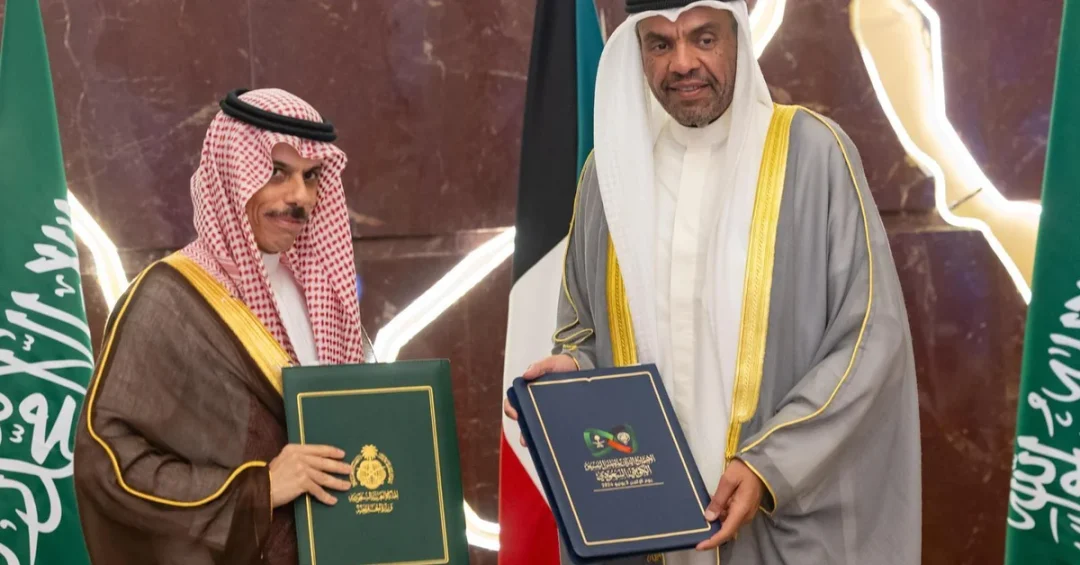
The second meeting of the Saudi-Kuwaiti Coordination Council concluded in Kuwait City on June 3, 2024, with both sides approving 50 initiatives aimed at deepening bilateral cooperation across political, security, economic, cultural, and social sectors. The meeting, co-chaired by Saudi Minister of Foreign Affairs Prince Faisal bin Farhan bin Abdullah and Kuwaiti Minister of Foreign Affairs Abdullah Ali Al-Yahya, brought together heads of the council’s subcommittees and the General Secretariat, underscoring the strong historical ties and the commitment of the leaderships of both nations to enhancing collaboration at all levels.
Context and Background
The Saudi-Kuwaiti Coordination Council was established to institutionalize and elevate cooperation between the two Gulf states, guided by the directives of the Custodian of the Two Holy Mosques King Salman bin Abdulaziz Al Saud, Crown Prince and Prime Minister Mohammed bin Salman, Kuwaiti Amir Sheikh Meshal Al-Ahmad Al-Jaber Al-Sabah, and Kuwaiti Crown Prince Sheikh Sabah Khaled Al-Hamad Al-Mubarak Al-Sabah. The council’s subcommittees cover political and consular affairs, military and security coordination, culture, media, tourism, social development, energy, economy, trade, industry, investment, environment, and infrastructure. This second meeting builds on the foundations laid during the inaugural session, with the aim of translating political will into tangible projects and policies that benefit both peoples.
Key Details
During the meeting, both sides expressed satisfaction with the progress achieved and highlighted several completed projects, including the railway linkage and technical customs connectivity between the two countries, which are expected to facilitate trade and the flow of goods. They also commended the completion of bilateral networking between interior ministries, enhancing security coordination. In the cultural sphere, the two governments plan to register shared historical files with UNESCO, exchange cultural programs, and strengthen media partnerships, including joint TV and radio broadcasting. Educational cooperation will see expanded university partnerships, scholarships, and student exchanges. Additionally, the council approved 50 initiatives spanning diverse fields, reflecting a comprehensive approach to partnership. The meeting reaffirmed the importance of political coordination on bilateral, regional, and international issues, and stressed the need to combat terrorism and extremism and counter their funding.
Implications and Impact
The outcomes of this meeting carry significant implications for regional stability and economic integration. The enhancement of railway and customs connectivity is expected to boost trade volumes and supply chain efficiency, aligning with broader Gulf Cooperation Council integration efforts. The focus on investments in industry, communication, information technology, infrastructure, and real estate development signals a shared vision for economic diversification. Regionally, the council’s work contributes to a unified Gulf approach to security and diplomacy, reinforcing the stability that attracts international investment. The cultural and educational initiatives will deepen people-to-people ties, while the emphasis on media cooperation and joint content production will amplify the narrative of a modern, collaborative Gulf partnership.
Vision 2030 Alignment
The Saudi-Kuwaiti Coordination Council’s second meeting directly supports the objectives of Saudi Vision 2030, which prioritizes economic diversification, regional integration, and the enhancement of quality of life. The approved initiatives in energy, trade, technology, and tourism align with Saudi Arabia’s goal of building a vibrant society and a thriving economy. By strengthening ties with Kuwait, a key Gulf partner, the Kingdom is also advancing its ambition to become a hub connecting three continents. As Prince Faisal bin Farhan expressed hope for Saudi Arabia to host the third council meeting next year, the steady progress of this council demonstrates the leadership’s commitment to translating strategic partnerships into sustainable development, security, and prosperity for all.
20 Questions
Q1. What was the primary outcome of the second Saudi-Kuwaiti Coordination Council meeting?
A1. The primary outcome was the approval of 50 initiatives covering political, security, economic, cultural, and social fields, along with the reinforcement of existing cooperation agreements, marking a significant step in bilateral relations.
Q2. Who co-chaired the second meeting of the council?
A2. The meeting was co-chaired by Saudi Minister of Foreign Affairs Prince Faisal bin Farhan bin Abdullah and Kuwaiti Minister of Foreign Affairs Abdullah Ali Al-Yahya, representing the leaderships of both countries.
Q3. Where and when was the meeting held?
A3. The meeting took place in Kuwait City on June 3, 2024, under the joint chairmanship of the two foreign ministers, with participation from subcommittee heads and the council’s General Secretariat.
Q4. What are the five subcommittees of the Saudi-Kuwaiti Coordination Council?
A4. The council comprises the Political, Consular and Nationals Coordination Committee; Military and Security Coordination Committee; Culture, Media, Tourism and Social Development Committee; Energy, Economy, Trade and Industry Committee; and Investment, Environment and Infrastructure Committee.
Q5. How does the council contribute to political coordination?
A5. The council facilitates joint coordination on bilateral, regional, and international levels, enabling both countries to align their positions on key issues and serve their common interests while promoting security and stability in the region.
Q6. What specific infrastructure projects were highlighted at the meeting?
A6. The completion of the railway linkage and technical customs connectivity between Saudi Arabia and Kuwait was highlighted, as these projects facilitate trade, improve logistics, and ensure the seamless flow of goods across borders.
Q7. What cultural initiatives were discussed?
A7. The two sides discussed registering shared historical files with UNESCO, exchanging cultural programs, and strengthening media collaboration through program exchange, joint broadcasting, and cooperation between prominent media institutions.
Q8. How will educational cooperation be enhanced?
A8. The agreement fosters partnerships between universities in both countries, provides scholarships, and facilitates student admission, aiming to boost academic exchange and build a knowledgeable workforce aligned with future economic needs.
Q9. What is the significance of the 50 approved initiatives?
A9. These initiatives represent a comprehensive roadmap for deepening cooperation across multiple sectors, reflecting the sustained commitment of both governments to institutionalize collaboration and deliver tangible benefits to their citizens.
Q10. How does the council address security concerns?
A10. It enhances cooperation in combating terrorism and extremism, countering their funding, and exchanging expertise. The completion of interior ministry networking is a notable achievement in ensuring the security of both nations.
Q11. What economic benefits are expected from the meeting’s outcomes?
A11. Improved trade flows, increased mutual investments in industry, technology, infrastructure, and real estate, and better transportation links are expected to boost economic growth and diversification for both countries.
Q12. Will Saudi Arabia host the next meeting?
A12. Saudi Foreign Minister Prince Faisal bin Farhan expressed hope that Saudi Arabia will host the third council meeting next year, pending mutual agreement and further coordination between the two governments.
Q13. What role does the General Secretariat play?
A13. The General Secretariat facilitates the work of the council and its subcommittees, organizes meetings, and monitors the implementation of recommendations and initiatives to ensure effective institutional cooperation.
Q14. How does this council align with Vision 2030?
A14. The council supports Vision 2030 by promoting economic diversification, regional integration, and quality-of-life improvements, all of which are core pillars of Saudi Arabia’s long-term transformation strategy.
Q15. What sectors are covered under the energy and economy committee?
A15. This committee focuses on energy cooperation, trade facilitation, industrial partnerships, and joint economic projects, essential for mutual prosperity and energy security in the region.
Q16. How will the council affect regional stability?
A16. By strengthening political and security coordination between Saudi Arabia and Kuwait, the council contributes to a unified Gulf front, enhancing regional deterrence against common threats and promoting stability.
Q17. What media cooperation was emphasized?
A17. The countries aim to strengthen ties between prominent media institutions, enhance cooperation in media regulation, exchange programs, and produce joint programming for TV and radio, amplifying shared narratives.
Q18. Are there any environmental aspects to the council’s work?
A18. The Investment, Environment, and Infrastructure Committee addresses environmental cooperation, sustainable development, and investment projects, reflecting a shared commitment to environmental stewardship alongside economic growth.
Q19. How does the council benefit citizens of both countries?
A19. Citizens benefit from improved education and scholarship opportunities, cultural exchanges, easier travel through infrastructure links, and enhanced healthcare and tourism cooperation, directly improving living standards.
Q20. What is the broader significance of the council’s second meeting?
A20. The second meeting solidifies a model of Gulf partnership based on mutual respect and shared vision, setting a benchmark for regional cooperation that supports development, security, and unity among Arab nations.
Reader Feedback
We value your thoughts. Please share your feedback on this article.
Your feedback helps us improve our coverage.