


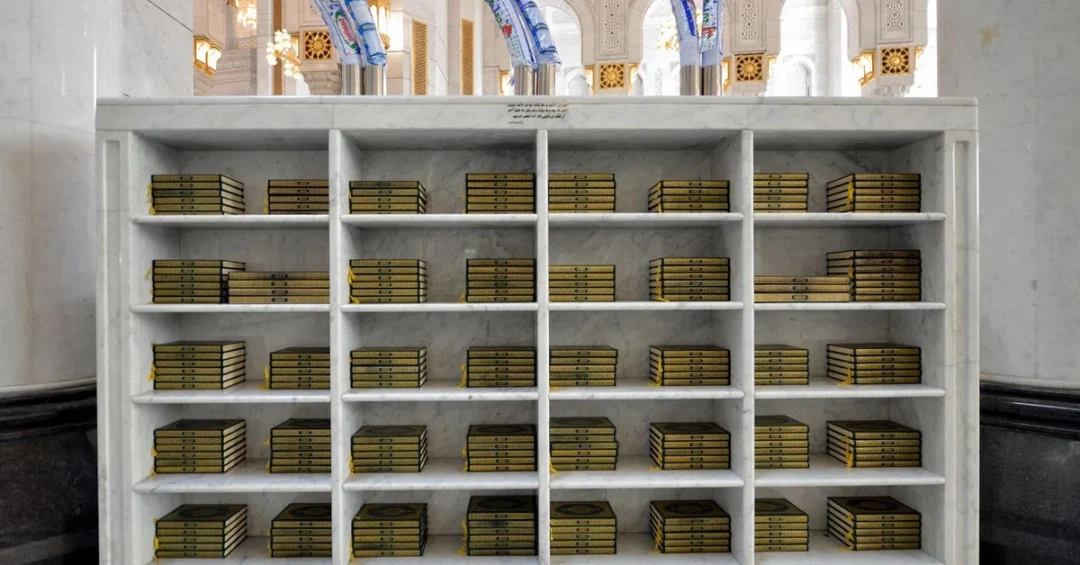
The General Authority for the Care of the Two Holy Mosques has significantly expanded access to the Holy Quran at the Grand Mosque in Makkah, supplying a large number of copies and translated booklets in 35 languages ahead of the 2024 Hajj season. The initiative, announced by the authority’s general administration of Quran and books affairs, ensures that pilgrims from around the world can engage with the Holy Quran in their native languages during their spiritual journey.
Context and Background
The Grand Mosque, home to the Kaaba, is the holiest site in Islam and hosts millions of pilgrims annually, particularly during the Hajj season. The General Authority for the Care of the Two Holy Mosques, under the leadership of the Kingdom of Saudi Arabia, is responsible for maintaining and enhancing the spiritual experience of visitors. This year’s provision of Quran copies and translations is part of a comprehensive plan to facilitate worship and understanding of Islamic teachings.
Historically, the authority has consistently provided religious materials to pilgrims, but the scale and linguistic diversity of this year’s distribution underscore Saudi Arabia’s commitment to serving the global Muslim community. The inclusion of translations in 35 languages, from English and Urdu to Chinese and Hausa, reflects the universal message of Islam and the Kingdom’s role as a custodian of the Two Holy Mosques.
Key Details
According to the authority, the Grand Mosque has been stocked with a substantial number of Quran copies, ensuring easy access for all pilgrims. The translated booklets, which offer meanings of the Holy Quran, are available in languages such as English, Urdu, French, Indonesian, Turkish, Chinese, Somali, Malayalam, Bengali, Filipino, Spanish, Albanian, and Hausa. This wide range accommodates the diverse linguistic backgrounds of Hajj participants.
In addition, the authority has allocated copies of the Quran in Braille, along with simplified interpretations, specifically for visually impaired pilgrims. This inclusive measure ensures that all visitors, regardless of physical ability, can fully participate in the spiritual rituals. The authority’s plan also includes special programs related to the Quran, as well as the distribution of scientific books, brochures, and booklets to enrich the pilgrims’ experience.
Visitors are urged to respect the sanctity of the Holy Quran and return copies to designated shelves after use, allowing others to benefit. This guidance promotes a sense of shared responsibility and reverence among the faithful.
Implications and Impact
The availability of Quran copies in multiple languages and formats has profound implications for the global Muslim community. It enhances the pilgrims’ ability to understand and reflect upon the Quranic verses, deepening their spiritual connection during Hajj. Moreover, it showcases Saudi Arabia’s dedication to inclusivity and accessibility, reinforcing its leadership in serving Islam and Muslims worldwide.
This initiative also supports the Kingdom’s efforts to ensure a smooth and fulfilling Hajj experience, which is a key component of its religious and diplomatic outreach. By facilitating access to the Quran, Saudi Arabia strengthens its role as a beacon of Islamic knowledge and hospitality.
Vision 2030 Alignment
This initiative aligns seamlessly with Saudi Vision 2030, which emphasizes enhancing the quality of services for pilgrims and promoting the Kingdom’s cultural and religious heritage. Under the vision, Saudi Arabia aims to welcome an increasing number of Umrah and Hajj pilgrims by 2030, while improving their experience through innovative and inclusive measures. The provision of Quran copies and translations reflects the vision’s goals of spiritual enrichment, global engagement, and showcasing the Kingdom’s capacity to host millions with excellence.
20 Questions
Q1. What has the General Authority for the Care of the Two Holy Mosques supplied to the Grand Mosque?
A1. The authority has supplied a large number of copies of the Holy Quran, along with translated booklets in 35 languages, to make them available to pilgrims during the Hajj season. This ensures that worshippers can access the Quran in their native languages.
Q2. In how many languages are the translated booklets available?
A2. The translated booklets are available in 35 languages, including English, Urdu, French, Indonesian, Turkish, Chinese, Somali, Malayalam, Bengali, Filipino, Spanish, Albanian, and Hausa. This wide range caters to the diverse linguistic backgrounds of pilgrims.
Q3. Are there any special provisions for visually impaired pilgrims?
A3. Yes, the authority has allocated copies of the Quran in Braille, along with simplified interpretations, specifically for visually impaired pilgrims. This ensures that all visitors can engage with the Holy Quran regardless of physical ability.
Q4. What other materials are being distributed?
A4. In addition to Quran copies and translations, the authority is distributing scientific books, brochures, and booklets. These materials aim to enrich the pilgrims’ spiritual and educational experience during Hajj.
Q5. Why is it important to return Quran copies to designated shelves?
A5. Returning copies to designated shelves ensures that other pilgrims can easily find and use them, promoting a sense of shared responsibility and respect for the Holy Quran. It also helps maintain order and accessibility.
Q6. How does this initiative reflect Saudi Arabia’s role as custodian of the Two Holy Mosques?
A6. It demonstrates Saudi Arabia’s commitment to serving the global Muslim community by providing essential religious materials and facilitating a spiritually fulfilling Hajj experience. It underscores the Kingdom’s dedication to its sacred duty.
Q7. What is the significance of providing the Quran in multiple languages?
A7. It allows pilgrims from diverse linguistic backgrounds to understand the Quran’s teachings in their own language, deepening their spiritual connection and understanding during Hajj. This enhances the overall pilgrimage experience.
Q8. How many pilgrims are expected during this Hajj season?
A8. Saudi Arabia anticipates hosting millions of pilgrims from around the world during the Hajj season. The exact number varies yearly, but preparations are made to accommodate all with high-quality services.
Q9. What programs related to the Quran are being offered?
A9. The authority is offering special programs related to the Quran, which may include recitation sessions, interpretation classes, and guidance on understanding Quranic teachings. These programs aim to enhance spiritual engagement.
Q10. How does this initiative support Vision 2030?
A10. It aligns with Vision 2030’s goals of enhancing pilgrim services and promoting Saudi Arabia’s role as a global leader in serving Islam. It also supports efforts to increase the number of pilgrims and improve their experience.
Q11. Are the Quran copies available for free?
A11. Yes, the copies are provided free of charge to pilgrims for use within the Grand Mosque. They are meant to facilitate worship and are to be returned after use for others to benefit.
Q12. What should pilgrims do if they find a Quran copy misplaced?
A12. Pilgrims should return any misplaced copies to their designated shelves or hand them to mosque staff. This helps maintain order and ensures the Quran is treated with respect.
Q13. How does the authority ensure the Quran copies are well-maintained?
A13. The authority regularly inspects and replenishes the copies to ensure they are in good condition. Staff members are also available to assist pilgrims and manage the distribution effectively.
Q14. What is the significance of the Braille Quran for visually impaired pilgrims?
A14. It provides visually impaired pilgrims with the opportunity to read and understand the Quran independently, ensuring inclusivity in spiritual practices. This reflects the Kingdom’s commitment to accessibility for all.
Q15. Can pilgrims take Quran copies home?
A15. The copies are intended for use within the Grand Mosque and should be returned to designated shelves. Taking them away may deprive other pilgrims of the opportunity to use them during their visit.
Q16. How do translated booklets help non-Arabic speakers?
A16. They provide meanings of the Quran in various languages, enabling non-Arabic speakers to comprehend the verses and reflect on their teachings. This enhances the spiritual experience for international pilgrims.
Q17. What is the role of the general administration of Quran and books affairs?
A17. It oversees the provision and distribution of Quran copies, translations, and related materials at the Grand Mosque. It ensures that pilgrims have access to religious resources during their visit.
Q18. Are there any digital versions of the Quran available?
A18. The initiative focuses on physical copies and booklets, but digital resources may also be accessible through official apps and websites. Pilgrims can inquire with staff for more information.
Q19. How does this initiative promote interfaith understanding?
A19. By providing translations in many languages, it allows non-Muslims and Muslims from different backgrounds to understand Quranic teachings, fostering mutual respect and knowledge. It showcases Islam’s universal message.
Q20. What is the overall goal of this initiative?
A20. The goal is to facilitate a spiritually enriching Hajj experience by ensuring every pilgrim can access and understand the Holy Quran. It reflects Saudi Arabia’s dedication to serving the Guests of Allah with excellence.
Reader Feedback
We value your thoughts. Please share your feedback on this article.
Your feedback helps us improve our coverage.