


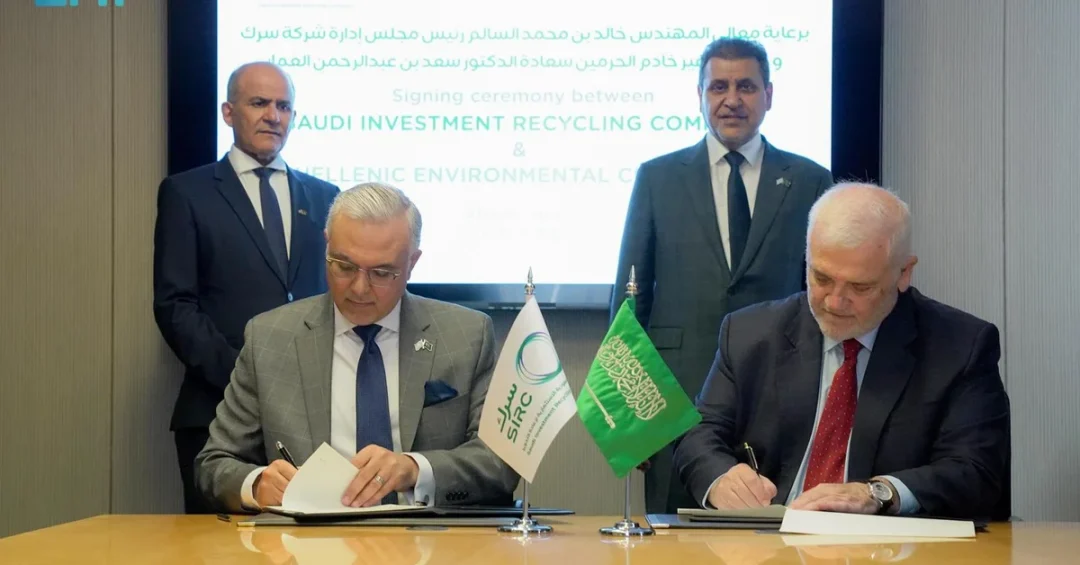
The Saudi Investment Recycling Company (SIRC), wholly owned by the Public Investment Fund (PIF), signed a memorandum of understanding (MoU) with Greek company HEC in Athens on June 5, 2024, to establish environmental treatment centers for ship recycling in the Kingdom and explore industrial waste treatment facilities. The signing ceremony took place on the sidelines of the Posidonia International Shipping and Marine Services 2024 exhibition, under the patronage of SIRC Chairman of the Board of Directors Eng. Khaled Al-Salem, and in the presence of the Saudi Ambassador to Greece Dr. Saad bin Abdulrahman Al-Ammar.
Context and Background
The MoU was co-signed by SIRC Chief Executive Eng. Ziad Al-Shiha and HEC Chairman of the Board of Directors Dimitris Melissanidis. It aims to create a partnership to establish environmental treatment centers to provide recycling services for ships in the Kingdom; enhance the commitment to environmental sustainability, waste management, and recycling; and explore and establish facilities for treating industrial waste.
This agreement reflects Saudi Arabia’s broader commitment to environmental sustainability and the circular economy, aligning with the goals of Saudi Vision 2030 to diversify the economy and promote sustainable development.
Key Details
Under the MoU, the two sides will jointly identify and evaluate strategic locations for industrial waste treatment facilities, considering factors such as proximity to industrial centers, transport infrastructure, and environmental impact. The MoU also promotes joint studies and research in the waste-management and recycling sectors to identify innovative solutions, improve the use of resources, and ensure compliance with all applicable environmental laws, regulations, and standards in the Kingdom.
Implications and Impact
This partnership is expected to enhance Saudi Arabia’s ability to manage marine and industrial waste sustainably, supporting the Kingdom’s environmental goals and contributing to the growth of the recycling sector. It also strengthens international cooperation between Saudi Arabia and Greece in environmental technologies and services.
Vision 2030 Alignment
By advancing waste management and recycling infrastructure, this MoU directly supports Saudi Vision 2030’s objectives of environmental sustainability, economic diversification, and international collaboration. It underscores the Kingdom’s leadership in adopting innovative solutions for a greener future.
20 Questions
Q1. What is the main purpose of the MoU signed between SIRC and HEC?
A1. The MoU aims to create a partnership to establish environmental treatment centers for ship recycling in Saudi Arabia and explore facilities for treating industrial waste, enhancing environmental sustainability and waste management.
Q2. When and where was the MoU signed?
A2. The MoU was signed on June 5, 2024, in Athens, Greece, on the sidelines of the Posidonia International Shipping and Marine Services 2024 exhibition.
Q3. Who signed the MoU on behalf of SIRC and HEC?
A3. SIRC Chief Executive Eng. Ziad Al-Shiha and HEC Chairman of the Board of Directors Dimitris Melissanidis co-signed the MoU.
Q4. Under whose patronage was the signing ceremony held?
A4. The signing ceremony was held under the patronage of SIRC Chairman of the Board of Directors Eng. Khaled Al-Salem.
Q5. Who was present at the signing ceremony?
A5. The Saudi Ambassador to Greece, Dr. Saad bin Abdulrahman Al-Ammar, was present at the signing ceremony.
Q6. What does SIRC stand for and who owns it?
A6. SIRC stands for Saudi Investment Recycling Company, and it is wholly owned by the Public Investment Fund (PIF).
Q7. What is the significance of the Posidonia exhibition?
A7. The Posidonia International Shipping and Marine Services 2024 exhibition is a major global maritime event where industry leaders discuss trends and innovations, providing a platform for this MoU.
Q8. What types of facilities will be established under the MoU?
A8. The MoU focuses on establishing environmental treatment centers for ship recycling and industrial waste treatment facilities in Saudi Arabia.
Q9. How will strategic locations for industrial waste treatment facilities be chosen?
A9. Locations will be jointly identified and evaluated based on factors such as proximity to industrial centers, transport infrastructure, and environmental impact.
Q10. What role does research play in this MoU?
A10. The MoU promotes joint studies and research in waste management and recycling to identify innovative solutions, improve resource use, and ensure compliance with environmental standards.
Q11. How does this MoU support Saudi Arabia’s environmental goals?
A11. By enhancing waste management and recycling infrastructure, the MoU supports Saudi Arabia’s commitment to environmental sustainability and the circular economy.
Q12. What are the expected benefits for Saudi Arabia’s recycling sector?
A12. The partnership is expected to boost the recycling sector by introducing advanced technologies, creating jobs, and improving waste treatment capabilities.
Q13. How does this MoU align with Saudi Vision 2030?
A13. It aligns with Vision 2030’s goals of economic diversification, environmental sustainability, and international collaboration, contributing to a greener future.
Q14. What is HEC’s role in the partnership?
A14. HEC, a Greek company, will collaborate with SIRC to provide expertise and support in establishing recycling services and industrial waste treatment facilities.
Q15. Will this MoU lead to new regulations in Saudi Arabia?
A15. The MoU ensures compliance with existing environmental laws, regulations, and standards in the Kingdom, and may inform future policies as the partnership develops.
Q16. How does this partnership enhance Saudi-Greek relations?
A16. It strengthens bilateral ties by fostering cooperation in environmental technologies and services, promoting mutual economic growth and sustainability.
Q17. What economic impact might this MoU have?
A17. It could stimulate investment in recycling infrastructure, create employment opportunities, and contribute to the growth of the green economy in Saudi Arabia.
Q18. Are there any specific environmental laws the MoU refers to?
A18. The MoU ensures compliance with all applicable environmental laws, regulations, and standards in Saudi Arabia, without specifying particular laws.
Q19. How does this initiative contribute to global environmental efforts?
A19. By improving marine waste management and recycling, the initiative supports global efforts to reduce pollution and promote sustainable practices in the shipping industry.
Q20. What are the next steps after signing this MoU?
A20. The next steps include joint identification of strategic locations, conducting studies and research, and developing plans to establish the agreed facilities.
Reader Feedback
We value your thoughts. Please share your feedback on this article.
Your feedback helps us improve our coverage.