


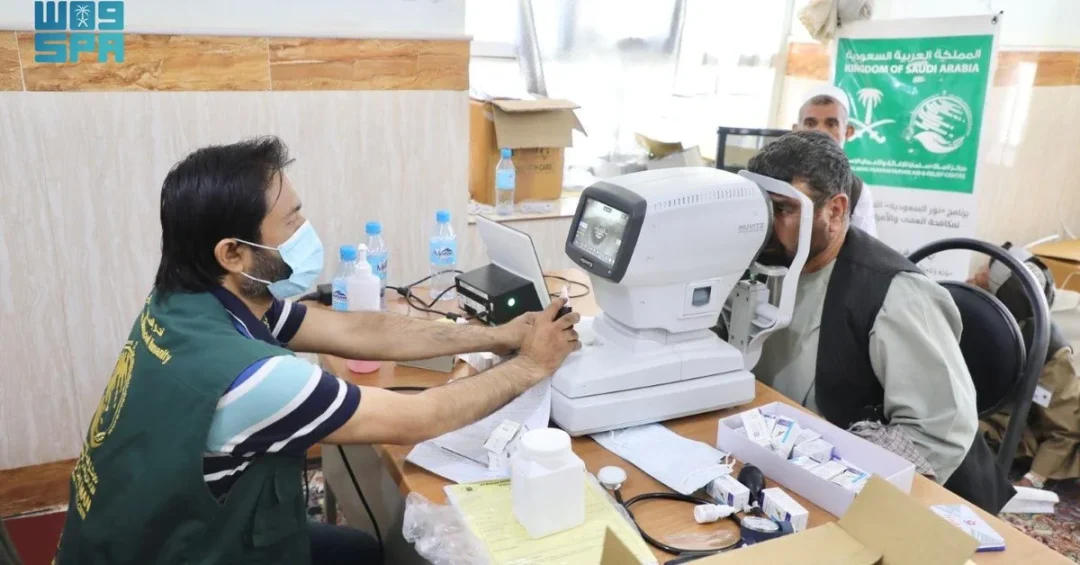
The Kingdom of Saudi Arabia, through the King Salman Humanitarian Aid and Relief Centre (KSrelief), successfully concluded the “Saudi Noor” volunteer program in Herat, Afghanistan, on June 4, 2024. The program, implemented in collaboration with Al Basar International Foundation from May 29 to June 4, screened 8,622 patients and performed 818 successful eye surgeries, delivering essential eye care to thousands in need.
Context and Background
KSrelief, established in 2015 under the leadership of the Custodian of the Two Holy Mosques, King Salman bin Abdulaziz Al Saud, is Saudi Arabia’s primary humanitarian arm. It operates worldwide to provide relief and aid, often focusing on health, food security, and education. The “Saudi Noor” volunteer program is a flagship initiative aimed at combating blindness and related eye diseases in underserved regions. Afghanistan, which has faced decades of conflict and limited healthcare infrastructure, remains a priority for such interventions. This program underscores Saudi Arabia’s commitment to global humanitarian causes, irrespective of geographical or political boundaries.
Key Details
The “Saudi Noor” volunteer program was carried out by a specialized medical team from KSrelief and Al Basar International Foundation. Over the course of seven days, the team conducted comprehensive eye screenings for 8,622 patients and performed 818 surgical procedures, including cataract surgeries and other treatments for vision impairment. The initiative targeted individuals in Herat province, many of whom lack access to basic eye care. By restoring sight, the program directly improved the quality of life for hundreds of patients and their families. The success of this mission highlights the efficiency and expertise of Saudi medical volunteers and their partners.
Implications and Impact
The completion of the “Saudi Noor” program in Afghanistan has significant humanitarian implications. It not only alleviates suffering but also strengthens bilateral relations between Saudi Arabia and Afghanistan. By addressing critical health needs, the Kingdom demonstrates its role as a responsible global actor and a leader in humanitarian diplomacy. The program’s success also sets a precedent for future volunteer missions in Afghanistan and other regions facing similar challenges. Furthermore, it contributes to the international community’s efforts to achieve the Sustainable Development Goals, particularly those related to health and well-being. The positive reception from local communities further solidifies Saudi Arabia’s reputation as a compassionate and reliable partner.
Vision 2030 Alignment
This humanitarian initiative aligns closely with Saudi Vision 2030, which emphasizes the Kingdom’s commitment to global engagement and social responsibility. Vision 2030 seeks to diversify Saudi Arabia’s economy and enhance its international standing, and humanitarian work is a key pillar of this strategy. By extending aid to countries like Afghanistan, Saudi Arabia showcases its leadership in addressing global challenges and promotes its values of compassion and solidarity. The “Saudi Noor” program exemplifies how the Kingdom leverages its resources and expertise to make a tangible difference in the world, reinforcing its position as a beacon of hope and progress.
20 Questions
Q1. What is the “Saudi Noor” volunteer program?
A1. The “Saudi Noor” volunteer program is a humanitarian initiative by KSrelief and Al Basar International Foundation to combat blindness and eye diseases in underserved regions. It provides free screenings and surgeries to those in need.
Q2. When and where did the recent “Saudi Noor” program take place?
A2. The recent program took place in Herat, Afghanistan, from May 29 to June 4, 2024. It was conducted by a team of Saudi medical volunteers and their partners.
Q3. How many patients were screened during the program?
A3. A total of 8,622 patients were screened for various eye conditions during the seven-day mission. This screening helped identify those requiring surgical intervention.
Q4. How many surgeries were performed?
A4. The medical team successfully performed 818 surgeries, primarily cataract and other vision-restoring procedures. These surgeries brought immediate relief and improved vision to patients.
Q5. Who implemented the program?
A5. The program was implemented by the King Salman Humanitarian Aid and Relief Centre (KSrelief) in collaboration with Al Basar International Foundation. Both organizations provided medical expertise and logistical support.
Q6. Why was Afghanistan chosen for this program?
A6. Afghanistan was chosen due to its significant need for eye care services, exacerbated by years of conflict and limited healthcare infrastructure. KSrelief prioritizes such underserved regions.
Q7. What types of eye diseases were addressed?
A7. The program addressed various eye diseases, including cataracts, glaucoma, and other vision-impairing conditions. Surgeries and treatments were tailored to each patient’s needs.
Q8. How does this program reflect Saudi Arabia’s humanitarian commitment?
A8. It demonstrates Saudi Arabia’s dedication to alleviating human suffering globally, regardless of borders. KSrelief’s efforts are a core part of the Kingdom’s humanitarian diplomacy.
Q9. What is KSrelief’s role in global humanitarian efforts?
A9. KSrelief is Saudi Arabia’s primary humanitarian agency, providing aid in health, food security, education, and emergency relief worldwide. It operates under the guidance of King Salman.
Q10. How does the program align with Vision 2030?
A10. It aligns with Vision 2030’s goal of enhancing Saudi Arabia’s global role and social responsibility. Humanitarian initiatives showcase the Kingdom’s leadership and compassion.
Q11. What impact did the program have on local communities?
A11. The program restored vision and improved the quality of life for hundreds of patients, bringing joy to families. It also strengthened trust and goodwill toward Saudi Arabia.
Q12. How many volunteers participated in the program?
A12. While the exact number is not specified, a specialized team of Saudi medical volunteers and support staff participated. Their expertise ensured the program’s success.
Q13. What is Al Basar International Foundation?
A13. Al Basar International Foundation is a humanitarian organization that focuses on combating blindness and providing eye care worldwide. It partners with KSrelief on such missions.
Q14. How does this program contribute to sustainable development?
A14. By improving health outcomes, the program supports the UN’s Sustainable Development Goals, particularly Goal 3 on good health and well-being. It also builds local capacity.
Q15. Will there be more such programs in Afghanistan?
A15. KSrelief continues to assess needs and may conduct future volunteer programs in Afghanistan. The success of this mission paves the way for more initiatives.
Q16. What other countries have benefited from “Saudi Noor”?
A16. The “Saudi Noor” program has been implemented in several countries, including Yemen, Sudan, and Bangladesh. It is part of KSrelief’s global outreach.
Q17. How can other organizations partner with KSrelief?
A17. Organizations can partner with KSrelief by contacting the center through official channels. Partnerships are based on shared humanitarian goals and mutual agreements.
Q18. What was the duration of the program?
A18. The program ran for one week, from May 29 to June 4, 2024. Despite the short duration, the team achieved significant results.
Q19. How does the program handle post-operative care?
A19. Patients receive follow-up care and medications as needed. Local health facilities are often involved to ensure continuity of care after the mission ends.
Q20. What message does this program send to the world?
A20. It conveys Saudi Arabia’s commitment to peace, compassion, and global solidarity. The Kingdom stands ready to help those in need, reflecting its Islamic values and humanitarian ethos.
Reader Feedback
We value your thoughts. Please share your feedback on this article.
Your feedback helps us improve our coverage.