


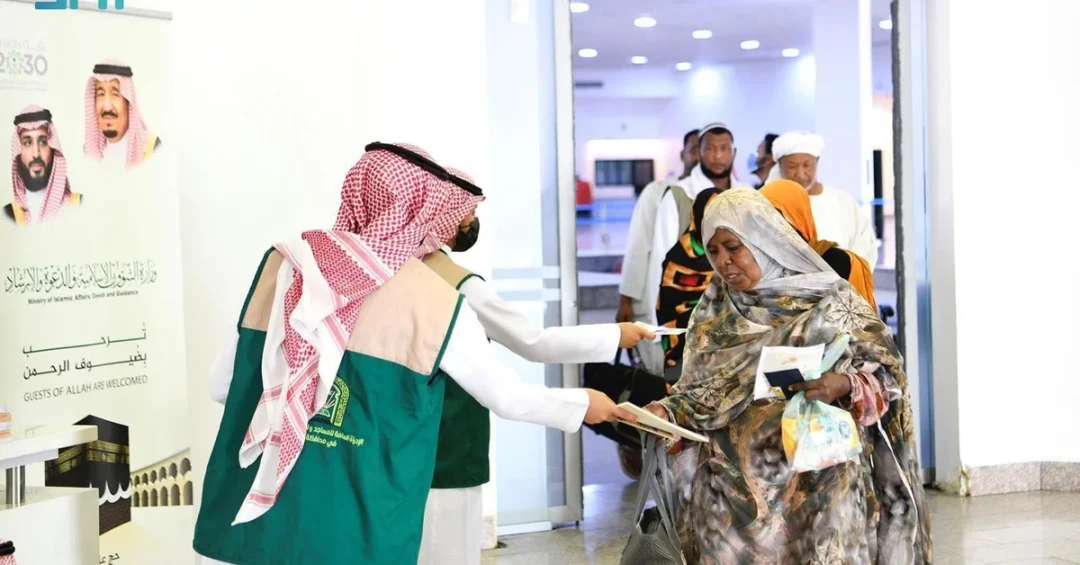
The Ministry of Islamic Affairs, Dawah and Guidance branch in Makkah welcomed 777 Sudanese pilgrims—both male and female—who arrived via Jeddah Islamic Port to perform Hajj. The arrival underscores the Kingdom of Saudi Arabia’s unwavering commitment to serving pilgrims from around the world, ensuring their spiritual journey is safe, comfortable, and spiritually enriching.
Context and Background
The Hajj, one of the Five Pillars of Islam, draws millions of Muslims annually to the holy city of Makkah. Saudi Arabia, under the leadership of the Custodian of the Two Holy Mosques, King Salman bin Abdulaziz Al Saud, and Crown Prince Mohammed bin Salman, has consistently invested in expanding and modernizing pilgrimage infrastructure. The Ministry of Islamic Affairs, Dawah and Guidance plays a pivotal role in this endeavor, particularly through its Makkah branch, which oversees religious services and guidance for pilgrims. This year, the branch has intensified efforts to facilitate the arrival of pilgrims via various entry points, including Jeddah Islamic Port, which serves as a key gateway for those traveling by sea.
Key Details
Upon arrival, the Sudanese pilgrims were greeted by working committees operating around the clock, providing immediate hospitality and support. Each pilgrim received educational and guidance booklets, along with barcodes that allow them to download essential smartphone applications. These resources are designed to help them perform Hajj rituals with ease, offering step-by-step instructions and spiritual guidance. The ministry’s Makkah branch has also prepared extensively for the Hajj season within the holy capital. During the month of Dhu Al-Qi’dah, the branch provided a range of services across mosques in the central region. To ensure a seamless experience, supervisors were assigned to work continuously, verifying that all mosque facilities were ready to receive worshippers. In total, 94 mosques were designated for Friday prayers during Hajj, out of approximately 456 mosques in the central region. Additionally, the branch conducted 280 supervisory tours, recording 244 observations for further consideration—a testament to its commitment to continuous improvement.
Implications and Impact
The arrival of nearly 800 Sudanese pilgrims highlights the strong bilateral ties between Saudi Arabia and Sudan, as well as the Kingdom’s global role as a facilitator of religious tourism. By providing comprehensive services—from educational materials to around-the-clock assistance—Saudi Arabia ensures that pilgrims can focus on their spiritual obligations without logistical concerns. This not only enhances the pilgrim experience but also reinforces the Kingdom’s reputation as a gracious host. Furthermore, the integration of digital tools, such as barcodes for app downloads, reflects Saudi Arabia’s broader push toward digital transformation in line with Vision 2030. The efficient handling of large pilgrim groups also demonstrates the Kingdom’s logistical capabilities, which are essential for managing the annual influx of millions during Hajj.
Vision 2030 Alignment
The meticulous planning and execution of pilgrim services align closely with Saudi Vision 2030, which seeks to enhance the quality of life for citizens and visitors alike, while diversifying the economy through religious tourism. By leveraging technology and improving infrastructure, the Ministry of Islamic Affairs, Dawah and Guidance contributes to the Vision’s goals of increasing Umrah and Hajj capacity and ensuring a world-class experience for pilgrims. As Saudi Arabia continues to welcome millions of Muslims from across the globe, its dedication to serving the Guests of Allah remains a cornerstone of its leadership and a source of pride for the entire Islamic world.
20 Questions
Q1. How many Sudanese pilgrims arrived in Makkah?
A1. The Ministry of Islamic Affairs, Dawah and Guidance branch in Makkah received 777 Sudanese pilgrims, both male and female, who arrived via Jeddah Islamic Port to perform Hajj.
Q2. Through which port did the Sudanese pilgrims enter Saudi Arabia?
A2. The pilgrims arrived through Jeddah Islamic Port, a major gateway for sea travelers. The Ministry’s Makkah branch oversees their reception and ensures their comfort with round-the-clock hospitality.
Q3. What resources were provided to the pilgrims upon arrival?
A3. The pilgrims received educational and guidance booklets, along with barcodes for downloading essential smartphone applications. These resources help them perform Hajj rituals with ease and understanding.
Q4. Which Saudi ministry is responsible for receiving the pilgrims?
A4. The Ministry of Islamic Affairs, Dawah and Guidance, specifically its Makkah branch, is tasked with receiving and assisting pilgrims. It provides guidance, hospitality, and logistical support to ensure a smooth Hajj experience.
Q5. How many mosques in the central region were designated for Friday prayers during Hajj?
A5. A total of 94 mosques were designated for Friday prayers during the Hajj season. This is part of the Ministry’s efforts to accommodate the increased number of worshippers in the holy capital.
Q6. What is the total number of mosques in the central region?
A6. The central region of Makkah has approximately 456 mosques. These mosques are maintained and supervised by the Ministry of Islamic Affairs, Dawah and Guidance to ensure they are ready for pilgrims.
Q7. How many supervisory tours of mosques were conducted?
A7. The Makkah branch conducted 280 supervisory tours of mosques in the central region. These tours resulted in 244 observations recorded for further consideration and improvement.
Q8. What was the purpose of the supervisory tours?
A8. The tours aimed to ensure the readiness of mosque services and facilities for the Hajj season. Supervisors checked everything from cleanliness to functionality, ensuring a comfortable environment for pilgrims.
Q9. When did the Sudanese pilgrims arrive?
A9. The pilgrims arrived during the Hajj season, specifically in the month of Dhu Al-Qi’dah. This is the month preceding Dhul-Hijjah, when Hajj rituals are performed.
Q10. What is the role of the working committees at Jeddah Islamic Port?
A10. The working committees provide around-the-clock hospitality and assistance to arriving pilgrims. They ensure a smooth reception process, offering guidance and support from the moment pilgrims disembark.
Q11. How do the booklets assist the pilgrims?
A11. The booklets contain essential information about Hajj rituals, including step-by-step guidance and prayers. They also include barcodes for downloading apps that provide further assistance, making the pilgrimage easier to navigate.
Q12. What digital tools were provided to the pilgrims?
A12. Pilgrims received barcodes that allow them to download smartphone applications. These apps offer guidance on Hajj rituals, prayer times, and other essential information to enhance their spiritual journey.
Q13. How does Saudi Arabia ensure the comfort of pilgrims?
A13. Saudi Arabia, through the Ministry of Islamic Affairs, Dawah and Guidance, provides comprehensive services including guidance materials, digital tools, and round-the-clock support. Supervisors ensure mosques and facilities are fully operational.
Q14. What is the significance of the 244 observations recorded?
A14. The observations are part of a continuous improvement process. They help the Ministry identify areas for enhancement in mosque services and facilities, ensuring an ever-better experience for pilgrims.
Q15. How does this arrival reflect Saudi-Sudan relations?
A15. The warm reception of Sudanese pilgrims highlights the strong bilateral ties between Saudi Arabia and Sudan. It demonstrates Saudi Arabia’s commitment to serving all Muslims, regardless of nationality.
Q16. What is the role of the Makkah branch during Hajj?
A16. The Makkah branch of the Ministry of Islamic Affairs, Dawah and Guidance oversees religious services, guidance, and hospitality for pilgrims. It ensures mosques are ready and provides educational resources.
Q17. How does this align with Vision 2030?
A17. Vision 2030 aims to enhance the pilgrimage experience and increase capacity. By improving services and leveraging technology, Saudi Arabia aligns with its goals of economic diversification and spiritual hospitality.
Q18. What other services does the Makkah branch provide?
A18. The branch provides educational booklets, digital guidance, mosque maintenance, and supervisory tours. It also designates mosques for Friday prayers and ensures all facilities are ready for pilgrims.
Q19. How many pilgrims are expected this Hajj season?
A19. While exact numbers vary, Saudi Arabia prepares to welcome millions of pilgrims from around the world. The Ministry’s efforts ensure that all pilgrims receive the highest level of care and service.
Q20. What message does this send to the international community?
A20. It showcases Saudi Arabia’s dedication to serving Islam’s holiest sites and its capability to manage large-scale religious events. It reinforces the Kingdom’s role as a global leader in pilgrimage services.
Reader Feedback
We value your thoughts. Please share your feedback on this article.
Your feedback helps us improve our coverage.