


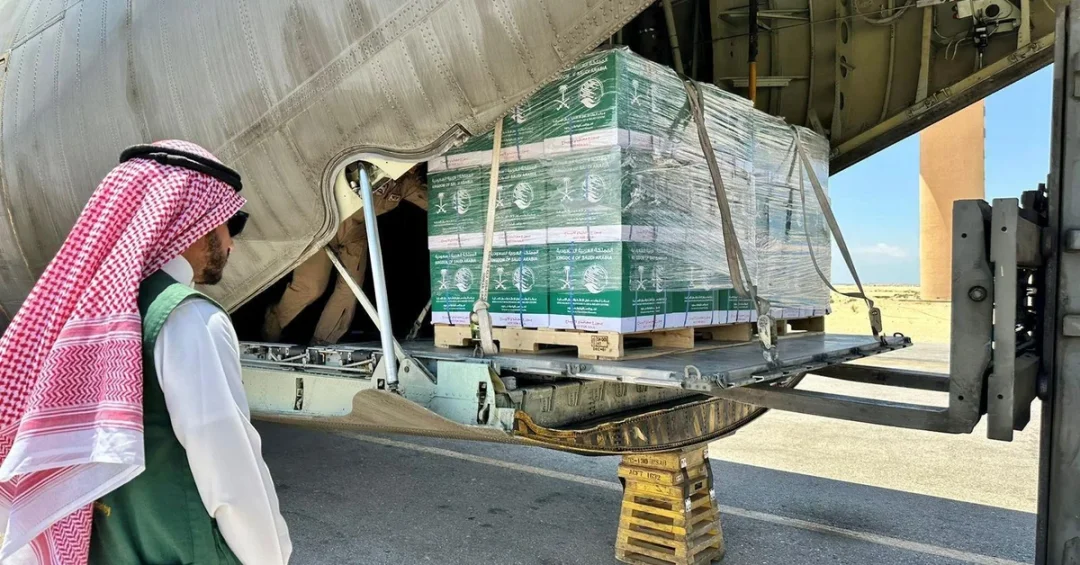
The 51st Saudi relief plane, operated by the King Salman Humanitarian Aid and Relief Center (KSrelief) in coordination with the Ministry of Defense, arrived in El-Arish, Egypt, on June 2, 2024, carrying medical and shelter supplies destined for the Palestinian people in the Gaza Strip. This delivery is part of Saudi Arabia’s ongoing humanitarian airlift, which has now dispatched more than fifty planes to provide urgent assistance to Palestinians affected by the crisis. The aid is being transported via Egypt to facilitate entry into Gaza, reflecting the Kingdom’s steadfast commitment to supporting the brotherly Palestinian people during times of need.
Context and Background
The humanitarian situation in Gaza has deteriorated significantly due to ongoing conflict, leading to severe shortages of medical supplies, food, and shelter. In response, Saudi Arabia launched a comprehensive relief campaign under the directives of the Custodian of the Two Holy Mosques, King Salman bin Abdulaziz Al Saud, and His Royal Highness Crown Prince Mohammed bin Salman bin Abdulaziz Al Saud, Prime Minister and Minister of Defense. KSrelief, the Kingdom’s dedicated humanitarian arm, has been at the forefront of this effort, coordinating with Egyptian authorities and the Ministry of Defense to ensure the timely delivery of aid.
Since the beginning of the crisis, Saudi Arabia has dispatched 51 relief planes, delivering thousands of tons of medical equipment, food baskets, and shelter materials. These flights are part of a broader airlift that underscores the Kingdom’s historical role in supporting the Palestinian cause and alleviating the suffering of civilians. The use of El-Arish as a staging point allows for the efficient transfer of aid through the Rafah crossing, the primary entry point for humanitarian goods into Gaza.
Key Details of the 51st Relief Flight
The 51st relief plane carried a substantial consignment of medical supplies, including surgical instruments, medications, and emergency kits, as well as shelter materials such as tents and blankets. The aid was loaded at King Khalid International Airport in Riyadh and flown to El-Arish International Airport, where it was received by representatives of the Egyptian Red Crescent and the Palestinian Red Crescent Society. From there, the supplies will be transported by truck to the Rafah crossing for distribution inside Gaza.
This mission is part of a series of flights that have been arriving in Egypt since the airlift began. KSrelief has been working in close coordination with the Egyptian Ministry of Health and the Ministry of Defense to streamline the process, ensuring that aid reaches those in need as quickly as possible. Saudi Arabia has also established a fundraising campaign through the Sahem platform, which has raised millions of dollars from citizens and residents to support the relief efforts.
International and Regional Implications
Saudi Arabia’s humanitarian airlift demonstrates the Kingdom’s commitment to international humanitarian law and its role as a responsible global actor. By providing aid to Palestinians, Saudi Arabia reinforces its longstanding support for the Palestinian people and contributes to regional stability. The operation also highlights the strong bilateral relationship between Saudi Arabia and Egypt, as both countries collaborate to facilitate the delivery of relief supplies.
This effort is part of a wider diplomatic push by Saudi Arabia to address the humanitarian crisis in Gaza. The Kingdom has consistently called for an immediate ceasefire, the protection of civilians, and the unimpeded delivery of aid. Through KSrelief, Saudi Arabia has provided assistance to more than 100 countries, but the Palestinian cause remains a priority due to its historical and religious significance.
Vision 2030 Alignment
While Vision 2030 primarily focuses on economic diversification and social reform within the Kingdom, Saudi Arabia’s humanitarian efforts abroad are an integral part of its global engagement strategy. By demonstrating leadership in humanitarian crises, the Kingdom enhances its international standing and soft power, which are key components of Vision 2030’s goal to position Saudi Arabia as a pivotal player on the world stage. The relief airlift to Gaza exemplifies the Kingdom’s commitment to humanitarian values and its role as a force for stability and compassion in the region.
20 Questions
Q1. What is the 51st Saudi relief plane?
A1. The 51st Saudi relief plane is a humanitarian flight operated by KSrelief in coordination with the Ministry of Defense, carrying medical and shelter supplies to Palestinians in Gaza.
Q2. When did the 51st relief plane arrive in Egypt?
A2. It arrived on June 2, 2024, according to the Saudi Press Agency.
Q3. Where did the plane land?
A3. The plane landed in El-Arish, Egypt, which serves as a staging point for aid destined for Gaza.
Q4. What supplies were on board?
A4. The plane carried medical and shelter supplies, including medications, surgical instruments, tents, and blankets.
Q5. Who operates the relief flights?
A5. The flights are operated by the King Salman Humanitarian Aid and Relief Center (KSrelief) in coordination with the Ministry of Defense.
Q6. Why is the aid sent to Egypt instead of directly to Gaza?
A6. The aid is sent to Egypt because the Rafah crossing is the primary entry point for humanitarian goods into Gaza, and Egypt facilitates the transfer.
Q7. How many relief planes has Saudi Arabia sent so far?
A7. This is the 51st relief plane, indicating that more than fifty flights have been dispatched since the airlift began.
Q8. What is KSrelief?
A8. KSrelief is the King Salman Humanitarian Aid and Relief Center, Saudi Arabia’s dedicated humanitarian agency that provides aid worldwide.
Q9. Who ordered the relief efforts?
A9. The relief efforts are under the directives of King Salman bin Abdulaziz Al Saud and Crown Prince Mohammed bin Salman.
Q10. What is the historical significance of Saudi aid to Palestine?
A10. Saudi Arabia has a long history of supporting the Palestinian people, reflecting its commitment to the Palestinian cause and regional stability.
Q11. How is the aid distributed inside Gaza?
A11. The aid is transported by truck from El-Arish to the Rafah crossing and then distributed by the Palestinian Red Crescent Society inside Gaza.
Q12. What other aid has Saudi Arabia provided?
A12. Saudi Arabia has provided food baskets, medical supplies, and shelter materials, and has also launched a fundraising campaign through the Sahem platform.
Q13. How does this aid align with Saudi Vision 2030?
A13. It enhances Saudi Arabia’s global standing and soft power, which are key aspects of Vision 2030’s goal to position the Kingdom as a pivotal international player.
Q14. What is the role of the Ministry of Defense?
A14. The Ministry of Defense coordinates with KSrelief to facilitate the transportation and delivery of relief supplies.
Q15. How many countries has KSrelief assisted?
A15. KSrelief has provided assistance to more than 100 countries around the world.
Q16. What is the Sahem platform?
A16. The Sahem platform is a fundraising initiative that allows citizens and residents to donate to humanitarian causes, including relief for Gaza.
Q17. What is the significance of the 51st flight?
A17. It demonstrates Saudi Arabia’s sustained commitment to providing humanitarian aid to Palestinians over an extended period.
Q18. Who receives the aid in Egypt?
A18. The aid is received by representatives of the Egyptian Red Crescent and the Palestinian Red Crescent Society.
Q19. What is Saudi Arabia’s stance on the Gaza crisis?
A19. Saudi Arabia calls for an immediate ceasefire, protection of civilians, and unimpeded delivery of humanitarian aid.
Q20. How does this aid reflect Saudi Arabia’s foreign policy?
A20. It reflects Saudi Arabia’s commitment to humanitarian values, regional stability, and its role as a responsible global actor.
Reader Feedback
We value your thoughts. Please share your feedback on this article.
Your feedback helps us improve our coverage.