


Saudi Arabia, Russia, Iraq, the United Arab Emirates, Kuwait, Kazakhstan, Algeria, and Oman convened in Riyadh on June 2, 2024, on the sidelines of the 37th OPEC and non-OPEC Ministerial Meeting (ONOMM) to reinforce the precautionary efforts of OPEC+ nations and support the stability and balance of global oil markets. The meeting, reported by the Saudi Press Agency (SPA), resulted in a decision to extend additional voluntary production cuts of 1.65 million barrels per day (bpd) until the end of December 2025, and to prolong separate cuts of 2.2 million bpd until the end of September 2024.
Context and Background
The OPEC+ alliance, a coalition of major oil-producing nations, has consistently taken coordinated action to manage global oil supply and stabilize prices. The additional voluntary cuts discussed in Riyadh were initially announced in April 2023 and November 2023, representing a collective effort led by Saudi Arabia, Russia, Iraq, the United Arab Emirates, Kuwait, Kazakhstan, Algeria, and Oman. These measures are part of a broader strategy to prevent market volatility and ensure a balanced supply-demand dynamic.
The 37th ONOMM provided the platform for these discussions, highlighting the continued collaboration between OPEC and non-OPEC members. The meeting underscored the group’s commitment to a proactive approach in addressing global economic uncertainties and geopolitical developments that affect energy markets.
Key Details of the Agreement
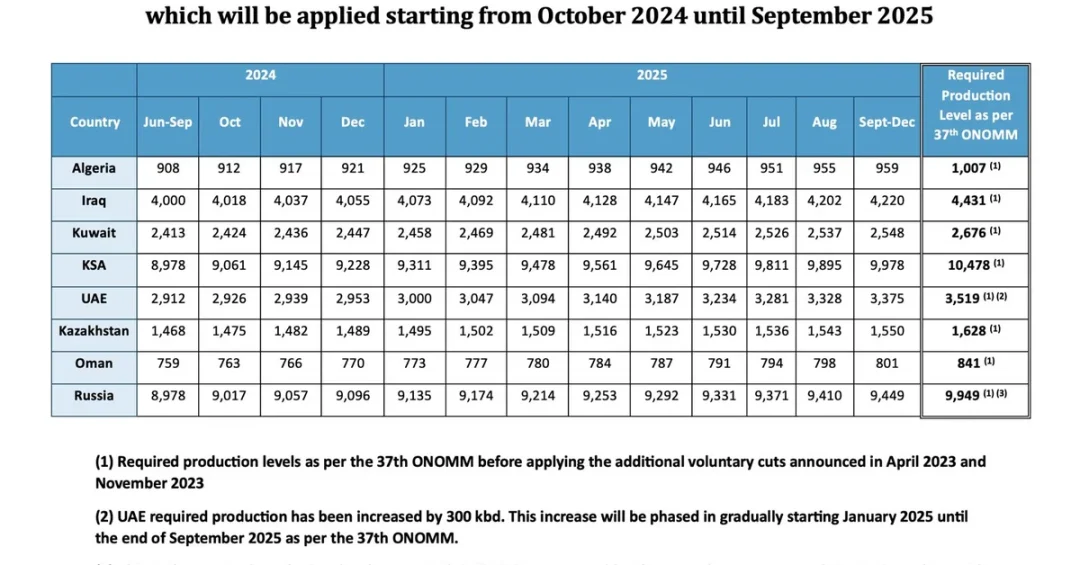
Under the agreement, the eight participating countries will extend the voluntary cuts of 1.65 million bpd, first announced in April 2023, through December 2025. Additionally, the 2.2 million bpd cut announced in November 2023 will be extended until September 2024, after which it will be gradually phased out on a monthly basis until September 2025. This phased approach, detailed in an official table attached to the statement, is designed to support market stability while allowing for flexible adjustments based on evolving market conditions. The monthly increase can be paused or reversed if necessary.
In a spirit of transparency and collaboration, the meeting welcomed pledges from Iraq, Russia, and Kazakhstan to achieve full conformity with production targets and to resubmit updated compensation schedules for overproduced volumes since January 2024. These schedules are to be submitted to the OPEC Secretariat before the end of June 2024, as agreed in the 52nd Meeting of the Joint Ministerial Monitoring Committee (JMMC). The attached table, available via the Saudi Ministry of Energy, outlines production levels and the application of voluntary reductions from October 2024 to September 2025.
Implications for Global Oil Markets
The decision to extend production cuts is expected to have significant implications for global oil markets, potentially stabilizing prices amid fluctuating demand and economic uncertainties. By maintaining supply constraints, OPEC+ members aim to support their national economies, which are heavily reliant on oil revenues, while also ensuring a stable energy supply for international consumers.
The collaborative nature of the agreement, with commitments from key producers such as Iraq, Russia, and Kazakhstan to adhere to production limits, demonstrates the group’s unity and shared responsibility. This unity is crucial for the credibility of OPEC+ and its ability to influence market dynamics.
Vision 2030 Alignment
Saudi Arabia’s leadership in these discussions reflects its strategic vision to balance energy market stability with its long-term economic transformation under Vision 2030. By promoting cooperation among oil-producing nations and ensuring a stable oil market, the Kingdom supports the sustainability of its energy sector, which remains a vital source of revenue for funding Vision 2030 initiatives. These initiatives aim to diversify the economy, develop non-oil sectors, and enhance the quality of life for citizens and residents.
As the world’s leading energy exporter, Saudi Arabia continues to play a pivotal role in global energy security and economic stability, aligning with its commitment to responsible global engagement and sustainable development.
20 Questions
Q1. What was the main purpose of the meeting in Riyadh?
A1. The meeting aimed to reinforce the precautionary efforts of OPEC+ countries to support the stability and balance of oil markets and decide on extensions of voluntary production cuts.
Q2. Which countries participated in the meeting?
A2. Saudi Arabia, Russia, Iraq, the United Arab Emirates, Kuwait, Kazakhstan, Algeria, and Oman participated in the meeting held on the sidelines of the 37th ONOMM.
Q3. What was decided regarding the 1.65 million bpd cuts?
A3. The countries decided to extend the additional voluntary cuts of 1.65 million barrels per day, initially announced in April 2023, until the end of December 2025.
Q4. How will the 2.2 million bpd cuts be phased out?
A4. The 2.2 million bpd cuts, announced in November 2023, will be extended until September 2024, then gradually phased out monthly until September 2025, subject to market conditions.
Q5. What is the role of the Joint Ministerial Monitoring Committee?
A5. The JMMC monitors compliance with production targets and agreed that Iraq, Russia, and Kazakhstan would resubmit updated compensation schedules for overproduced volumes by June 2024.
Q6. Why are these production cuts important for market stability?
A6. The cuts help balance supply and demand, stabilise oil prices, and support the economies of oil-producing nations during periods of uncertainty.
Q7. How does this decision affect global oil prices?
A7. By reducing supply, the cuts aim to prevent price declines and support higher prices, though market reactions depend on various factors including demand and geopolitical events.
Q8. What is the significance of Saudi Arabia’s leadership in OPEC+?
A8. Saudi Arabia’s leadership is crucial for fostering cooperation among members and ensuring the credibility and effectiveness of OPEC+ decisions.
Q9. What are additional voluntary cuts?
A9. Additional voluntary cuts are production reductions beyond the agreed OPEC+ quotas, undertaken by individual countries to further support market stability.
Q10. When were the additional voluntary cuts first announced?
A10. The cuts of 1.65 million bpd were announced in April 2023, and the 2.2 million bpd cuts were announced in November 2023.
Q11. What is the attached table referred to in the statement?
A11. The table, available on the Saudi Ministry of Energy website, outlines production levels and the application of voluntary reductions from October 2024 to September 2025.
Q12. How does this align with Vision 2030?
A12. The decision supports market stability, which helps sustain oil revenues essential for funding Vision 2030 economic diversification and social development programmes.
Q13. What happens if market conditions change?
A13. The monthly increases can be paused or reversed if market conditions require, ensuring flexibility in responding to unforeseen developments.
Q14. Which countries pledged to improve compliance?
A14. Iraq, Russia, and Kazakhstan pledged to achieve full conformity and resubmit updated compensation schedules for overproduced volumes.
Q15. When are the updated compensation schedules due?
A15. The updated schedules are to be submitted to the OPEC Secretariat before the end of June 2024, as agreed in the 52nd JMMC meeting.
Q16. What is the expected impact on OPEC+ cohesion?
A16. The agreement demonstrates unity and shared responsibility, strengthening OPEC+ cohesion and its ability to manage global oil supply.
Q17. How does this affect non-OPEC producers like Russia?
A17. Non-OPEC producers like Russia participate voluntarily, and their cooperation is vital for the effectiveness of supply management efforts.
Q18. What is the 37th ONOMM?
A18. The 37th OPEC and non-OPEC Ministerial Meeting is a gathering of oil-producing nations to coordinate production policies and review market conditions.
Q19. Why is transparency important in these meetings?
A19. Transparency builds trust among members and with global markets, ensuring that decisions are understood and complied with, which enhances market stability.
Q20. What is Saudi Arabia’s role in global energy security?
A20. Saudi Arabia, as a leading exporter, plays a pivotal role in ensuring stable energy supplies and supporting global economic stability through responsible production policies.
Reader Feedback
We value your thoughts. Please share your feedback on this article.
Your feedback helps us improve our coverage.