


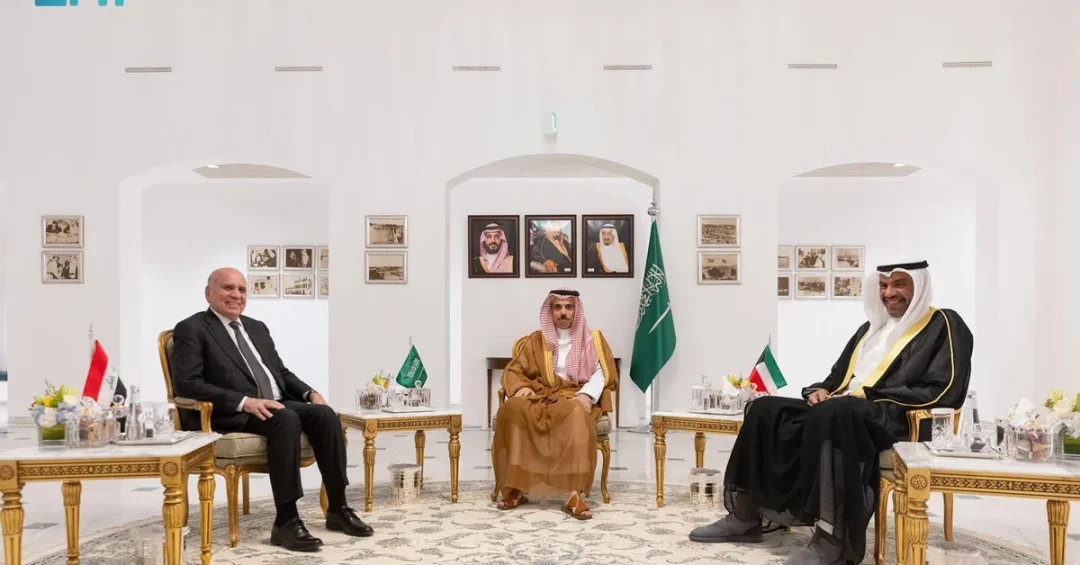
Saudi Minister of Foreign Affairs Prince Faisal bin Farhan bin Abdullah received Iraqi Deputy Prime Minister and Minister of Foreign Affairs Dr. Fuad Mohammed Hussein and Kuwaiti Minister of Foreign Affairs Abdullah Ali Al-Yahya at the ministry’s headquarters in Riyadh on June 6, 2024, according to the Saudi Press Agency (SPA). The high-level meeting focused on strengthening cooperation across multiple fields and enhancing bilateral and multilateral coordination on issues of common interest.
Context and Background
The meeting underscores Saudi Arabia’s ongoing commitment to regional diplomacy and its role as a stabilizing force in the Middle East. Prince Faisal bin Farhan, who has served as Minister of Foreign Affairs since 2019, has been at the forefront of Saudi Arabia’s efforts to deepen ties with neighboring countries and promote dialogue. Iraq and Kuwait are key partners for the Kingdom, sharing historical, cultural, and economic links. This trilateral engagement reflects the broader trend of enhanced Gulf cooperation and aligns with Saudi Arabia’s Vision 2030, which seeks to strengthen international partnerships and foster stability.
Key Details
During the meeting, the ministers discussed ways to enhance and develop aspects of cooperation in many fields. They emphasized the importance of intensifying bilateral and multilateral coordination on issues of common interest. The discussions likely covered topics such as economic collaboration, security cooperation, and regional political developments. The presence of Deputy Minister for Political Affairs Ambassador Dr. Saud Al-Sati highlights the meeting’s diplomatic significance. While specific agreements were not announced, the talks reinforce the Kingdom’s proactive approach to regional engagement under the leadership of the Custodian of the Two Holy Mosques, King Salman bin Abdulaziz Al Saud, and Crown Prince Mohammed bin Salman.
Implications and Impact
This trilateral meeting carries important implications for regional stability and cooperation. By bringing together Iraq and Kuwait, Saudi Arabia facilitates dialogue that can lead to joint initiatives in trade, investment, and security. For Iraq, engagement with Gulf states offers economic opportunities and support for reconstruction efforts. For Kuwait, it reinforces historical ties and mutual interests. The meeting also sends a signal of unity among Arab nations, countering external influences and promoting a unified stance on regional challenges. Such diplomacy enhances Saudi Arabia’s leadership role and contributes to the broader goal of a peaceful and prosperous Middle East.
Vision 2030 Alignment
This diplomatic engagement aligns directly with Saudi Arabia’s Vision 2030, which emphasizes international cooperation, economic diversification, and regional stability. Vision 2030 seeks to position the Kingdom as a global investment powerhouse and a hub for diplomacy. By fostering strong relationships with neighbors like Iraq and Kuwait, Saudi Arabia opens avenues for joint ventures, trade, and cultural exchange. These efforts support the Kingdom’s long-term objectives of economic growth and global engagement, reinforcing its role as a leader in the region and beyond.
20 Questions
Q1. Who received the Iraqi and Kuwaiti foreign ministers in Riyadh?
A1. Saudi Minister of Foreign Affairs Prince Faisal bin Farhan bin Abdullah received them at the ministry’s headquarters in Riyadh on June 6, 2024, as reported by the Saudi Press Agency.
Q2. What was the main purpose of the meeting?
A2. The meeting aimed to enhance and develop aspects of cooperation in many fields and to emphasize the importance of intensifying bilateral and multilateral coordination on issues of common interest.
Q3. Which Iraqi official attended the meeting?
A3. Iraqi Deputy Prime Minister and Minister of Foreign Affairs Dr. Fuad Mohammed Hussein attended the meeting, representing Iraq and engaging in discussions on mutual cooperation.
Q4. Who represented Kuwait at the meeting?
A4. Kuwaiti Minister of Foreign Affairs Abdullah Ali Al-Yahya represented Kuwait, participating in talks focused on strengthening ties and regional coordination.
Q5. Where did the meeting take place?
A5. The meeting took place at the Ministry of Foreign Affairs headquarters in Riyadh, Saudi Arabia, underscoring the Kingdom’s role as a diplomatic hub.
Q6. When did the meeting occur?
A6. The meeting occurred on June 6, 2024, according to the Saudi Press Agency, highlighting timely diplomatic engagement among the three nations.
Q7. Who else attended the meeting besides the foreign ministers?
A7. Deputy Minister for Political Affairs Ambassador Dr. Saud Al-Sati also attended, adding depth to the discussions on political and diplomatic matters.
Q8. What topics were discussed?
A8. The ministers discussed enhancing cooperation in many fields and intensifying bilateral and multilateral coordination on issues of common interest, without specifying particular agreements.
Q9. What does this meeting signify for Saudi Arabia’s foreign policy?
A9. It signifies Saudi Arabia’s commitment to regional diplomacy, stability, and cooperation, reinforcing its leadership role in the Middle East and beyond.
Q10. How does this meeting relate to Vision 2030?
A10. It aligns with Vision 2030’s goals of international cooperation, economic diversification, and regional stability, supporting Saudi Arabia’s long-term strategic objectives.
Q11. What are the implications for Iraq?
A11. For Iraq, the meeting offers opportunities for economic collaboration and support for reconstruction, strengthening ties with Gulf neighbors and promoting regional integration.
Q12. What are the implications for Kuwait?
A12. For Kuwait, it reinforces historical ties and mutual interests, enhancing cooperation on security, trade, and diplomatic issues within the Gulf region.
Q13. Was any agreement signed during the meeting?
A13. No specific agreements were announced, but the discussions focused on enhancing cooperation and coordination, laying groundwork for future collaboration.
Q14. How does this meeting affect regional stability?
A14. It promotes dialogue and unity among Arab nations, countering external influences and contributing to a more stable and cooperative Middle East.
Q15. What is the significance of the timing?
A15. The timing reflects ongoing diplomatic efforts by Saudi Arabia to engage neighbors on mutual interests, especially amid regional challenges and opportunities.
Q16. How does this fit into Saudi Arabia’s broader diplomatic efforts?
A16. It is part of Saudi Arabia’s proactive diplomacy, fostering partnerships and stability, as seen in various initiatives and meetings with regional and global leaders.
Q17. What role does the Deputy Minister for Political Affairs play?
A17. Ambassador Dr. Saud Al-Sati supports high-level diplomatic engagements, providing expertise on political affairs and enhancing the depth of discussions.
Q18. What message does this meeting send to the international community?
A18. It signals Saudi Arabia’s dedication to peaceful cooperation and regional leadership, promoting a positive image of the Kingdom as a reliable partner.
Q19. How might this meeting influence future trilateral cooperation?
A19. It sets the stage for increased collaboration in trade, security, and culture, potentially leading to joint initiatives and stronger ties among the three nations.
Q20. What is the expected outcome of this meeting?
A20. The expected outcome includes enhanced coordination and cooperation, contributing to regional stability and supporting Saudi Arabia’s Vision 2030 goals.
Reader Feedback
We value your thoughts. Please share your feedback on this article.
Your feedback helps us improve our coverage.