


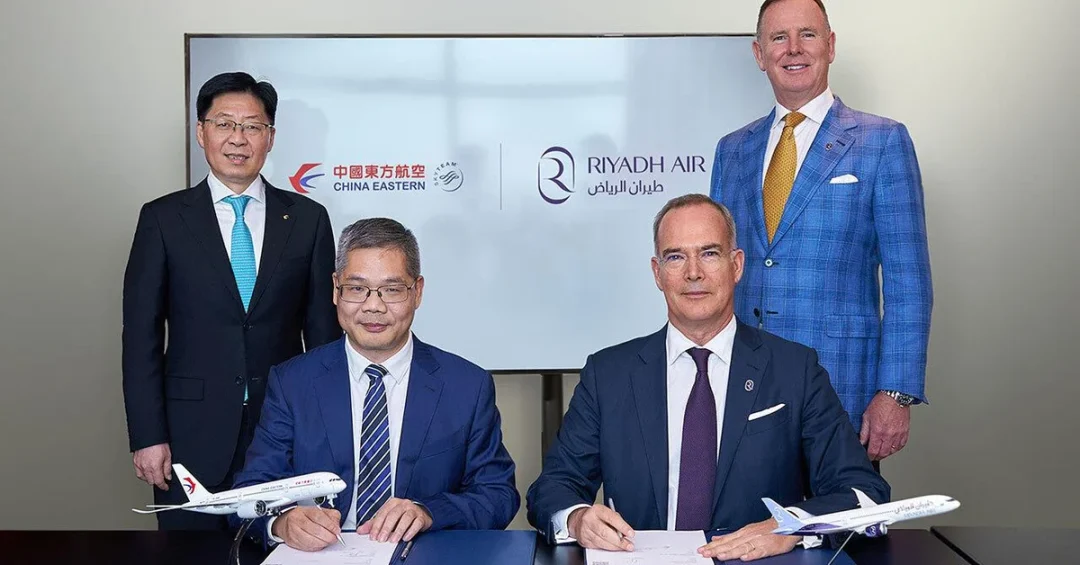
Riyadh Air, the newly established national airline of Saudi Arabia, has signed a Memorandum of Understanding (MoU) with China Eastern Airlines to expand into the Chinese market, announced at the International Air Transport Association (IATA) Annual General Meeting (AGM) in Dubai on June 3, 2024. This strategic partnership aims to strengthen economic and cultural ties between China and Saudi Arabia while unlocking new travel options for underserved markets.
Context and Background
The MoU was formalized during the IATA AGM, a key event for the global aviation industry. Riyadh Air, launched as part of Saudi Arabia’s Vision 2030 initiative to diversify the economy, is poised to become a major player in international aviation. China Eastern Airlines, one of China’s leading carriers, has recently initiated direct flights from Shanghai to Riyadh, underscoring a shared commitment to enhancing connectivity and collaboration in trade, tourism, and culture.
This partnership reflects the growing economic and cultural ties between China and Saudi Arabia, two nations seeking to deepen their strategic cooperation. By joining forces, the airlines aim to create seamless travel experiences and foster new opportunities for growth.
Key Details
Tony Douglas, CEO of Riyadh Air, commented, “This MoU marks a significant milestone for Riyadh Air as China is a hugely important market for our future network. By collaborating with China Eastern Airlines, a leading player in the Chinese market, we can unlock new travel opportunities and drive economic growth across both countries. We are particularly excited to explore synergies in digital innovation, where both airlines share a commitment to the future of travel.”
Wang Zhiqing, Chairman of China Eastern Airlines, expressed enthusiasm for the strategic cooperation, emphasizing a focus on the future. The MoU encompasses collaboration in various business areas, including information technology and digital operations. Wang highlighted that China Eastern Airlines is dedicated to driving high-quality development, enhancing core competitiveness, and delivering “excellent products and experiences to customers through comprehensive digital empowerment”.
Furthermore, the MoU facilitates seamless connections between China Eastern Airlines’ Shanghai-based hub network and Riyadh Air’s future route network, easing passenger transfers between China and regions such as the Middle East, Europe, Africa, and South America.
Implications and Impact
This partnership is expected to bolster connectivity between Asia, the Middle East, and other global regions, promoting tourism and trade. For Saudi Arabia, it aligns with Vision 2030 goals to increase international flight destinations and passenger traffic. The collaboration in digital innovation could set new standards for the aviation industry, enhancing customer experience and operational efficiency.
Regionally, the MoU strengthens Saudi Arabia’s position as a global aviation hub, fostering economic diversification and cultural exchange. Internationally, it signals China’s growing engagement with the Middle East, with potential ripple effects on global travel patterns and business collaborations.
Vision 2030 Alignment
This partnership underscores Saudi Arabia’s commitment to Vision 2030, which aims to transform the Kingdom into a global investment and tourism powerhouse. By expanding air connectivity and embracing digital transformation, Riyadh Air and China Eastern Airlines are contributing to the realization of these ambitious goals, enhancing Saudi Arabia’s global role and fostering sustainable economic growth.
20 Questions
Q1. What is the main purpose of the MoU between Riyadh Air and China Eastern Airlines?
A1. The MoU aims to expand Riyadh Air into the Chinese market, enhance connectivity, and foster collaboration in trade, tourism, and digital innovation between Saudi Arabia and China.
Q2. When and where was the MoU signed?
A2. The MoU was signed on June 3, 2024, at the International Air Transport Association (IATA) Annual General Meeting held in Dubai.
Q3. Who represented Riyadh Air at the signing?
A3. Tony Douglas, CEO of Riyadh Air, represented the airline and highlighted the significance of the partnership for future network expansion.
Q4. Who is the Chairman of China Eastern Airlines?
A4. Wang Zhiqing is the Chairman of China Eastern Airlines, and he expressed enthusiasm for the strategic cooperation and its focus on digital transformation.
Q5. What recent route has China Eastern Airlines launched to Saudi Arabia?
A5. China Eastern Airlines has launched direct flights from Shanghai to Riyadh, demonstrating a commitment to enhancing connectivity and collaboration.
Q6. How does this partnership benefit underserved markets?
A6. The partnership unlocks new travel options for underserved markets by improving connectivity and facilitating transfers between China and regions like the Middle East, Europe, Africa, and South America.
Q7. What role does digital innovation play in this collaboration?
A7. Digital innovation is a key focus, with both airlines exploring synergies in technology and digital operations to enhance customer experience and operational efficiency.
Q8. How does this MoU align with Saudi Arabia’s Vision 2030?
A8. It supports Vision 2030 by expanding international flight destinations, boosting tourism, and promoting economic diversification through enhanced global connectivity.
Q9. What are the expected economic impacts of this partnership?
A9. The partnership is expected to drive economic growth by increasing trade, tourism, and business collaborations between China and Saudi Arabia, benefiting both economies.
Q10. What did Tony Douglas say about the Chinese market?
A10. Tony Douglas stated that China is a hugely important market for Riyadh Air’s future network and that collaborating with China Eastern Airlines will unlock new travel opportunities.
Q11. How will the MoU facilitate passenger transfers?
A11. The MoU facilitates seamless connections between China Eastern’s Shanghai hub and Riyadh Air’s future network, easing transfers between China and various global regions.
Q12. What areas of business does the MoU cover?
A12. The MoU covers collaboration in various business areas, including information technology, digital operations, and connectivity, with a focus on digital empowerment.
Q13. What is the significance of the IATA AGM for this announcement?
A13. The IATA AGM is a prestigious global aviation event, providing a platform to announce strategic partnerships that shape the future of the industry.
Q14. How does this partnership strengthen China-Saudi relations?
A14. It strengthens economic and cultural ties by enhancing connectivity, fostering trade and tourism, and promoting collaboration in digital innovation between the two nations.
Q15. What digital transformation efforts does China Eastern Airlines have?
A15. China Eastern Airlines is focused on digitalization, aiming to enhance core competitiveness and deliver excellent customer experiences through comprehensive digital empowerment.
Q16. What future route network does Riyadh Air plan?
A16. Riyadh Air plans to develop a comprehensive route network connecting Saudi Arabia to key global destinations, including China, to support Vision 2030 goals.
Q17. How might this partnership affect tourism in Saudi Arabia?
A17. It could boost tourism by making travel more accessible for Chinese tourists and facilitating transfers from other regions, contributing to Saudi Arabia’s tourism goals.
Q18. What is the role of Riyadh Air in Saudi Arabia’s aviation strategy?
A18. Riyadh Air is a key component of Saudi Arabia’s aviation strategy, aimed at increasing international connectivity and supporting economic diversification under Vision 2030.
Q19. How does the partnership promote cultural exchange?
A19. By enhancing connectivity, the partnership facilitates people-to-people exchanges, fostering greater understanding and cultural ties between China and Saudi Arabia.
Q20. What are the next steps for implementing this MoU?
A20. The airlines will collaborate on digital innovation, network integration, and operational synergies, with further details to be developed as the partnership progresses.
Reader Feedback
We value your thoughts. Please share your feedback on this article.
Your feedback helps us improve our coverage.