


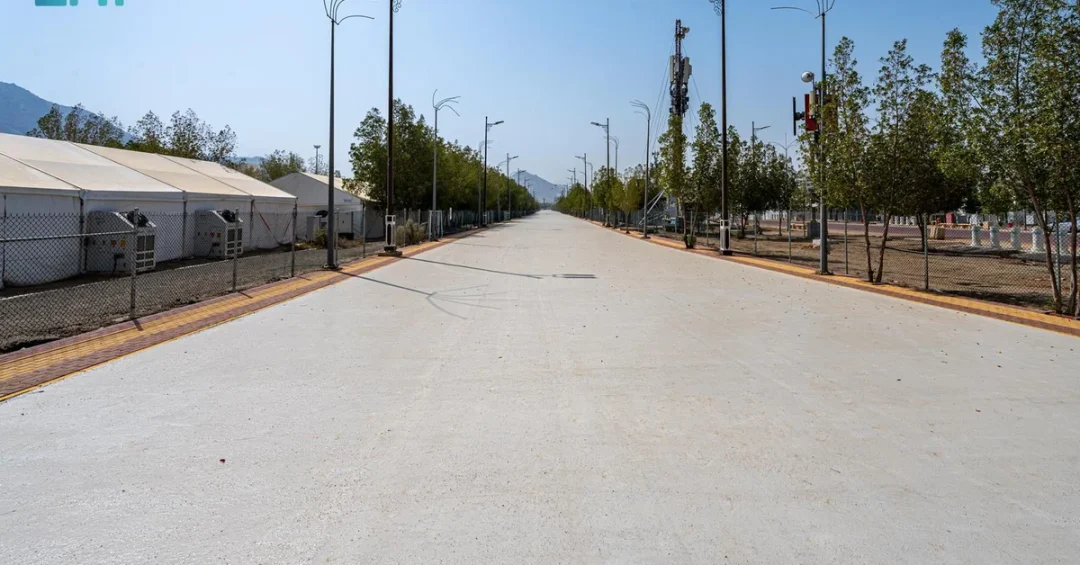
Minister of Transport and Logistic Services and Chairman of the Roads General Authority, Eng. Saleh bin Nasser Al-Jasser, launched an initiative to use flexible rubber asphalt in pedestrian walkways at the holy sites for this year’s Hajj season (1445 AH), aimed at improving pilgrims’ public health and enhancing their quality of life. The announcement, carried by the Saudi Press Agency, underscores the Kingdom’s commitment to leveraging scientific innovation to serve the millions of pilgrims who perform Hajj annually.
Context and Background
The Roads General Authority, in collaboration with various entities, implemented this scientific innovation on the road parallel to pedestrian path No. 6 leading to Mount Arafat. The technology utilizes recycled rubber derived from the recycling of tires in asphalt mixtures, which helps reduce tire waste accumulation and minimizes pollution resulting from tire burning. This initiative aligns with Saudi Arabia’s broader efforts to promote sustainability and improve the pilgrimage experience through advanced infrastructure.
Key Details
According to the Roads General Authority, experiments have demonstrated that the hardness of standard asphalt surfaces and sidewalks causes discomfort and issues for the ankles and feet of pilgrims, especially the elderly, who comprise 53% of the total pilgrims. This has led to increased demand for health facilities during the Hajj season, with 38% of injuries concentrated in the foot and ankle area. The use of flexible rubber asphalt is expected to reduce pressure on the ankles and feet, providing a sense of comfort while walking, ultimately leading to an improvement in the public health of pilgrims and enhancing their quality of life.
Implications and Impact
This initiative represents a significant step forward in Saudi Arabia’s ongoing efforts to enhance the Hajj experience for pilgrims from around the world. By addressing a common health issue, the Kingdom demonstrates its dedication to the well-being of all visitors to the holy sites. The use of recycled materials also highlights Saudi Arabia’s commitment to environmental sustainability and innovation, setting a precedent for future infrastructure projects. This development is expected to reduce the strain on healthcare facilities during the Hajj season, allowing medical resources to be allocated more efficiently.
Vision 2030 Alignment
This initiative is a clear reflection of Saudi Vision 2030’s goals to improve the quality of life for citizens and visitors, promote sustainable practices, and foster innovation in public services. By integrating recycled rubber into infrastructure, the Kingdom not only enhances the pilgrimage experience but also contributes to environmental protection and economic diversification. As Saudi Arabia continues to welcome millions of pilgrims each year, such forward-thinking projects underscore its leadership in serving humanity and its commitment to creating a more comfortable and safe environment for all.
20 Questions
Q1. What initiative was launched by Minister Al-Jasser?
A1. Eng. Saleh bin Nasser Al-Jasser launched an initiative to use flexible rubber asphalt in pedestrian walkways at the holy sites during Hajj 1445 AH. The initiative aims to improve pilgrims’ public health and enhance their quality of life.
Q2. Where was the flexible rubber asphalt implemented?
A2. It was implemented on the road parallel to pedestrian path No. 6 leading to Mount Arafat. This location is a key route for pilgrims during Hajj.
Q3. What material is used in the flexible rubber asphalt?
A3. The material is recycled rubber derived from the recycling of tires. This helps reduce tire waste and pollution from tire burning.
Q4. Why is the initiative important for elderly pilgrims?
A4. Elderly pilgrims make up 53% of the total, and standard asphalt causes discomfort to their ankles and feet. The flexible rubber asphalt reduces pressure, providing comfort and improving their health.
Q5. What percentage of injuries are concentrated in the foot and ankle area?
A5. According to the Roads General Authority, 38% of injuries during Hajj are concentrated in the foot and ankle area. This initiative aims to reduce such injuries.
Q6. How does the initiative benefit the environment?
A6. By using recycled rubber from tires, it reduces tire waste accumulation and minimizes pollution from tire burning. This supports environmental sustainability.
Q7. Who collaborated on this initiative?
A7. The Roads General Authority implemented it in collaboration with various entities. The specific partners were not named in the announcement.
Q8. What is the expected outcome for pilgrims’ health?
A8. The use of flexible rubber asphalt is expected to reduce pressure on ankles and feet, providing comfort while walking. This leads to improved public health and quality of life for pilgrims.
Q9. How does this initiative align with Saudi Vision 2030?
A9. It aligns with Vision 2030’s goals to improve quality of life, promote sustainability, and foster innovation. It also enhances the pilgrimage experience.
Q10. What year’s Hajj is this initiative for?
A10. It is for the Hajj season of 1445 AH, which corresponds to 2024. The initiative was launched in June 2024.
Q11. What is the role of the Roads General Authority?
A11. The Roads General Authority is responsible for implementing and overseeing the initiative. It collaborates with other entities to ensure successful execution.
Q12. How does the initiative reduce pressure on health facilities?
A12. By reducing foot and ankle injuries, it lessens the demand for health facilities during Hajj. This allows medical resources to be used more efficiently.
Q13. What is the significance of using recycled tires?
A13. Using recycled tires helps reduce waste and pollution. It also demonstrates Saudi Arabia’s commitment to sustainable practices and innovation.
Q14. What did experiments show about standard asphalt?
A14. Experiments showed that standard asphalt’s hardness causes discomfort and issues for pilgrims’ ankles and feet, especially the elderly. This led to increased health facility demand.
Q15. How does this initiative reflect Saudi leadership?
A15. It showcases Saudi Arabia’s dedication to serving pilgrims and improving their experience through innovation. It highlights the Kingdom’s leadership in sustainable infrastructure.
Q16. What is the expected impact on pilgrims’ quality of life?
A16. The initiative is expected to enhance comfort while walking, reduce foot and ankle issues, and improve overall public health. This leads to a better quality of life during Hajj.
Q17. Who announced the initiative?
A17. The initiative was announced by the Saudi Press Agency (SPA). It was launched by Eng. Saleh bin Nasser Al-Jasser.
Q18. What is the title of Eng. Saleh bin Nasser Al-Jasser?
A18. He is the Minister of Transport and Logistic Services and Chairman of the Roads General Authority’s Board of Directors.
Q19. How does the initiative contribute to Saudi Arabia’s global role?
A19. It demonstrates Saudi Arabia’s commitment to serving humanity and hosting Hajj safely and comfortably. It enhances the Kingdom’s reputation as a leader in innovation and sustainability.
Q20. What future applications might this technology have?
A20. While not specified, the technology could be applied to other pedestrian areas and infrastructure projects across Saudi Arabia. It aligns with Vision 2030’s sustainability goals.
Reader Feedback
We value your thoughts. Please share your feedback on this article.
Your feedback helps us improve our coverage.