


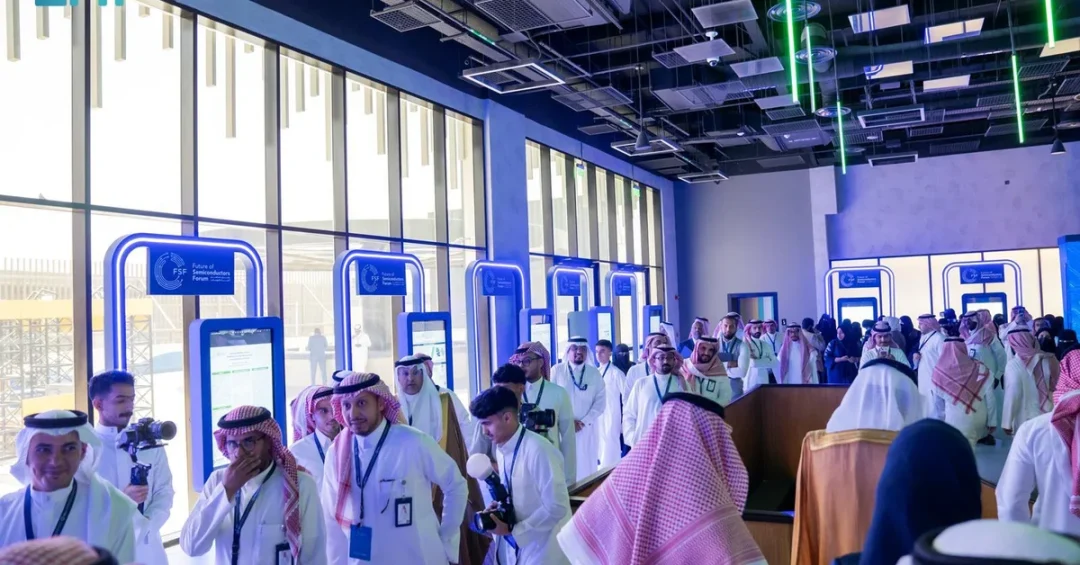
Riyadh, June 06, 2024 — The King Abdulaziz City for Science and Technology (KACST) has launched a series of strategic initiatives to localize electronic chip design and strengthen the Kingdom of Saudi Arabia’s position in the global semiconductor industry. Announced during the Future of Semiconductors Forum 2024, held under the title “Empowering Silicon Innovations,” these initiatives aim to boost the digital economy, develop local talent, and drive transformative changes in the Middle East region. The forum was organized by KACST in cooperation with the King Abdullah University of Science and Technology (KAUST) and attended by key officials including Minister of Communications and Information Technology Eng. Abdullah Al-Sawaha, Minister of Investment Eng. Khalid Al-Falih, and other dignitaries.
Context and Background
The semiconductor industry is a cornerstone of modern technology, powering everything from smartphones to advanced computing systems. Saudi Arabia, under Vision 2030, is aggressively pursuing diversification away from oil, with a strong focus on technology and innovation. The Future of Semiconductors Forum 2024, organized by KACST and KAUST, serves as a platform to showcase the Kingdom’s commitment to becoming a global player in this critical field. The event brought together government officials, industry experts, and academics to discuss opportunities and challenges in semiconductor design, manufacturing, and applications.
Key Details
KACST President Dr. Munir Eldesouki announced the establishment of the National Capability Center for Semiconductors (NCCS). This center will provide researchers with access to advanced clean-room laboratories spanning over 3,600 square meters at KACST and KAUST. It aims to create a research network for local and international universities, as well as the public and private sectors, to conduct specialized research in electronic chip design. The NCCS will support researchers from over 30 Saudi universities and train 500 researchers and students annually in semiconductor technologies.
Additionally, Dr. Eldesouki unveiled a new joint master’s program in semiconductors between KACST, Princess Nourah Bint Abdulrahman University, and the University of California at Los Angeles (UCLA). This program will offer high-quality education and practical training in clean-room laboratories, culminating in an academic degree, and will help qualify male and female researchers in future technology specializations.
Furthermore, the semiconductor incubator program (Ignition) opened registration for its first round. This program, the first of its kind in the region, is designed to attract entrepreneurs globally and support start-ups in the semiconductor industry, contributing to national economic growth.
Research, Development and Innovation Authority (RDIA) General Supervisor Dr. Mohammed Al-Otaibi announced the establishment of the National Semiconductor Hub, which aims to promote local design of electronic chips. The hub plans to support 50 specialized companies, train and employ 5,000 engineers in integrated circuit design, and attract over SAR1 billion in investment capital by 2030. The National Technology Development Program (NTDP) will provide more than SAR150 million in support products to companies within this group.
Implications and Impact
These initiatives are set to significantly enhance Saudi Arabia’s technological sovereignty and economic diversification. By localizing electronic chip design, the Kingdom reduces reliance on foreign supply chains and fosters a knowledge-based economy. The NCCS and National Semiconductor Hub will not only advance research and innovation but also create high-skilled jobs and attract global talent. The collaboration with UCLA and the Ignition incubator underscores Saudi Arabia’s commitment to building a robust semiconductor ecosystem, positioning the Kingdom as a regional leader in deep technology.
KAUST President Professor Tony Chan emphasized the strategic collaboration between KACST and KAUST, highlighting the Kingdom’s keenness on this industry. Professor Shuji Nakamura, a 2014 Nobel Prize winner in physics, also spoke at the conference, discussing applications of his invention, VCSEL Laser Technology, in short-distance communication, car sensors, and facial-recognition tools. The forum featured eight scientific sessions covering topics such as semiconductor landscape, photonics, quantum technologies, AI in lighting, and electronic chips in electric vehicles.
Vision 2030 Alignment
These initiatives are directly aligned with Saudi Vision 2030, which seeks to diversify the economy, develop human capital, and establish the Kingdom as a global innovation hub. By localizing semiconductor design and manufacturing, Saudi Arabia is not only advancing its technological capabilities but also contributing to the growth of the digital economy and creating opportunities for future generations. The training of 500 researchers annually and the employment of 5,000 engineers in integrated circuit design will build a skilled workforce essential for the Kingdom’s long-term prosperity. As Saudi Arabia continues to invest in deep technology, it reinforces its role as a leader in the global semiconductor industry and a key player in shaping the future of technology.
20 Questions
Q1. What is the Future of Semiconductors Forum 2024?
A1. The Future of Semiconductors Forum 2024 is an event organized by KACST in cooperation with KAUST, titled “Empowering Silicon Innovations,” aimed at advancing Saudi Arabia’s semiconductor industry through discussions and initiatives.
Q2. Who attended the opening of the forum?
A2. The opening was attended by Minister of Communications and Information Technology Eng. Abdullah Al-Sawaha, Minister of Investment Eng. Khalid Al-Falih, SDAIA President Dr. Abdullah Al-Ghamdi, and Princess Nourah Bint Abdulrahman University President Dr. Enas Al-Issa.
Q3. What is the National Capability Center for Semiconductors (NCCS)?
A3. The NCCS is a center established by KACST to provide researchers access to advanced clean-room laboratories at KACST and KAUST, aiming to create a research network for specialized research in electronic chip design.
Q4. How many researchers will the NCCS train annually?
A4. The NCCS plans to train 500 researchers and students in semiconductor technologies every year, helping to develop expertise in electronic chip production.
Q5. What is the joint master’s program announced?
A5. A joint master’s program in semiconductors between KACST, Princess Nourah Bint Abdulrahman University, and UCLA, offering high-quality education and practical training in clean-room laboratories.
Q6. What is the Ignition program?
A6. Ignition is a semiconductor incubator program, the first of its kind in the region, designed to attract entrepreneurs and support start-ups in the semiconductor industry to boost economic growth.
Q7. Who announced the National Semiconductor Hub?
A7. Dr. Mohammed Al-Otaibi, General Supervisor of the Research, Development and Innovation Authority (RDIA), announced the establishment of the National Semiconductor Hub.
Q8. What are the goals of the National Semiconductor Hub?
A8. The hub aims to promote local design of electronic chips, support 50 specialized companies, train and employ 5,000 engineers, and attract over SAR1 billion in investment capital by 2030.
Q9. How much support will the National Technology Development Program provide?
A9. The National Technology Development Program (NTDP) will provide more than SAR150 million worth of support products to companies within the National Semiconductor Hub.
Q10. What did KAUST President Professor Tony Chan emphasize?
A10. He emphasized the strategic collaboration between KACST and KAUST and the Kingdom’s keenness on the semiconductor industry, highlighting its potential to create a promising future.
Q11. Who is Professor Shuji Nakamura?
A11. Professor Shuji Nakamura is a 2014 Nobel Prize winner in physics who discussed his invention, VCSEL Laser Technology, and its applications in communication, car sensors, and facial recognition.
Q12. What topics were discussed in the forum’s scientific sessions?
A12. Sessions covered the semiconductor landscape, photonics, quantum technologies, AI in lighting, semiconductor packaging, IoT sensors, and electronic chips in electric vehicles, among others.
Q13. How many companies exhibited at the forum?
A13. The forum featured an exhibition showcasing 20 local and international companies displaying the latest advancements in semiconductors and research posters.
Q14. What is the significance of localizing electronic chip design?
A14. Localizing electronic chip design enhances technological sovereignty, reduces reliance on foreign supply chains, fosters a knowledge-based economy, and creates high-skilled jobs.
Q15. How does the initiative align with Saudi Vision 2030?
A15. It aligns with Vision 2030 by diversifying the economy, developing human capital, and establishing Saudi Arabia as a global innovation hub in deep technology.
Q16. What role will the NCCS play in research?
A16. The NCCS will provide access to advanced clean-room laboratories, create a research network, and conduct specialized research in electronic chip design to fulfill national priorities.
Q17. What is the expected impact on the digital economy?
A17. The initiatives will boost the digital economy by fostering innovation, attracting investment, creating jobs, and building a skilled workforce in semiconductor technologies.
Q18. How many universities will benefit from the NCCS?
A18. Researchers from over 30 Saudi universities will benefit from the NCCS resources, helping to develop expertise in electronic chip production.
Q19. What is VCSEL Laser Technology used for?
A19. VCSEL Laser Technology is utilized in short-distance communication, car sensors, and facial-recognition tools in smartphones, as discussed by Professor Shuji Nakamura.
Q20. What is the ultimate goal of these initiatives?
A20. The ultimate goal is to establish Saudi Arabia as a global leader in the semiconductor industry, drive economic growth, and support the ambitions of Vision 2030.
Reader Feedback
We value your thoughts. Please share your feedback on this article.
Your feedback helps us improve our coverage.