


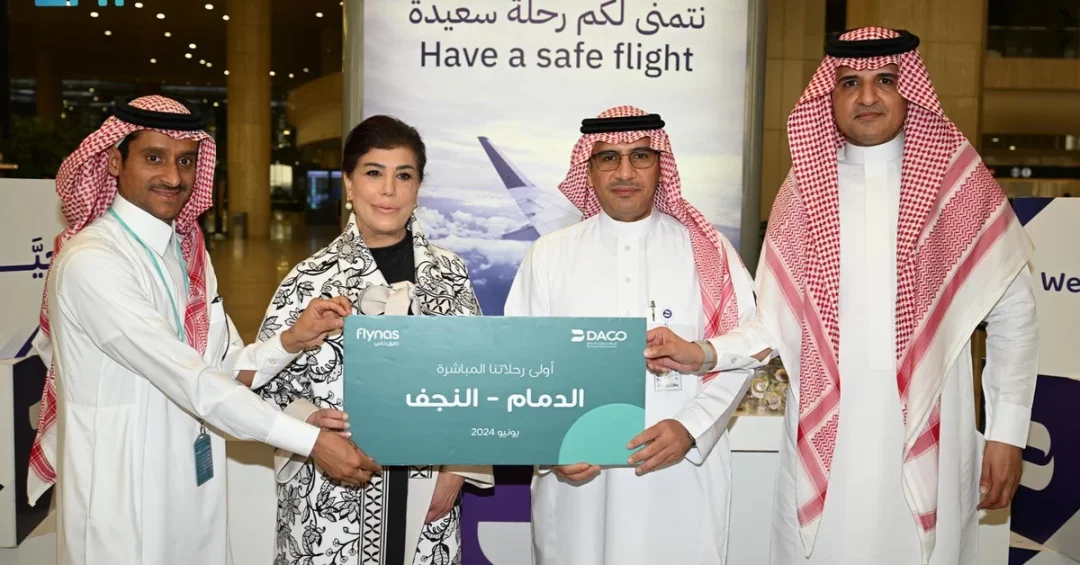
RIYADH, June 2, 2024 — The inaugural direct flight from King Fahd International Airport in Dammam to Najaf, Iraq, was operated on Saturday by the national carrier Flynas, marking a significant step in expanding air connectivity between the Kingdom of Saudi Arabia and the Republic of Iraq. The launch of flight XY821 was attended by the Iraqi Ambassador to the Kingdom, Safia Taleb Al Souhail, along with senior officials from the Saudi-Iraqi Coordination Council, representatives from Flynas, and leaders from the civil aviation sector. The new route, which will operate three direct weekly flights, is the result of sustained efforts by the Saudi-Iraqi Coordination Council to strengthen bilateral ties.
Context and Background
The launch of the Dammam-Najaf route builds upon the longstanding historical and cultural ties between Saudi Arabia and Iraq, which have been consistently supported by Custodian of the Two Holy Mosques King Salman bin Abdulaziz Al Saud and His Royal Highness Prince Mohammed bin Salman bin Abdulaziz Al Saud, Crown Prince and Prime Minister. These relations have witnessed growing cooperation across various sectors, and the new air link is expected to further expand bilateral engagement to achieve mutual interests and promote regional growth and stability.
Prior to this inaugural flight, direct air connections between the two countries were limited to Baghdad and Erbil. The addition of Najaf, a city of significant religious and cultural importance, represents a strategic expansion of the Kingdom’s aviation network. The General Authority of Civil Aviation has emphasized that this new route adds a vital air corridor between the two nations, facilitating the movement of travelers, including religious pilgrims and businesspeople, and contributing to broader economic and social exchange.
Key Details
The inaugural flight was met with a formal ceremony at Najaf International Airport, attended by the Saudi Ambassador to Iraq, Abdulaziz Al-Shammari, and the Governor of Najaf, Eng. Yusuf Kinawi. The event underscored the mutual commitment of both nations to enhancing connectivity and fostering closer people-to-people ties. The flight route will be operated by Flynas, Saudi Arabia’s leading low-cost carrier, which has been expanding its network in line with the Kingdom’s national aviation strategy.
This development aligns with the Kingdom’s ambitious national aviation strategy, which aims to increase annual passenger capacity to more than 330 million and reach over 250 destinations worldwide. The strategy is a key pillar of Saudi Vision 2030, which seeks to diversify the economy, enhance non-oil sectors, and position the Kingdom as a global logistics and tourism hub. The new Dammam-Najaf route not only strengthens ties with Iraq but also contributes to the broader goal of expanding Saudi Arabia’s international flight network.
International Impact
The launch of direct flights between Dammam and Najaf carries significant implications for regional connectivity and economic cooperation. It is expected to boost trade, tourism, and investment flows between Saudi Arabia and Iraq, while also facilitating religious travel for pilgrims visiting the holy sites in Najaf. The improved air link reflects the growing diplomatic and economic partnership between the two countries, which has been nurtured through the Saudi-Iraqi Coordination Council. This council, established to enhance bilateral cooperation, has been instrumental in driving initiatives that promote mutual prosperity and regional stability.
From a broader perspective, the new route enhances Saudi Arabia’s role as a regional aviation hub and supports the Kingdom’s efforts to become a global leader in air transport. It also signals the strengthening of ties between Saudi Arabia and Iraq, which is a key partner in the region. The flight connection is expected to encourage further collaboration in areas such as energy, infrastructure, and cultural exchange, aligning with the shared vision of a stable and prosperous Middle East.
Vision 2030 Alignment
The Dammam-Najaf route is a direct reflection of Saudi Vision 2030’s objectives to expand the Kingdom’s aviation sector, increase non-oil revenues, and deepen international partnerships. By enhancing air connectivity, Saudi Arabia is not only facilitating travel but also creating new opportunities for economic diversification and cultural exchange. As the Kingdom continues to open up to the world, initiatives like this demonstrate its commitment to building bridges with neighboring countries and contributing to regional development. The new flight service will play a role in achieving the national aviation strategy’s targets, bringing Saudi Arabia closer to its goal of becoming a top global destination for business, tourism, and pilgrimage.
20 Questions
Q1. What was the inaugural direct flight route launched by Flynas?
A1. The inaugural direct flight was from King Fahd International Airport in Dammam, Saudi Arabia, to Najaf, Iraq. This marks the first direct air link between the two cities.
Q2. When did the first Dammam-Najaf flight take place?
A2. The first flight took place on June 1, 2024, as reported by the Saudi Press Agency. It was operated by Flynas under flight number XY821.
Q3. Which airline operated the inaugural flight?
A3. The national carrier Flynas operated the inaugural flight. Flynas is a leading Saudi low-cost airline known for expanding connectivity in line with national aviation goals.
Q4. How many weekly flights will be operated on this route?
A4. There will be three direct weekly flights between Dammam and Najaf. This frequency is expected to accommodate travelers for business, pilgrimage, and tourism.
Q5. Who attended the launch ceremony in Dammam?
A5. The Iraqi Ambassador to Saudi Arabia, Safia Taleb Al Souhail, attended, along with high-ranking officials from the Saudi-Iraqi Coordination Council and representatives from Flynas and the civil aviation sector.
Q6. What was the significance of the ceremony at Najaf International Airport?
A6. The ceremony at Najaf International Airport welcomed the inaugural flight and was attended by Saudi Ambassador to Iraq Abdulaziz Al-Shammari and Governor of Najaf Eng. Yusuf Kinawi, highlighting bilateral cooperation.
Q7. What role did the Saudi-Iraqi Coordination Council play in launching this route?
A7. The Saudi-Iraqi Coordination Council facilitated the launch as part of its efforts to strengthen bilateral relations. The council works to enhance cooperation across various sectors, including aviation.
Q8. What other destinations in Iraq are served by direct flights from Saudi Arabia?
A8. Saudi Arabia already operates direct flights to Baghdad and Erbil. The addition of Najaf expands the Kingdom’s air connectivity with Iraq to three destinations.
Q9. How does this new route align with Saudi Arabia’s national aviation strategy?
A9. It supports the strategy’s goals to increase annual passenger capacity to over 330 million and reach more than 250 destinations worldwide. This expansion enhances Saudi Arabia’s global aviation hub status.
Q10. What is the expected impact on religious travel?
A10. The direct flights will facilitate easier travel for pilgrims visiting the holy sites in Najaf. This improves accessibility and convenience for religious travelers from Saudi Arabia and beyond.
Q11. Which Saudi officials have supported the strengthening of ties with Iraq?
A11. Custodian of the Two Holy Mosques King Salman bin Abdulaziz Al Saud and Crown Prince Mohammed bin Salman bin Abdulaziz Al Saud have consistently supported deepening bilateral relations with Iraq.
Q12. What economic benefits are anticipated from the new air link?
A12. The route is expected to boost trade, tourism, and investment flows between Saudi Arabia and Iraq. It also creates opportunities for business collaboration and regional economic integration.
Q13. How does this flight contribute to Vision 2030?
A13. It advances Vision 2030 by expanding non-oil sectors, enhancing international connectivity, and promoting Saudi Arabia as a global logistics and tourism hub. It also fosters regional partnerships.
Q14. What is the capacity of King Fahd International Airport?
A14. King Fahd International Airport is one of the largest airports in the world by area and serves as a major hub for eastern Saudi Arabia. It handles millions of passengers annually.
Q15. Will there be additional routes between Saudi Arabia and Iraq in the future?
A15. While no specific announcements have been made, the expansion aligns with the Kingdom’s aviation strategy, which aims to increase destinations. Further growth in connectivity is likely as ties strengthen.
Q16. What is the significance of Najaf as a destination?
A16. Najaf is a holy city in Iraq, home to the Imam Ali Shrine, a major pilgrimage site for Shia Muslims. It holds deep religious and cultural importance.
Q17. How does this route reflect Saudi Arabia’s diplomatic efforts?
A17. It demonstrates Saudi Arabia’s commitment to building bridges with neighboring countries and fostering stability. The route is a tangible outcome of diplomatic engagement through the Saudi-Iraqi Coordination Council.
Q18. What other sectors are expected to benefit from improved Saudi-Iraqi relations?
A18. Sectors such as energy, infrastructure, trade, and cultural exchange are expected to benefit. Enhanced connectivity facilitates deeper cooperation and mutual prosperity.
Q19. Who is the Saudi Ambassador to Iraq?
A19. Abdulaziz Al-Shammari is the Saudi Ambassador to Iraq. He attended the ceremony at Najaf International Airport to welcome the inaugural flight.
Q20. How does this launch contribute to regional stability?
A20. By enhancing people-to-people ties and economic interdependence, the route promotes mutual understanding and cooperation, contributing to stability and prosperity in the region.
Reader Feedback
We value your thoughts. Please share your feedback on this article.
Your feedback helps us improve our coverage.