


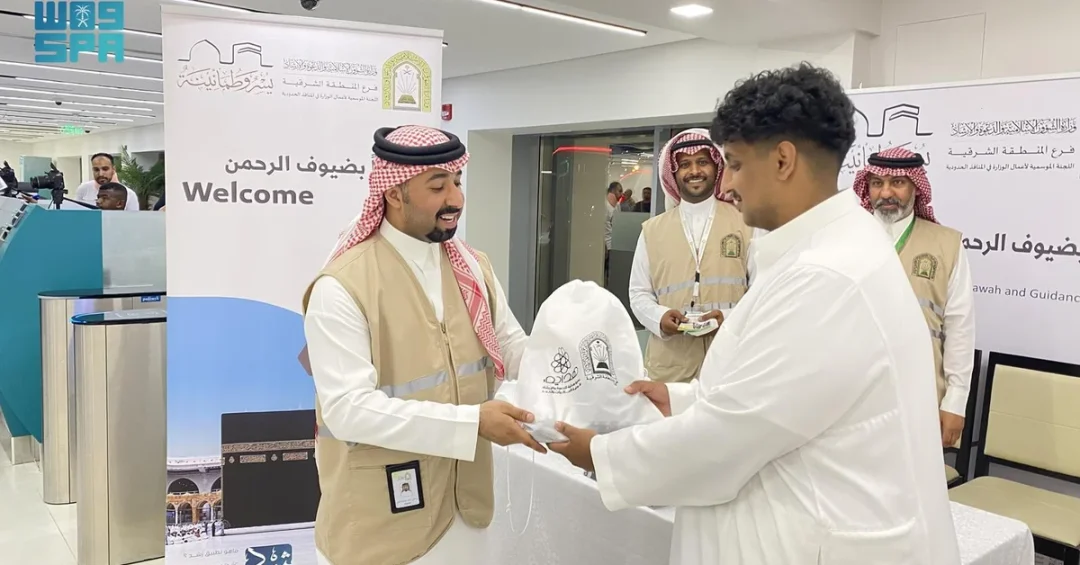
The Ministry of Islamic Affairs, Dawah and Guidance, through its branch in the Eastern Region, has received more than 650 pilgrims arriving via the King Fahd Causeway Port since the start of the Hajj season for the year 1445 AH. The ministry announced that it has provided a comprehensive set of awareness and guidance booklets to help pilgrims understand the provisions of Hajj rituals. In addition, the ministry distributed identification barcodes for its digital applications, including the “Rushd” application, which offers awareness and guidance content designed to facilitate the performance of rituals and provide pilgrims with necessary assistance throughout their journey to the Holy Land.
Context and Background
The King Fahd Causeway, a major land link between Saudi Arabia and Bahrain, serves as a vital entry point for pilgrims traveling from the Gulf region and beyond. Each year, the Ministry of Islamic Affairs, Dawah and Guidance mobilizes resources to ensure a smooth and spiritually fulfilling Hajj experience for all pilgrims. The Eastern Region branch’s efforts reflect the Kingdom’s longstanding commitment to serving guests of God and facilitating their religious duties. This initiative is part of a broader national strategy to enhance pilgrim services, leveraging technology and education to streamline the Hajj journey.
Key Details
The awareness and guidance booklets provided by the ministry cover essential aspects of Hajj rituals, including the correct procedures for Tawaf, Sa’i, and other rites. These materials are available in multiple languages to accommodate the diverse backgrounds of pilgrims. Furthermore, the ministry has distributed barcodes that allow pilgrims to easily download the “Rushd” application. This app features a user-friendly interface with step-by-step guidance, supplications, and real-time updates, ensuring that pilgrims have access to accurate information at their fingertips. The ministry’s proactive approach underscores its dedication to leveraging digital tools for religious education and support.
Implications and Impact
The reception of over 650 pilgrims at the King Fahd Causeway Port highlights the Kingdom’s capacity to manage large influxes of visitors during the Hajj season. It also demonstrates the effectiveness of integrated services provided by various Saudi authorities, including immigration, health, and security. For international observers, this initiative showcases Saudi Arabia’s commitment to hospitality and religious facilitation, reinforcing its role as a global leader in serving pilgrims. The use of technology like the “Rushd” app not only enhances the pilgrim experience but also reflects the Kingdom’s broader digital transformation goals.
Vision 2030 Alignment
This effort aligns seamlessly with Saudi Vision 2030, which aims to enhance the quality of services for pilgrims and visitors, increase the capacity of the Hajj and Umrah sectors, and promote digital innovation. By providing advanced guidance and support, the Ministry of Islamic Affairs, Dawah and Guidance contributes to the Vision’s objective of hosting an increasing number of pilgrims while ensuring their comfort and spiritual well-being. As the Kingdom continues to invest in infrastructure and technology, such initiatives will further solidify its standing as a premier destination for religious tourism and a model of efficient, compassionate service.
20 Questions
Q1. What is the King Fahd Causeway Port?
A1. The King Fahd Causeway Port is a major land border crossing between Saudi Arabia and Bahrain, serving as a key entry point for travelers and pilgrims. It facilitates the movement of people and goods, and during Hajj season, it becomes a vital route for pilgrims arriving from the Gulf region.
Q2. Which ministry is responsible for receiving pilgrims at the King Fahd Causeway Port?
A2. The Ministry of Islamic Affairs, Dawah and Guidance, specifically its branch in the Eastern Region, is responsible for receiving and assisting pilgrims at the King Fahd Causeway Port. The ministry provides guidance and support to ensure a smooth Hajj experience.
Q3. How many pilgrims have been received so far this Hajj season?
A3. More than 650 pilgrims have been received through the King Fahd Causeway Port since the start of the Hajj season for the year 1445 AH. This number is expected to grow as the season progresses.
Q4. What is the purpose of the awareness and guidance booklets distributed to pilgrims?
A4. The booklets are designed to educate pilgrims about the provisions and rituals of Hajj, helping them perform their religious duties correctly. They cover essential rites and are available in multiple languages to cater to diverse pilgrims.
Q5. What is the “Rushd” application?
A5. The “Rushd” application is a digital tool developed by the Ministry of Islamic Affairs, Dawah and Guidance. It provides awareness and guidance content, including step-by-step instructions for rituals, supplications, and real-time updates to assist pilgrims during their journey.
Q6. How do pilgrims access the “Rushd” application?
A6. Pilgrims can access the “Rushd” application by scanning identification barcodes distributed by the ministry at the port. These barcodes make it easy to download the app, ensuring pilgrims have immediate access to essential guidance.
Q7. Why is the King Fahd Causeway important for Hajj pilgrims?
A7. The King Fahd Causeway is a crucial land route for pilgrims traveling from Bahrain and other Gulf countries. It provides a direct and efficient way to enter Saudi Arabia, reducing travel time and facilitating the influx of pilgrims during Hajj season.
Q8. What other services are provided to pilgrims at the port?
A8. In addition to guidance materials, pilgrims receive assistance with immigration, health checks, and other logistical support. Various Saudi authorities collaborate to ensure a seamless and comfortable experience for all travelers.
Q9. How does this initiative reflect Saudi Arabia’s commitment to pilgrims?
A9. This initiative demonstrates Saudi Arabia’s dedication to serving guests of God by providing comprehensive support and modern tools. It reflects the Kingdom’s longstanding tradition of hospitality and its efforts to continuously improve pilgrim services.
Q10. What role does technology play in this year’s Hajj season?
A10. Technology, such as the “Rushd” application, plays a significant role in enhancing the pilgrim experience. It offers digital guidance, real-time information, and easy access to resources, aligning with Saudi Arabia’s digital transformation goals under Vision 2030.
Q11. Are the awareness materials available in multiple languages?
A11. Yes, the awareness and guidance booklets are available in multiple languages to accommodate the diverse linguistic backgrounds of pilgrims. This ensures that all pilgrims can understand the rituals and perform them correctly.
Q12. What is the significance of the year 1445 AH in the context of Hajj?
A12. The year 1445 AH is the current Islamic Hijri year, marking the Hajj season of 2024. It is a time when millions of Muslims from around the world gather in Mecca for the annual pilgrimage.
Q13. How does the ministry ensure the accuracy of the guidance provided?
A13. The ministry employs qualified scholars and experts to prepare the guidance materials. These materials are based on authentic Islamic sources, ensuring that pilgrims receive accurate and reliable information.
Q14. What is the expected number of pilgrims this year?
A14. While exact numbers vary, Saudi Arabia anticipates hosting over two million pilgrims for Hajj 1445 AH. The Kingdom has expanded capacity and services to accommodate the growing number of pilgrims safely and comfortably.
Q15. How does the ministry handle the distribution of barcodes?
A15. The ministry distributes identification barcodes at the port and other entry points. Pilgrims can scan these barcodes to download the “Rushd” application and access its features. The process is designed to be quick and user-friendly.
Q16. What are the key rituals that pilgrims need to perform during Hajj?
A16. Key rituals include Ihram (state of consecration), Tawaf (circumambulation of the Kaaba), Sa’i (walking between Safa and Marwah), standing at Arafat, and throwing pebbles at Jamarat. The guidance materials cover these in detail.
Q17. How does the ministry support pilgrims with special needs?
A17. The Ministry of Islamic Affairs, Dawah and Guidance provides specialized assistance for pilgrims with special needs, including accessible facilities, dedicated staff, and tailored guidance materials to ensure they can perform their rituals with ease.
Q18. What is the role of the Eastern Region branch in this initiative?
A18. The Eastern Region branch of the Ministry of Islamic Affairs, Dawah and Guidance oversees the reception and support of pilgrims entering through the King Fahd Causeway Port. It coordinates the distribution of materials and ensures smooth operations.
Q19. How does this initiative contribute to Vision 2030?
A19. The initiative aligns with Vision 2030 by enhancing pilgrim services, promoting digital innovation, and increasing the capacity of the Hajj sector. It reflects the Kingdom’s commitment to improving the quality of life for visitors and achieving excellence in religious tourism.
Q20. What feedback have pilgrims given about these services?
A20. Pilgrims have expressed appreciation for the organized support and digital tools provided. Many have highlighted the convenience of the “Rushd” application and the helpfulness of the guidance booklets in facilitating their Hajj journey.
Reader Feedback
We value your thoughts. Please share your feedback on this article.
Your feedback helps us improve our coverage.