


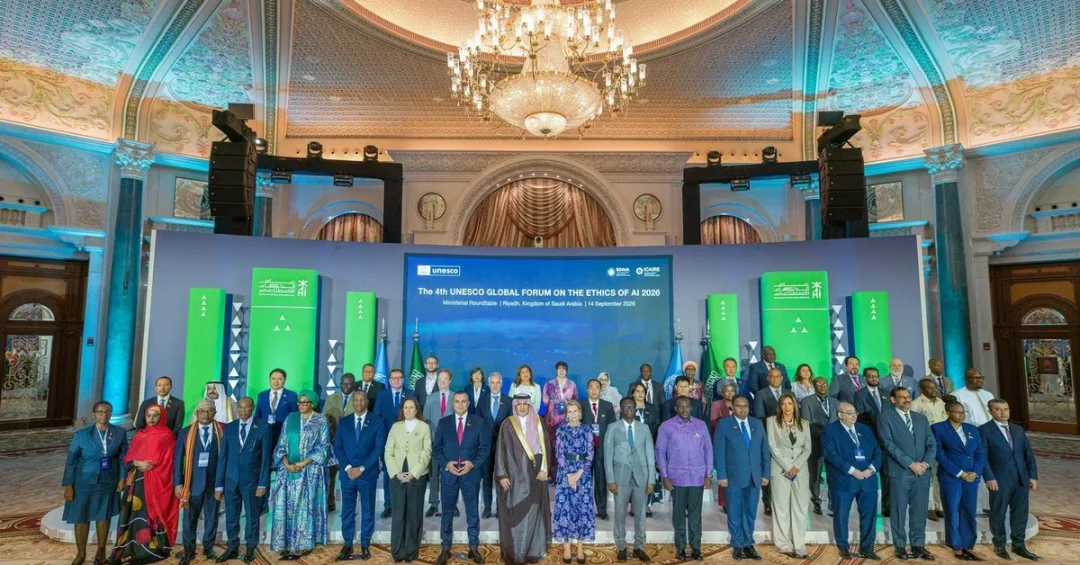
Saudi Arabia, UNESCO, and the International Center for AI Research and Ethics (ICAIRE) issued a joint international statement on September 15, 2026, following a closed ministerial meeting held in Riyadh during the Fourth UNESCO Global Forum on the Ethics of Artificial Intelligence. The forum, hosted by the Kingdom from September 14 to 17, brought together more than 60 ministers and international representatives to advance global cooperation on the ethical development and governance of AI.
Context and Background
The Fourth UNESCO Global Forum on the Ethics of Artificial Intelligence convened in Riyadh as part of Saudi Arabia’s ongoing efforts to shape global AI governance in line with its Vision 2030 objectives. The meeting was co-chaired by Dr. Abdullah Alghamdi, President of the Saudi Data and AI Authority (SDAIA) and Chairman of the ICAIRE Board, representing Saudi Arabia, and Åsa Regnér, UNESCO Deputy Director-General. Dr. Alghamdi welcomed the Kingdom’s guests and commended the constructive cooperation between Saudi Arabia and UNESCO across various fields, particularly in AI, a rapidly evolving sector driven by global technological advancements.
The forum builds on the UNESCO Recommendation on the Ethics of Artificial Intelligence, adopted in 2021, which serves as the global normative framework for the ethical, safe, inclusive, and sustainable development of AI. The gathering reflects a shared international commitment to ensuring that AI benefits humanity while respecting cultural and linguistic diversity.
Key Details
In the joint statement, participants underscored the importance of strengthening international cooperation to ensure that the development, deployment, and use of AI contribute to human well-being, sustainable development, and the public good. They reaffirmed the importance of continuing to be guided by the UNESCO Recommendation on the Ethics of Artificial Intelligence as the common foundation for AI governance.
The statement commended UNESCO’s leadership in AI governance and encouraged the organization to further support member states in developing national strategies informed by its frameworks, while accounting for differing national contexts and capacities, as well as cultural and linguistic diversity.
Participants emphasized the importance of international cooperation, intercultural dialogue, and mutual learning, particularly amid rapid technological advancement and a complex global environment. They underscored the role of multilateral cooperation in fostering trust and inclusive participation in the development and governance of AI technologies, with the active involvement of women and youth.
They also stressed the importance of addressing the needs of developing countries, particularly in Africa, and bridging gaps in access to AI capabilities and infrastructure. The meeting highlighted the importance of strengthening infrastructure, institutional capacity, skills, and knowledge sharing as fundamental pillars for ensuring the safe and ethical use of AI, while emphasizing the need to enhance cooperation among governments, international organizations, academia, the private sector, and civil society to address challenges that transcend national borders.
The meeting co-chairs welcomed the spirit of dialogue and cooperation that characterized the ministers’ discussions and called on member states and all stakeholders to strengthen implementation of the UNESCO Recommendation on the Ethics of Artificial Intelligence. They emphasized the importance of supporting international cooperation to develop and deploy AI in an ethical, safe, and sustainable manner, while safeguarding cultural and linguistic diversity and respecting national priorities and contexts. They also stressed the importance of fostering dialogue and knowledge-sharing among diverse stakeholders to ensure broad access to the benefits of AI technologies, promoting responsible innovation, and addressing potential risks in ways that uphold human rights and dignity. In addition, they highlighted the need to promote AI literacy, empower children and youth, facilitate their participation in AI governance, and protect their rights and safety in the digital environment.
Implications and Impact
The joint statement signals a significant step forward in global AI governance, positioning Saudi Arabia as a key player in shaping international norms and standards for AI ethics. By co-chairing the meeting and hosting the forum, the Kingdom demonstrates its commitment to multilateral cooperation and its growing leadership in technology and innovation.
The emphasis on bridging gaps in access to AI capabilities, particularly for developing countries in Africa, reflects a shared vision of inclusive growth and sustainable development. This aligns with Saudi Arabia’s broader efforts to promote global stability and prosperity through initiatives such as the Middle East Green Initiative and the Digital Cooperation Organization.
The focus on empowering women and youth in AI governance underscores the importance of diversity and inclusion in shaping the future of technology. Saudi Arabia has made significant strides in this area, with women now holding prominent roles in the tech sector and youth driving innovation across the Kingdom.
Vision 2030 Alignment
This development closely aligns with Saudi Vision 2030, which seeks to diversify the economy, foster innovation, and position the Kingdom as a global hub for technology and knowledge. Through initiatives like SDAIA and NEOM, Saudi Arabia is investing in AI research, education, and infrastructure to build a sustainable and inclusive digital future.
The Kingdom’s leadership in hosting the UNESCO Global Forum and co-chairing the ministerial meeting demonstrates its commitment to international collaboration and its role as a bridge between cultures and nations. By championing ethical AI governance, Saudi Arabia is not only advancing its own transformation but also contributing to a safer, more equitable world for all.
20 Questions
Q1. What was the purpose of the closed ministerial meeting held in Riyadh?
A1. The meeting aimed to discuss opportunities and challenges of AI and to issue a joint statement on strengthening international cooperation for ethical AI development, as part of the Fourth UNESCO Global Forum on the Ethics of AI.
Q2. Who co-chaired the ministerial meeting?
A2. The meeting was co-chaired by Dr. Abdullah Alghamdi, President of SDAIA and Chairman of ICAIRE, representing Saudi Arabia, and Åsa Regnér, UNESCO Deputy Director-General.
Q3. How many countries were represented at the meeting?
A3. More than 60 ministers and international representatives from around the world attended the meeting, reflecting broad global participation.
Q4. What key document guides the discussions on AI ethics?
A4. The UNESCO Recommendation on the Ethics of Artificial Intelligence, adopted in 2021, serves as the global normative framework for ethical, safe, inclusive, and sustainable AI development.
Q5. What did participants emphasize regarding international cooperation?
A5. They underscored the importance of strengthening international cooperation to ensure AI contributes to human well-being, sustainable development, and the public good.
Q6. What role did UNESCO play according to the statement?
A6. UNESCO was commended for its leadership in AI governance and encouraged to further support member states in developing national strategies informed by its frameworks.
Q7. How did participants address the needs of developing countries?
A7. They stressed the importance of addressing the needs of developing countries, particularly in Africa, and bridging gaps in access to AI capabilities and infrastructure.
Q8. What did the meeting say about involving women and youth?
A8. The statement emphasized the active involvement of women and youth in the development and governance of AI technologies.
Q9. What pillars were highlighted for safe and ethical AI use?
A9. Participants highlighted strengthening infrastructure, institutional capacity, skills, and knowledge sharing as fundamental pillars.
Q10. What cooperation is needed among stakeholders?
A10. Enhanced cooperation among governments, international organizations, academia, the private sector, and civil society is needed to address challenges that transcend national borders.
Q11. What did the co-chairs call on member states to do?
A11. They called on member states and all stakeholders to strengthen implementation of the UNESCO Recommendation on the Ethics of AI.
Q12. How does the statement address cultural and linguistic diversity?
A12. It emphasizes safeguarding cultural and linguistic diversity and respecting national priorities and contexts in AI development and deployment.
Q13. What is the importance of AI literacy according to the statement?
A13. Promoting AI literacy is crucial to empower children and youth, facilitate their participation in AI governance, and protect their rights and safety in the digital environment.
Q14. What did Dr. Alghamdi say about Saudi Arabia’s cooperation with UNESCO?
A14. He commended the constructive cooperation between Saudi Arabia and UNESCO across various fields, particularly in AI, for the benefit of peoples worldwide.
Q15. What is the significance of the forum being held in Riyadh?
A15. It highlights Saudi Arabia’s growing leadership in global AI governance and its commitment to multilateral cooperation and innovation.
Q16. How does this meeting align with Saudi Vision 2030?
A16. It aligns with Vision 2030’s goals to diversify the economy, foster innovation, and position Saudi Arabia as a global hub for technology and knowledge.
Q17. What potential risks did participants mention?
A17. They mentioned addressing potential risks in ways that uphold human rights and dignity, ensuring responsible innovation.
Q18. What is the role of ICAIRE in this context?
A18. ICAIRE, co-founded by Saudi Arabia, supports international efforts to develop ethical AI frameworks and promote responsible innovation globally.
Q19. What next steps were outlined in the statement?
A19. The statement calls for strengthened implementation of the UNESCO Recommendation and continued dialogue and knowledge-sharing among diverse stakeholders.
Q20. How does this meeting benefit the global community?
A20. It fosters international cooperation, bridges gaps in AI access, and promotes ethical AI development that benefits all humanity, especially developing countries.
Reader Feedback
We value your thoughts. Please share your feedback on this article.
Your feedback helps us improve our coverage.