


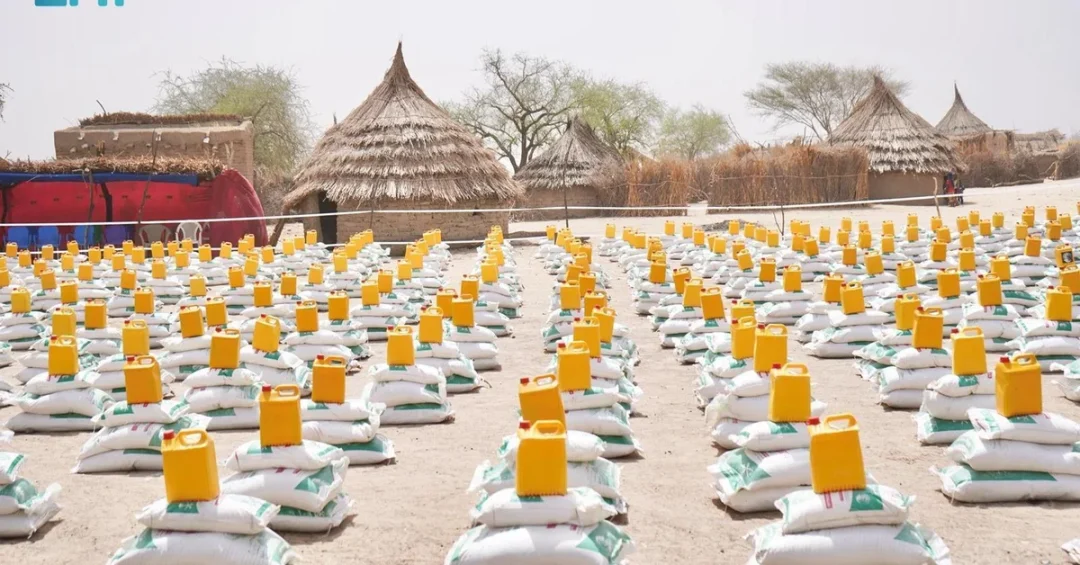
The King Salman Humanitarian Aid and Relief Center (KSrelief) distributed 600 food baskets to the neediest families in the Batha Region of the Republic of Chad on June 7, 2024, benefiting 3,600 individuals. The distribution is part of a project to support food security in Chad this year, implemented by KSrelief in coordination with local authorities. This initiative reflects the Kingdom of Saudi Arabia’s ongoing commitment to alleviating suffering and providing essential aid to vulnerable communities worldwide.
Context and Background
Chad faces significant humanitarian challenges, including food insecurity exacerbated by climate change, conflict, and displacement. The Batha Region, located in central Chad, hosts many families in need of assistance. KSrelief, established in 2015 under the leadership of the Kingdom of Saudi Arabia, has been at the forefront of providing relief to such communities. The center’s work aligns with Saudi Arabia’s Vision 2030, which emphasizes global humanitarian responsibility and sustainable development.
KSrelief’s food security project in Chad is one of many initiatives aimed at combating hunger and malnutrition. By targeting the most vulnerable, KSrelief ensures that aid reaches those who need it most, contributing to stability and resilience in the region.
Key Details
The 600 food baskets contained essential staples such as rice, flour, oil, and sugar, sufficient to support a family for a month. The distribution was carried out in collaboration with Chad’s Ministry of Social Affairs and local NGOs, ensuring transparency and efficiency. According to KSrelief, the project is expected to benefit thousands of families across multiple regions in Chad throughout the year.
The King Salman Humanitarian Aid and Relief Center (KSrelief) has a long history of humanitarian work in Chad, including previous food distributions, medical camps, and water projects. In 2023 alone, KSrelief implemented numerous projects in Chad, focusing on food security, health, and education.
Implications and Impact
This distribution not only addresses immediate hunger but also contributes to long-term food security and community resilience. By supporting families in Batha, KSrelief helps reduce the risk of malnutrition, particularly among children and women, and enables recipients to focus on rebuilding their livelihoods. The initiative also strengthens bilateral relations between Saudi Arabia and Chad, demonstrating the Kingdom’s role as a global humanitarian leader.
International observers have praised Saudi Arabia’s humanitarian efforts, which are consistently among the largest globally. KSrelief’s operations in Chad and other countries reflect the Kingdom’s dedication to the principles of humanity and solidarity, as outlined in Saudi Vision 2030.
Vision 2030 Alignment
Saudi Vision 2030 aims to diversify the economy and enhance the Kingdom’s global role, including through humanitarian and developmental aid. KSrelief’s work in Chad is a prime example of this vision in action, showcasing Saudi Arabia’s commitment to international cooperation and sustainable development. By supporting food security in Chad, the Kingdom not only saves lives but also contributes to the global goals of ending hunger and poverty.
As Saudi Arabia continues to expand its humanitarian reach, initiatives like this reinforce its position as a responsible global actor and a force for good in the world.
20 Questions
Q1. What is KSrelief?
A1. KSrelief is the King Salman Humanitarian Aid and Relief Center, a Saudi organization established in 2015 to provide international humanitarian assistance. It operates under the Kingdom of Saudi Arabia and implements projects in areas such as food security, health, and education.
Q2. How many food baskets were distributed in Chad?
A2. KSrelief distributed 600 food baskets to the neediest families in the Batha Region of Chad. The baskets contained essential food items sufficient to support a family for a month.
Q3. How many individuals benefited from this distribution?
A3. The distribution benefited 3,600 individuals. This was achieved by providing food baskets to families in need, with each basket designed to support multiple household members.
Q4. Where exactly in Chad did the distribution take place?
A4. The distribution took place in the Batha Region of the Republic of Chad. Batha is located in central Chad and hosts many vulnerable families facing food insecurity.
Q5. When did the distribution occur?
A5. The distribution occurred on June 7, 2024. The event was reported by the Saudi Press Agency on June 8, 2024, highlighting the Kingdom’s ongoing humanitarian efforts.
Q6. What is the project under which this aid was provided?
A6. The aid was provided under the project to support food security in Chad this year. This project is part of KSrelief’s broader efforts to combat hunger and malnutrition in the region.
Q7. Why is food security a concern in Chad?
A7. Chad faces food insecurity due to factors such as climate change, conflict, and displacement. Many families struggle to access sufficient nutritious food, making humanitarian aid essential for their survival.
Q8. Who implemented the distribution on the ground?
A8. KSrelief implemented the distribution in coordination with local authorities and NGOs in Chad. This collaboration ensures that aid reaches the intended beneficiaries efficiently and transparently.
Q9. What items were included in the food baskets?
A9. The food baskets contained staples such as rice, flour, oil, and sugar. These items were chosen to provide balanced nutrition and meet the basic dietary needs of a family for one month.
Q10. How does this aid align with Saudi Vision 2030?
A10. This aid aligns with Saudi Vision 2030 by demonstrating the Kingdom’s commitment to global humanitarian responsibility and sustainable development. It reflects Saudi Arabia’s goal to be a leading donor and partner in international development.
Q11. Has KSrelief worked in Chad before?
A11. Yes, KSrelief has a history of humanitarian work in Chad, including food distributions, medical camps, and water projects. In 2023, it implemented multiple projects focusing on food security, health, and education.
Q12. What impact does this distribution have on the local community?
A12. The distribution addresses immediate hunger and helps build resilience among vulnerable families. It reduces the risk of malnutrition and enables recipients to focus on rebuilding their livelihoods, contributing to long-term stability.
Q13. How does KSrelief ensure aid reaches the neediest?
A13. KSrelief works with local authorities and NGOs to identify the most vulnerable families. It uses established distribution networks and monitoring mechanisms to ensure transparency and effectiveness in aid delivery.
Q14. What is the significance of Saudi Arabia’s humanitarian efforts globally?
A14. Saudi Arabia is one of the largest humanitarian donors globally. Its efforts, channeled through KSrelief, demonstrate the Kingdom’s commitment to alleviating suffering and promoting solidarity, enhancing its role as a responsible global actor.
Q15. How many people has KSrelief helped worldwide?
A15. KSrelief has helped millions of people in over 80 countries since its establishment. Its projects cover food security, health, education, water, and sanitation, among other sectors.
Q16. What other countries does KSrelief assist in Africa?
A16. KSrelief assists many African countries, including Yemen, Sudan, Somalia, and Ethiopia. Its projects in Africa focus on emergency relief, food security, and health care for vulnerable populations.
Q17. How can other organizations partner with KSrelief?
A17. Organizations can partner with KSrelief through formal agreements and joint projects. KSrelief collaborates with UN agencies, international NGOs, and local partners to implement humanitarian initiatives worldwide.
Q18. What is the expected outcome of the food security project in Chad?
A18. The project aims to improve food security and reduce malnutrition among vulnerable families in Chad. It is expected to benefit thousands of families across multiple regions throughout the year.
Q19. How does this aid reflect Saudi Arabia’s foreign policy?
A19. This aid reflects Saudi Arabia’s foreign policy of promoting peace, stability, and development through humanitarian assistance. It strengthens bilateral ties and showcases the Kingdom’s leadership in global humanitarian efforts.
Q20. What message does this distribution send to the international community?
A20. It sends a message of solidarity and compassion, highlighting Saudi Arabia’s dedication to helping those in need. It reinforces the Kingdom’s role as a global humanitarian leader and a partner in achieving sustainable development goals.
Reader Feedback
We value your thoughts. Please share your feedback on this article.
Your feedback helps us improve our coverage.