


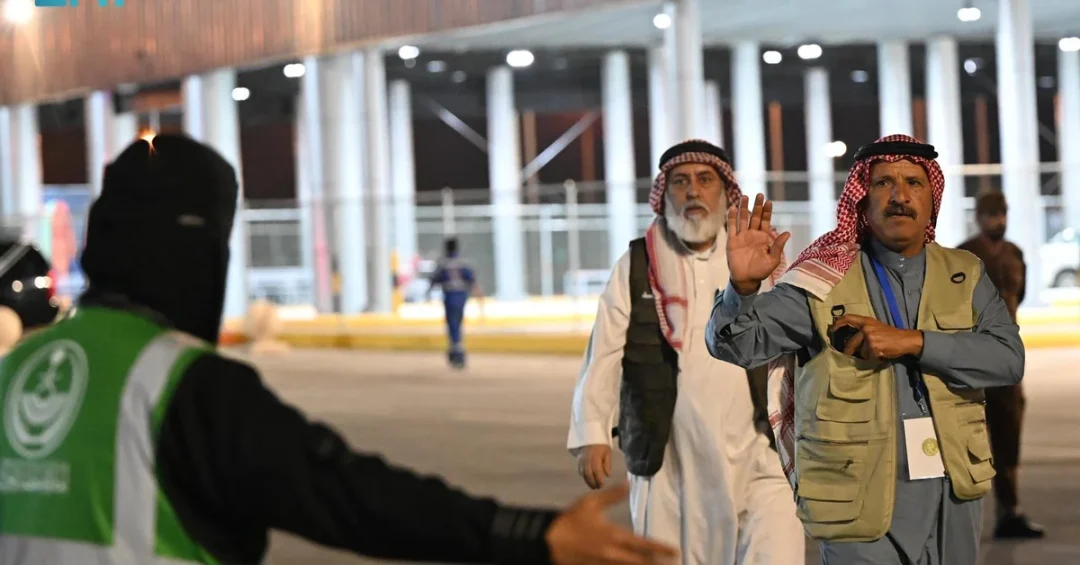
Government agencies and over 200 volunteers are providing round-the-clock services to pilgrims at the Halat Ammar Border Crossing in the Tabuk Region, under the direct supervision of Prince Fahd bin Sultan bin Abdulaziz, Governor of Tabuk and General Supervisor of Hajj affairs in the region. The crossing has seen a steady influx of pilgrims from Egypt, Jordan, and Palestine, all of whom are being received with comprehensive support as they make their way to the holy sites for Hajj.
Context and Background
The Halat Ammar Border Crossing, located in northwestern Saudi Arabia, serves as a vital entry point for pilgrims traveling overland from neighboring countries. This year, as in previous years, the Kingdom has mobilized a wide range of government agencies and volunteer teams to ensure that every pilgrim’s journey begins smoothly and comfortably. The operation is part of Saudi Arabia’s longstanding commitment to facilitating the Hajj pilgrimage, one of the largest annual gatherings of people in the world.
Under the guidance of the Saudi leadership, the Hajj lounge at Halat Ammar operates continuously, offering services that range from immigration and customs clearance to health care, food distribution, and spiritual guidance. The supervision by Prince Fahd bin Sultan bin Abdulaziz underscores the high-level attention given to the welfare of pilgrims at all entry points.
Key Details
More than 200 volunteers of both genders are actively participating in the provision of services at Halat Ammar. These volunteers, trained in hospitality and crowd management, assist pilgrims with paperwork, provide information, and ensure that all needs are met promptly. The presence of volunteers reflects the spirit of community service that is deeply ingrained in Saudi society.
Pilgrims interviewed by the Saudi Press Agency (SPA) expressed their gratitude for the facilities and services provided. They praised the good reception and generous hospitality they received and thanked the wise leadership for the care and attention given to them. Such feedback highlights the effectiveness of the coordinated efforts by various government agencies.
The agencies involved include the Ministry of Hajj and Umrah, the General Directorate of Passports, the Saudi Red Crescent Authority, and the Ministry of Health, among others. Each plays a specific role in ensuring a seamless experience for pilgrims, from the moment they arrive until they depart for Makkah and Madinah.
Implications and Impact
The efficient operation at Halat Ammar has significant implications for the overall Hajj season. By providing high-level services at border crossings, Saudi Arabia demonstrates its capacity to manage large-scale logistical challenges and its dedication to the comfort and safety of all pilgrims. This contributes to the Kingdom’s reputation as a gracious host and enhances the spiritual experience of the pilgrimage.
Furthermore, the successful management of pilgrim flows at Halat Ammar supports regional cooperation, as many pilgrims transit through Jordan and Egypt. The smooth processing of travelers fosters goodwill and strengthens ties between Saudi Arabia and its neighbors. It also showcases the Kingdom’s advanced infrastructure and commitment to Vision 2030’s goals of enhancing the quality of life and promoting international engagement.
Vision 2030 Alignment
Saudi Arabia’s Vision 2030 places a strong emphasis on improving the pilgrimage experience and increasing the number of pilgrims. The efforts at Halat Ammar align with this vision by ensuring that pilgrims receive world-class services. The use of volunteers and advanced technology also reflects the vision’s focus on community participation and innovation. As the Kingdom continues to develop its Hajj infrastructure, the Halat Ammar model serves as a testament to Saudi Arabia’s unwavering commitment to serving the guests of God and achieving the ambitious goals of Vision 2030.
20 Questions
Q1. What is the Halat Ammar Border Crossing?
A1. Halat Ammar is a border crossing in the Tabuk Region of Saudi Arabia, serving as a key entry point for pilgrims arriving from Egypt, Jordan, and Palestine, especially during the Hajj season.
Q2. Who supervises the services at Halat Ammar?
A2. The services are under the direct supervision of Prince Fahd bin Sultan bin Abdulaziz, Governor of Tabuk and General Supervisor of Hajj affairs in the region.
Q3. How many volunteers are participating in the services?
A3. More than 200 volunteers of both genders are participating in providing services to pilgrims at Halat Ammar.
Q4. What services are provided to pilgrims at Halat Ammar?
A4. Services include immigration and customs clearance, health care, food distribution, spiritual guidance, and assistance with paperwork, all available round the clock.
Q5. Which government agencies are involved?
A5. Agencies include the Ministry of Hajj and Umrah, the General Directorate of Passports, the Saudi Red Crescent Authority, and the Ministry of Health, among others.
Q6. From which countries are pilgrims arriving at Halat Ammar?
A6. Pilgrims are arriving from Egypt, Jordan, and Palestine, seeking to perform Hajj in Saudi Arabia.
Q7. How did pilgrims respond to the services?
A7. Pilgrims interviewed by the Saudi Press Agency praised the facilities and services, the good reception, and the generous hospitality, thanking the Saudi leadership.
Q8. What is the significance of the Halat Ammar crossing for Hajj?
A8. It is a vital entry point for overland pilgrims, ensuring smooth processing and support as they begin their spiritual journey to Makkah and Madinah.
Q9. How does this operation reflect Saudi Arabia’s commitment to pilgrims?
A9. It demonstrates the Kingdom’s dedication to providing top-notch services and facilities, ensuring the comfort and safety of all pilgrims.
Q10. What role do volunteers play at Halat Ammar?
A10. Volunteers assist with paperwork, provide information, manage crowds, and offer hospitality, reflecting community spirit and enhancing the pilgrim experience.
Q11. How does this align with Vision 2030?
A11. Vision 2030 aims to improve the pilgrimage experience and increase pilgrim numbers; the Halat Ammar model supports these goals through quality services and innovation.
Q12. What is the Saudi Press Agency’s role in reporting this?
A12. The Saudi Press Agency (SPA) interviewed pilgrims and reported on the services, highlighting the positive feedback and the effective coordination among agencies.
Q13. How does the crossing operate around the clock?
A13. Agencies and volunteers work in shifts to ensure continuous service, 24 hours a day, to accommodate the influx of pilgrims at any time.
Q14. What health services are available at Halat Ammar?
A14. The Ministry of Health provides medical care, including emergency services and health checks, to ensure pilgrims are fit for the journey ahead.
Q15. How many pilgrims are expected to pass through Halat Ammar this year?
A15. While exact numbers vary, the crossing typically handles thousands of pilgrims during Hajj season, with a steady influx from neighboring countries.
Q16. What measures are in place for crowd management?
A16. Trained volunteers and security personnel manage crowds to ensure orderly processing and prevent congestion, prioritizing safety and efficiency.
Q17. How does this benefit the local community in Tabuk?
A17. It fosters community engagement through volunteerism and boosts the local economy by supporting businesses that cater to pilgrims’ needs.
Q18. What technology is used to facilitate pilgrim processing?
A18. Advanced systems for immigration and customs, including biometric verification, are used to expedite procedures and enhance security.
Q19. How does Saudi Arabia ensure the quality of services at border crossings?
A19. Through rigorous training, oversight by senior officials, and coordination among multiple agencies, the Kingdom maintains high standards of service.
Q20. What is the overall message Saudi Arabia sends through these efforts?
A20. Saudi Arabia conveys its commitment to serving the guests of God with dignity and care, reflecting its leadership and the values of Vision 2030.
Reader Feedback
We value your thoughts. Please share your feedback on this article.
Your feedback helps us improve our coverage.